A single sales tax measure that would add a new half cent sales tax to fund transportation projects in Los Angeles County for 40 years, and extend an existing half-cent sales tax that terminates in 2039, is supported by at least 68 percent of voters.


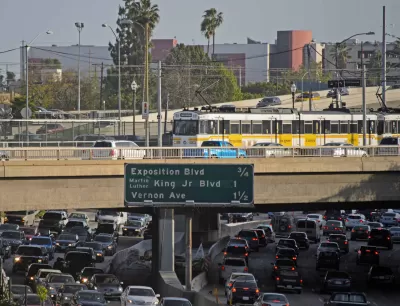
The measure, which could be placed on the ballot in Los Angeles County on Nov. 8, is both an addition and successor to the 2008 Measure R. It would need to pass by two-thirds per California law.
The legislation enabling the new tax to be placed on the ballot [SB-767 Los Angeles County Metropolitan Transportation Authority (Metro): transactions and use tax, authored by Senator Kevin de León (D-Los Angeles)] was signed into law by Gov. Jerry Brown last October.
"The Metro board is set to decide [on June 23] if it will place a measure on the November ballot that, if passed, would raise the countywide sales tax an extra half-cent above the existing Measure R half-cent tax approved by voters to fund transportation projects," writes Debbie L. Sklar for MyNewsLA.com.
Once Measure R ends in 2039, the new half-cent sales tax — as yet unnamed — would become a full cent and sunset in either 2057 or 2067.
The proposed plan would raise about $120 billion dollars over four decades for public transportation and highway projects, as well as street improvements and upkeep of public transit equipment.
According to two recent polls by Metro, the tax measure received 68 percent and 72 percent approval, with the former poll taken by phone, the latter at live forums conducted by Metro.
Additionally, 81 percent of telephone participants said they would support the idea of continuing on after 2067 with a smaller, quarter-cent tax to keep the system in “good working condition,” with that percentage going up to 88 percent for people surveyed at the forums, Metro spokeswoman Pauletta Tonilas said
Sklar goes on to describe the extensive public outreach efforts conducted by Metro, in both live and telephone forums.
Public input regarding rail projects revolved around speeding up rail line construction projects, separating rail from road crossings, more parking at stations, upgrading the Orange Line bus system to light rail and improving connections between bus and rail.
There was also interest in more funding for carpool and toll lanes, sidewalk and pothole repairs and improving pedestrian routes, while there were comments that urged less spending on highways.
Public meetings, as well as access to the draft potential ballot measure expenditure plan can be found on this Metro webpage.
The Los Angeles County Metropolitan Transportation Authority operates the third-largest public transportation system in the United States by ridership (per Wikipedia), after the New York Metropolitan Transportation Authority (MTA) and the Chicago Transit Authority (CTA).
FULL STORY: Transportation tax hike backed: You want to pay more?

$120 Billion Transportation Bond May Be Headed to Los Angeles County Voters
The transit and road measure, based on extending and increasing half-cent sales taxes, would fund a massive amount of light rail, bus, and road measures, including building a Sepulveda Pass tunnel which would accommodate a toll road and rail line.
How High is Too High for Transportation Sales Taxes?
Sales taxes are regressive, but unlike the gas tax, they bear no relationship to transportation. Should a November transportation ballot measure pass, sales taxes in three cities in the county of Los Angeles would exceed 10 percent.
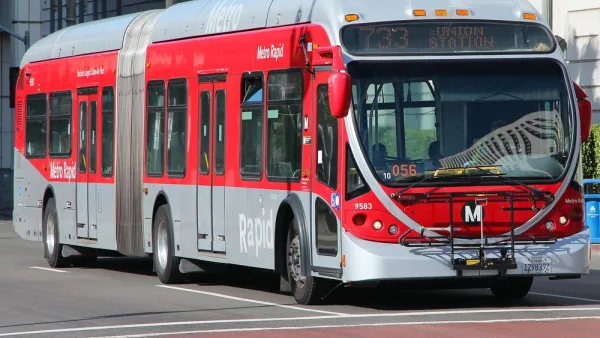
Los Angeles Metro Takes Initial Step Toward Conversion to Electric Buses by 2030
The board of L.A. Metro voted Thursday to spend $138 million to purchase 95 electric buses plus chargers and wiring upgrades for two transit lines that now use natural gas buses, and approved a motion to convert all buses to battery-electrics by 2030

Planetizen Federal Action Tracker
A weekly monitor of how Trump’s orders and actions are impacting planners and planning in America.

The state-sanctioned urbicide of Austin
People don’t kill cities. Freeways do.

US to reduce Colorado River water deliveries to Mexico
A new Colorado Treaty amendment reduces Mexico’s Colorado River water allocation by 250,000 acre feet.

5 New England states march closer to 800 megawatt wind energy project
Securing federal approval for the project may be complicated under the Trump administration, which has historically been hostile towards domestic wind power.

Baltimore to break ground on $50 million Transit Priority Project
The project will bring faster bus trips, safer streets and better bike connections to Baltimore.

Airbnb launches $250 million 'last-dollar financing' housing accelerator, makes first investment in Austin
The company will put $6.4 million towards affordable housing development in Texas’ capital.

FREE Course: Walkable City 1: Why Walkability?
After describing his path towards focusing on walkability as the essence of good planning, Jeff Speck marches through his five principal reasons for making more walkable places.
Reinventing Malls: Planning Alchemy—Turning Gray Fields Into Gold
The course focuses on the opportunities and imperatives that shape reinvention of mall sites.

Eagle County Government
Harvard University Graduate School of Design
Nashville Planning Department
The Architects Foundation
University of Cincinnati Online
The Pocatello Development Authority
The Urban Renewal Agency of the City of Pocatello
Journal of the American Planning Association