How can the New Urban Agenda respect the elderly—and make cities better for all of us in the process?


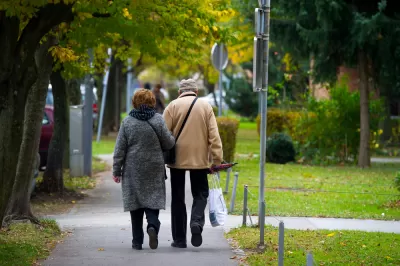
Ahead of the Habitat III conference in Ecuador, which will result in a New Urban Agenda, advocate Sion Jones urges urbanists worldwide to prioritize the needs of the aging and elderly.
Aging "change[s] the way we live, work, play, socialize, and experience our urban environments," Jones writes. Yet the needs pertaining to that experience are frequently not incorporated into policy or design. As a result, "our rights in the city are often compromised, particularly in older age, due to the social, economic and spatial characteristics of our cities."
Jones offers 10 areas of study to ensure a new urban agenda will include and respect the elderly.
For instance, Design housing for life (#5) includes both "flexible design" that can assure the ability to age in place, and broad policy changes that recognize tenancy rights and informal settlements.
Though progress in these areas would particularly benefit the elderly, it’s also clear that they would make cities more livable for everyone: Investing in sustainable transportation (#2) and combatting air pollution (#8) clean everyone’s air. But the elderly may feel certain needs more acutely, and urbanists may do well to build on their experiences to find solutions for all.
FULL STORY: 10 Ways to Create a New Urban Agenda That Includes Older People


Clean Air Programs Increase Property Values, Study Says
What’s good for the planet is good for the economy, according to a recent study published by the Lincoln Institute of Land Policy.
A Love Letter to the Bicycle
Riding a bicycle is not only a coping mechanism; it's also a way to protect ourselves during the coronavirus pandemic.
A More Disorderly Urban Form Praised in UN's Quito Papers
A UN conference in Quito Ecuador in October 2016 looked at housing the world’s growing urban population. The Conference resulted in a document and film advocating a more organic and disorderly urban form.

Planetizen Federal Action Tracker
A weekly monitor of how Trump’s orders and actions are impacting planners and planning in America.

The state-sanctioned urbicide of Austin
People don’t kill cities. Freeways do.

US to reduce Colorado River water deliveries to Mexico
A new Colorado Treaty amendment reduces Mexico’s Colorado River water allocation by 250,000 acre feet.

Airbnb launches $250 million 'last-dollar financing' housing accelerator, makes first investment in Austin
The company will put $6.4 million towards affordable housing development in Texas’ capital.

Guerilla urbanists are building DIY bus stop benches in Chicago
A before-and-after of one of the bus stops with a new bench. The new benches are not officially sanctioned or permitted, but the residents who placed them hope they will be the start of a network of DIY benches across the city.

Mamdani overhauls NYC's Vision Zero plan with 100 new policy goals
The overhaul aims to reduce traffic deaths and make streets safer for pedestrians, cyclists and drivers through lower speed limits, new safety infrastructure and more.

FREE Course: Walkable City 1: Why Walkability?
After describing his path towards focusing on walkability as the essence of good planning, Jeff Speck marches through his five principal reasons for making more walkable places.
Reinventing Malls: Planning Alchemy—Turning Gray Fields Into Gold
The course focuses on the opportunities and imperatives that shape reinvention of mall sites.

Eagle County Government
Harvard University Graduate School of Design
Nashville Planning Department
The Architects Foundation
University of Cincinnati Online
The Pocatello Development Authority
The Urban Renewal Agency of the City of Pocatello
Journal of the American Planning Association