The cause of infrastructure should be easy for people, and planners, to rally behind. But infrastructure's cause, like so many other political issues, invites conflicts of interest.


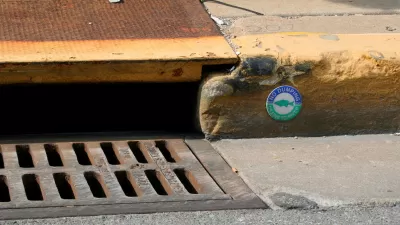
Angie Schmitt critiques Infrastructure Week, commemorated last week, mostly on Twitter (#InfrastructureMatters). Schmitt summarizes the event by calling it "a time where engineering and construction industry groups beat the drum for more money, using big numbers and images of collapsing bridges."
The problem with Infrastructure Week, according to Schmitt, is its focus on spending more money, rather than making better infrastructure.
Infrastructure Week is brought to you by some of the largest engineering firms in the world. The coalition is broader than that, and includes some perspectives that emphasize quality and efficiency. But the driving force is the American Society of Civil Engineers, an organization with plenty of self-interest in bigger public construction budgets.
Schmitt's argument includes additional, specific points about the sometimes-contradictory claims of the American Society of Civil Engineers before coming to the conclusion that the people leading the Infrastructure Week discussion are still catching up to a mature approach to infrastructure.
Read the full story: The Problem With “Infrastructure Week”
Texas Infrastructure Gets a ‘C’
The American Society of Civil Engineers rates states in 16 categories related to transportation, water, waste management, parks, and more.
Rebuilding America's Backbone: A Call for Resilient Infrastructure
How sustainable investments in infrastructure made today can secure the future.
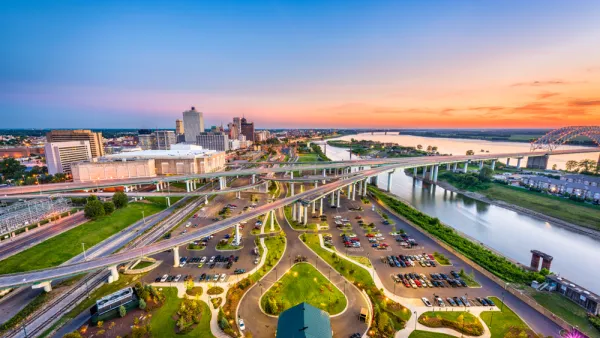
Crack in Bridge Connecting Arkansas to Tennessee Comes With Consequences, Debate
Goods movement on the Mississippi River, as well as truck traffic on a key interstate, has ground to a halt after a crack was discovered last week in a bridge on Interstate 40 connecting to Memphis.

Desperate measures: Advocates weigh draining Lake Powell to fill Colorado River
Draining the reservoir could reduce evaporation losses by a couple hundred thousand acre-feet.

Eastern Nebraska is running out of electricity
Data centers and electrification are straining eastern Nebraska’s grid, throttling economic development.

Malls are becoming the midtowns of the future
Mall and office park redevelopments are a generational opportunity to create new nodes of urbanity.

NYC breaks ground on anti-flooding infrastructure project
New York City's new system will reduce stormwater flows to local sewers by 90%.

One Kentucky town’s secret to affordable housing
The Smoketown Community Land Trust has already built seven affordable homes for community members.

Houston gains petal-shaped cooling infrastructure to make streets more ‘delightful’
The city has installed the pavilions along 15 blocks in Houston.

FREE Course: Walkable City 1: Why Walkability?
After describing his path towards focusing on walkability as the essence of good planning, Jeff Speck marches through his five principal reasons for making more walkable places.
Reinventing Malls: Planning Alchemy—Turning Gray Fields Into Gold
The course focuses on the opportunities and imperatives that shape reinvention of mall sites.

City of Rosemead
Rutgers University, Edward J. Bloustein School of Planning and Public Policy
One Hundred Miles
University of Michigan School for Environment and Sustainability (SEAS)
Hunter College, City University of New York (CUNY)
The Architects Foundation
City of Cambridge
Montrose County
The Pocatello Development Authority