It's the little things that count—especially when it comes to building safety infrastructure onto streets so that they better serve all modes of transportation.


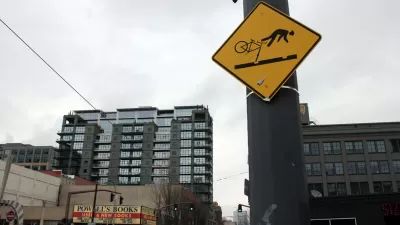
According to Jonathan Maus, "the City of Portland Bureau of Transportation is using an actual curb to separate bike-only lanes from standard vehicle lanes." The so-called "Tuff Curb" is the solution to the need for quick and easy physical separation between cars and bikes along protected bike lanes.
The Portland Bureau of Transportation has experimented with other forms of separation before:
They’ve tried using plastic wands but those rarely last more than a few days before they’re hit and ripped out by people who can’t control their cars. PBOT’s most recent attempt to help separate the bike lane from encroachment by motor vehicle operators came in the form of “rumble bars.” Those failed too.
The new Tuff Curb has already been installed "to separate a bike lane on SW 13th just before Clay," reports Maus. The post also includes images and more information about the cost of the new complete streets technology.
FULL STORY: City debuts new ‘Tuff Curb’ to create physical separation for bikeways

Austin Outlaws Blocking Bike Lanes
Drivers who park in bike lanes will receive citations of up to $300.
Portland Traffic Deaths Increased Despite Vision Zero Efforts
Traffic deaths in Portland, Oregon almost doubled between 2018 and 2023.
Protected Bike Lanes, Vehicle Lane Reductions Cause Stir in Baltimore
Residents and business operators say they weren’t warned about a road diet planned for a major thoroughfare in Baltimore. Planners and advocates say the changes have been a long time coming.

Planetizen Federal Action Tracker
A weekly monitor of how Trump’s orders and actions are impacting planners and planning in America.

The state-sanctioned urbicide of Austin
People don’t kill cities. Freeways do.

US to reduce Colorado River water deliveries to Mexico
A new Colorado Treaty amendment reduces Mexico’s Colorado River water allocation by 250,000 acre feet.

LA Metro’s ultimatum: no extra buses for LA28 if federal funding isn’t imminently secured
If Metro does not provide additional buses, LA28 organizers will have to find a new way to manage Olympic traffic. LA28’s budget does not include a line item for transit.

Colorado’s Largest Data Center Could Rise Next to Homes — Without a Public Hearing
The proposed campus would consume 11 times the power of Denver International Airport; as it has across the country, opposition mounts.

5 New England states march closer to 800 megawatt wind energy project
Securing federal approval for the project may be complicated under the Trump administration, which has historically been hostile towards domestic wind power.

FREE Course: Walkable City 1: Why Walkability?
After describing his path towards focusing on walkability as the essence of good planning, Jeff Speck marches through his five principal reasons for making more walkable places.
Reinventing Malls: Planning Alchemy—Turning Gray Fields Into Gold
The course focuses on the opportunities and imperatives that shape reinvention of mall sites.

Eagle County Government
Harvard University Graduate School of Design
Nashville Planning Department
The Architects Foundation
University of Cincinnati Online
The Pocatello Development Authority
The Urban Renewal Agency of the City of Pocatello
Journal of the American Planning Association