Transit riders in the famously small city of San Francisco (in geographic size, anyway) have set a goal to design and build a system that makes it possible to travel between any two points in the city in 30 minutes or less.


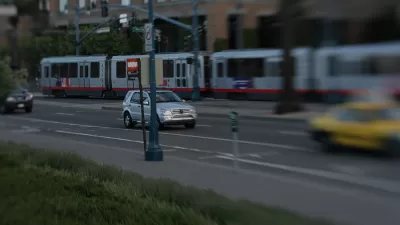
Camden Avery reports: "This month, the San Francisco Transit Riders Union, a transit-focused grassroots advocacy and improvement organization, announced 30X30, its ambitious new efficiency benchmark for public transit in the city."
Armed with its own crowdfunding website, 30X30 sets a benchmark of making any part of San Francisco accessible by transit in 30 minutes or less by the year 2010. Reed Martin of the SFTRU is quoted explaining how that goal could be achieved:
"Fundamentally, the three cornerstones of how we get to 30X30 are increasing speed, frequency, and reliability," he said. That "means different approaches for different lines—everything from red carpet lanes, allowing buses to cruise past traffic, to subway expansion, enabling truly high-speed trains just below the surface."
The local transit system, Muni, recently implemented a new phase of the "Muni Forward" program by redesigning the system on a high frequency grid. Neither the article nor the 30X30 site mentions the Muni Forward program.
Read the full story: SF Transit Riders Union Launches Ambitious '30X30' Muni Campaign
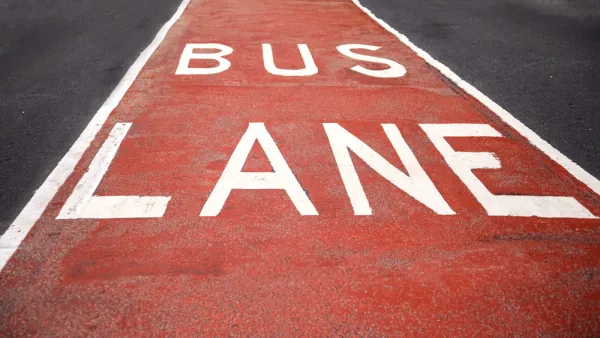
Yelp for Transit? San Francisco Will Give it a Shot
The San Francisco Municipal Transportation Agency will invite ratings from transit users via the existing MuniMobile app. That's brave.
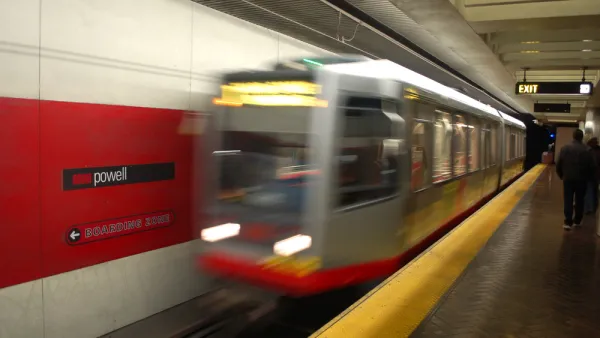
Latest 'Muni Forward' Changes Mean Route Changes, Frequency Improvements
Muni will soon launch the fourth phase of improvement to San Francisco's transit system.
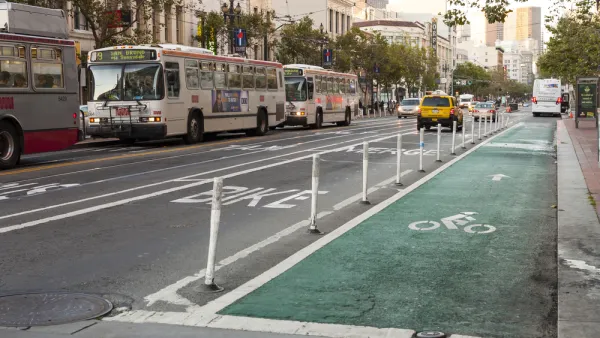
Bus Ridership Improving, More Improvements Arriving Soon in San Francisco
Muni is planning on making improvements on 50 miles of bus routes as the system faces increasing demand.

Planetizen Federal Action Tracker
A weekly monitor of how Trump’s orders and actions are impacting planners and planning in America.

Eastern Nebraska is running out of electricity
Data centers and electrification are straining eastern Nebraska’s grid, throttling economic development.

Move over, LA: St. Louis gears up for Olympics, invests millions in downtown redevelopment
The Missouri city will host the 2028 Olympic soccer group stage and knockout matches.

Dallas releases zoning code overhaul to officials
The drafted overhaul is over 400 pages long.

NYC renovations for dangerous, ‘mercilessly crammed’ street delayed until 2027
Construction was supposed to begin this fall.

San Diego’s Midway Rising project gets greenlight from city council
The project looks to become the largest affordable housing development in California's history.

FREE Course: Walkable City 1: Why Walkability?
After describing his path towards focusing on walkability as the essence of good planning, Jeff Speck marches through his five principal reasons for making more walkable places.
Reinventing Malls: Planning Alchemy—Turning Gray Fields Into Gold
The course focuses on the opportunities and imperatives that shape reinvention of mall sites.

City of Rosemead
Rutgers University, Edward J. Bloustein School of Planning and Public Policy
One Hundred Miles
University of Michigan School for Environment and Sustainability (SEAS)
Hunter College, City University of New York (CUNY)
The Architects Foundation
City of Cambridge
The Pocatello Development Authority
The Urban Renewal Agency of the City of Pocatello