Phase 1 of a project described as the "Grand Central Station of the West" has almost doubled in cost since 2008. Now San Francisco County Supervisors are considering a bailout of the project.


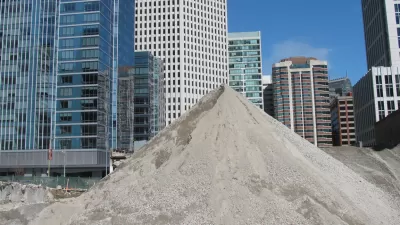
"San Francisco’s major Transbay transportation and development project has nearly doubled in cost since 2008, and The City is now poised to borrow hundreds of millions of dollars to offset the most recent negative financial blow," according to an article by Joshua Sabatini.
More specifically, the cost for the project has ballooned to $2.259 billion, according to a report by Budget Analyst Harvey Rose. The project's price tag in 2008 when construction began: $1.189 billion.
"To address the latest shortfall, The City has proposed issuing $260 million of certificates of participation, which would be paid back through the project area’s special tax district revenues," reports Sabatini.
Sabatini also notes that the bailout will borrow from Phase 2 of the project to save Phase 1. "It remains unclear how Phase 2 will be fully funded."
Read the full story: SF to bail out Transbay project after costs nearly double
S.F.'s Transbay Transit Center Won't Reopen Until June at the Earliest
The Transbay Transit Center, opened for a brief stint in the latter half of 2018 before structural flaws were discovered, won't be open to the public again anytime soon.
Cloud Computing Company Will Have its Name in the Clouds above San Francisco
It is only fitting that Salesforce, whose logo is a cloud, won the naming rights to what will be the West Coast's tallest building when completed in 2017 where they will lease half the space. When the fog rolls in, that's all the workers will see!
Concrete Pours into Foundation of San Francisco's Transbay Terminal
No sooner had the $6.4 billion eastern span of the Bay Bridge opened to traffic than the next huge transportation undertaking begun -- concrete began pouring for the new $4.5 billion Transbay Terminal. The bridge and terminal are related by history.

Planetizen Federal Action Tracker
A weekly monitor of how Trump’s orders and actions are impacting planners and planning in America.

California plans to bury El Niño’s downpour
If the state plays its cards right, it may be able to store a billion acre-feet of El Niño’s water in aquifers.

Desperate measures: Advocates weigh draining Lake Powell to fill Colorado River
Draining the reservoir could reduce evaporation losses by a couple hundred thousand acre-feet.

Los Angeles just elected an urban planner as its mayor
Transportation analysts are optimistic that Raman will be more aggressive in addressing transit issues than Bass.

Mamdani’s pied-à-terre tax survives legal challenge
A panel of judges found that the plaintiffs failed to demonstrate injury as a result of New York City's implementation of the tax.

Eastern Nebraska is running out of electricity
Data centers and electrification are straining eastern Nebraska’s grid, throttling economic development.

FREE Course: Walkable City 1: Why Walkability?
After describing his path towards focusing on walkability as the essence of good planning, Jeff Speck marches through his five principal reasons for making more walkable places.
Reinventing Malls: Planning Alchemy—Turning Gray Fields Into Gold
The course focuses on the opportunities and imperatives that shape reinvention of mall sites.

City of Rosemead
Rutgers University, Edward J. Bloustein School of Planning and Public Policy
One Hundred Miles
University of Michigan School for Environment and Sustainability (SEAS)
Hunter College, City University of New York (CUNY)
The Architects Foundation
City of Cambridge
Montrose County
The Pocatello Development Authority