The Chicago Region Trees Initiative provides a regional model for planting and protecting a sustainable natural environment in and around cities and communities.


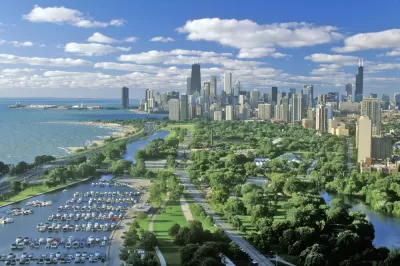
Ted Gregory reports on the results of a recent tree census in the seven-county Chicago region that found more than 157 million trees, "a number that translates to about 21 percent of the area covered in trees and shrubs — well below the national average of 27 percent."
Gregory describes the effort of surveying and cataloguing the region's trees, part of the Chicago Region Trees Initiative, as the most comprehensive tree census of any large U.S. metropolitan area.
The Chicago region, like many other parts of the country, is recovering from the emerald ash borer scourge, which "experts say will have wiped out 13 million trees by the time it moves downstate." The state has also been devastated by the European buckthorn, "an invasive plant that shoves out the state's native oak." The Chicago Region Trees Initiative hopes to build a sustainable blanket of plant life in northeast Illinois, with the help of 13 partner organizations. The article includes more details about the early efforts of the initiative.
FULL STORY: After emerald ash borer scourge, campaign under way to replant lost trees

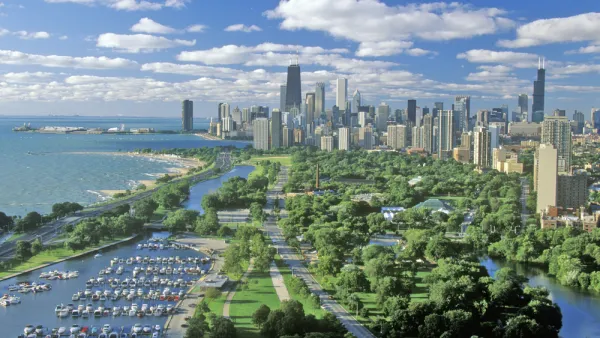
Protecting Chicago’s Tree Canopy
Advocates for urban greening are asking the city to boost its tree planting efforts and protect existing trees, which are a key tool for fighting the effects of climate change and worsening heat waves.
Cities Preparing for the Worst as the Emerald Ash Borer Comes to Town
A tiny insect, native to Asia, has been killing trees in huge numbers around the United States since 2002. With the emerald ash borer expected to spread, cities are trying to prepare to combat the worst of the devastation.
Take Care of Trees (They Take Care of You)
New research suggests that trees offer a "layer of protection" for cardiovascular disease.

Planetizen Federal Action Tracker
A weekly monitor of how Trump’s orders and actions are impacting planners and planning in America.

The state-sanctioned urbicide of Austin
People don’t kill cities. Freeways do.

US to reduce Colorado River water deliveries to Mexico
A new Colorado Treaty amendment reduces Mexico’s Colorado River water allocation by 250,000 acre feet.

5 New England states march closer to 800 megawatt wind energy project
Securing federal approval for the project may be complicated under the Trump administration, which has historically been hostile towards domestic wind power.

Baltimore to break ground on $50 million Transit Priority Project
The project will bring faster bus trips, safer streets and better bike connections to Baltimore.

Airbnb launches $250 million 'last-dollar financing' housing accelerator, makes first investment in Austin
The company will put $6.4 million towards affordable housing development in Texas’ capital.

FREE Course: Walkable City 1: Why Walkability?
After describing his path towards focusing on walkability as the essence of good planning, Jeff Speck marches through his five principal reasons for making more walkable places.
Reinventing Malls: Planning Alchemy—Turning Gray Fields Into Gold
The course focuses on the opportunities and imperatives that shape reinvention of mall sites.

Eagle County Government
Harvard University Graduate School of Design
Nashville Planning Department
The Architects Foundation
University of Cincinnati Online
The Pocatello Development Authority
The Urban Renewal Agency of the City of Pocatello
Journal of the American Planning Association