The executive director of the Bayou Land Conservancy takes to the pages of the Houston Chronicle to describe the conservationist and landscape-focused efforts that can prevent floods like those that struck Houston this week.


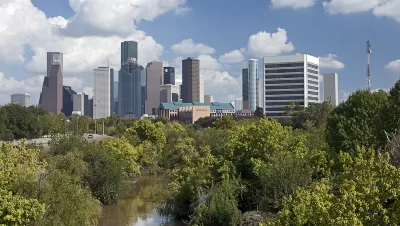
"For the past twenty years, we at Bayou Land Conservancy have watched, horrified, as the Houston region's wetlands are scraped and filled in — directly resulting in increased flooding," begins an editorial by Jennifer Lorenz.
The reason for the account is the catastrophic flooding in Houston this week. According to the article, wetlands serve as the kidneys of the area's watersheds, running a process that serves as the foundation of the region's ecology.
Lorenz adds:
The rampant destruction of our forested and prairie wetlands is upsetting this balance, drastically reducing the land's ability to absorb water. By allowing so many wetlands to be turned into subdivisions, we're not just kicking them to the curb; we're turning them into curbs. We need the ecological equivalent of dialysis.
The editorial also includes a list of suggested actions to balance the need to protect the watershed while also meeting the construction demands of a growing population. The list includes, with more details in the article, planting more trees and native plants, better enforcement of existing construction regulations, more citizen-power in the building permit process, better landscaping on residential properties, better watershed awareness, and ceasing and desisting " trapezoidal concrete detention areas." On that last issue, Florenz writes: "Engineers like right angles; nature doesn't."
Read the full story: Wrecked wetlands lead to flooding. Here's what you can do.
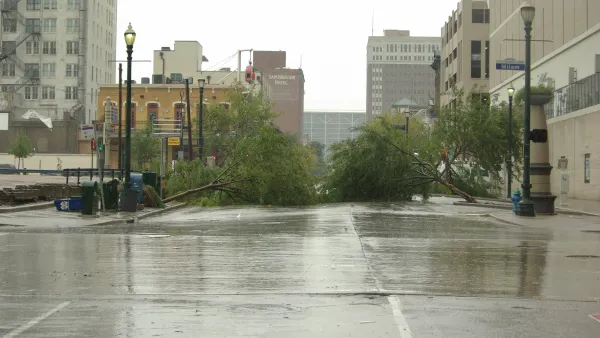
Houston’s ‘Ike Dike’ Won’t Adequately Protect the City
The largest project ever undertaken by the Army Corps of Engineers may not be enough to protect Houston-area communities from flooding during the most severe hurricanes, according to the Corps’ own analysis.

Harris County Will Use Toll Road Revenue to Pay for Flood Control
A new Flood Resilience Trust will create a permanent source of funding for flood control purposes, but the county still faces a shortfall for planned projects.
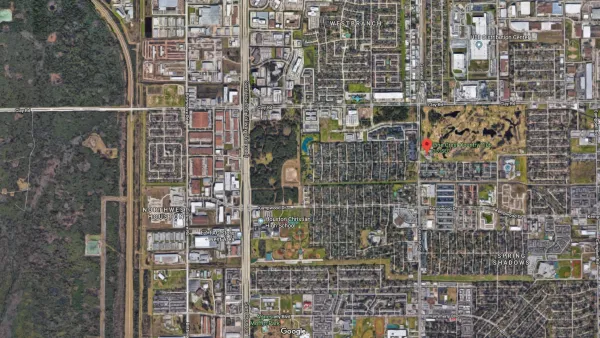
800 New Homes Approved for Houston's Floodplain
The city of Houston approved a new development that doesn't meet new elevations standards approved by the city of Houston earlier this month.

Planetizen Federal Action Tracker
A weekly monitor of how Trump’s orders and actions are impacting planners and planning in America.

California plans to bury El Niño’s downpour
If the state plays its cards right, it may be able to store a billion acre-feet of El Niño’s water in aquifers.

Desperate measures: Advocates weigh draining Lake Powell to fill Colorado River
Draining the reservoir could reduce evaporation losses by a couple hundred thousand acre-feet.

Housing is the top priority of Seattle’s sole new councilmember
Jenks campaigned on building 1,000 new units of affordable housing.

New tax cuts may slash $1.5 billion in funding for Miami transit, public parks
Amendment 3 will save Miami-Dade homeowners $2,700 in 2028.

Arizona, Wisconsin, Pennsylvania hope to finally advance climate goals post-midterms
The three states have spent years under Republican or divided control.

FREE Course: Walkable City 1: Why Walkability?
After describing his path towards focusing on walkability as the essence of good planning, Jeff Speck marches through his five principal reasons for making more walkable places.
Reinventing Malls: Planning Alchemy—Turning Gray Fields Into Gold
The course focuses on the opportunities and imperatives that shape reinvention of mall sites.

City of Rosemead
Rutgers University, Edward J. Bloustein School of Planning and Public Policy
One Hundred Miles
University of Michigan School for Environment and Sustainability (SEAS)
Hunter College, City University of New York (CUNY)
The Architects Foundation
City of Cambridge
Montrose County
The Pocatello Development Authority