Alan Mallach unpacks a remarkable project currently underway in Toronto, suggesting that sometimes higher, rather than lower, density may be the best way to go.


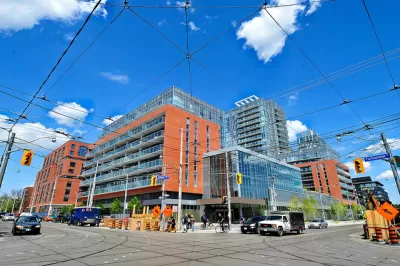
By the 1990s, Regent Park, a public housing project built in Toronto in the late 1940s, was showing many of the same problems that had prompted the Hope VI program in the United States. With over 2,000 housing units on 69 acres, located less than a mile from booming downtown Toronto, Regent Park had become Canada’s own poster child for distressed public housing.
In 2005, Toronto Community Housing, a city-owned nonprofit social housing provider, partnered with local developer, The Daniels Corporation, to execute a revitalization plan for the entire complex. Though far from complete, Regent Park’s transformation is well underway, and was recently featured in The New York Times. Although the appetite for large-scale revitalization seems to be modest in the United States these days, looking at how Toronto is rebuilding Regent Park offers some intriguing lessons for the federal government, as well as for states and cities that are grappling with the challenges of remaking distressed public housing projects.
FULL STORY: Canada is Looking Better and Better (The Regent Park Story)

Baton Rouge master plan aims to triple downtown population
The Louisiana capital wants to entice developers to its riverfront district.
Five simple zoning changes that any city can make to increase housing affordability
Zoning for more affordable housing is not rocket science, says Donald Elliot, author of "An Even Better Way to Zone." Here’s his five-step guide to getting started.
Study: Clarifying California’s Vague Definition of Transit Stops Could Make 1.3M Acres Eligible for Density Bonuses
According to researchers, no California jurisdictions are using the broadest possible definition of a transit stop.

Planetizen Federal Action Tracker
A weekly monitor of how Trump’s orders and actions are impacting planners and planning in America.

The state-sanctioned urbicide of Austin
People don’t kill cities. Freeways do.

US to reduce Colorado River water deliveries to Mexico
A new Colorado Treaty amendment reduces Mexico’s Colorado River water allocation by 250,000 acre feet.

Mamdani overhauls NYC's Vision Zero plan with 100 new policy goals
The overhaul aims to reduce traffic deaths and make streets safer for pedestrians, cyclists and drivers through lower speed limits, new safety infrastructure and more.

Amtrak not solely to blame for New Jersey commuter rail's unreliability, report finds
A new study from the Garden State Initiative found that NJ Transit’s budget grew 20% across a 4 year period, but reliability declined significantly over the same period.

EPA erases limits on planet-warming pollution from power plants
Under Monday’s plan, power plants would still have some limits on how much mercury, arsenic and other contaminants they can emit.

FREE Course: Walkable City 1: Why Walkability?
After describing his path towards focusing on walkability as the essence of good planning, Jeff Speck marches through his five principal reasons for making more walkable places.
Reinventing Malls: Planning Alchemy—Turning Gray Fields Into Gold
The course focuses on the opportunities and imperatives that shape reinvention of mall sites.

Eagle County Government
Harvard University Graduate School of Design
Nashville Planning Department
The Architects Foundation
University of Cincinnati Online
The Pocatello Development Authority
The Urban Renewal Agency of the City of Pocatello
Journal of the American Planning Association