Rural areas are troubled by narratives of brain drain and decline, but for most rural areas, the numbers simply don't back up those concerns.


"People who have grown up in and around small rural communities are used to hearing things like, 'small towns are dying,' 'we’re losing all our young people,' 'rural brain drain' and similar expressions," according to an article by Vicki Gerdes.
Gerdes, however, shares news of research by Kelly Asche, program coordinator for the Center for Small Towns at the University of Minnesota-Morris, who says these concerns in rural Minnesota simply aren't true, and "especially not in recent years." The first piece of evidence cited by Asche: rural population around the country has grown since 1970.
While Minnesota’s population statistics do show that rural areas are losing young people between the ages of 20-24, the same statistics also show that the only areas where this population is increasing are the communities where colleges and universities are located, Asche said.
The article provides additional insight about how different age demographics migrate between different types of communities at different stages in their lives.
Read the full story: Economic Summit in Detroit Lakes features good news for small towns

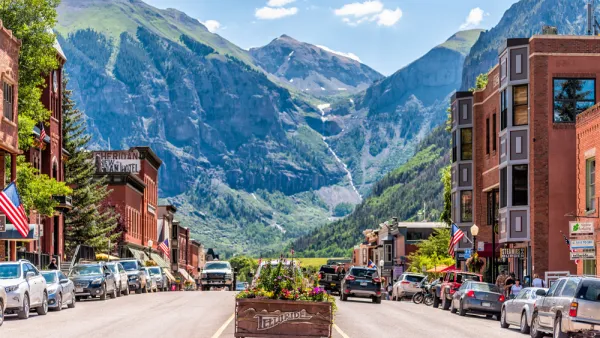
Pandemic Disrupts Ski Town Life in More Ways Than One
The working class that make ski towns run are getting squeezed out of work by public health restrictions while wealthy newcomers push real estate markets to crazy new heights.

When Amazon Brings Both Economic Optimism and Disappointment
A Kentucky town welcomed Amazon’s arrival, but the economic outcomes over the last two decades have been lackluster.
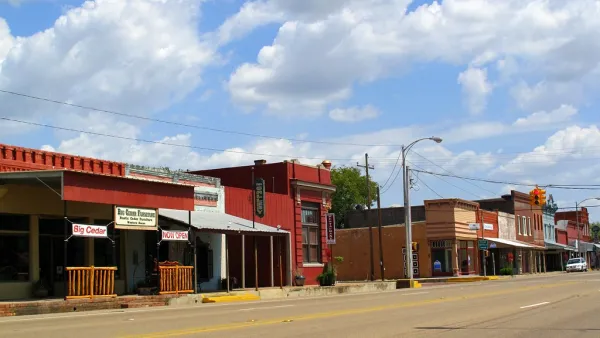
The Food Deserts of Rural America
When a town doesn’t have a grocery store, it means people don’t have access to food. But grocery stores also play an essential social and economic role in rural places. Community stores are trying to fill in the void.

Planetizen Federal Action Tracker
A weekly monitor of how Trump’s orders and actions are impacting planners and planning in America.

California plans to bury El Niño’s downpour
If the state plays its cards right, it may be able to store a billion acre-feet of El Niño’s water in aquifers.

Chicago breaks ground on $3 billion megadevelopment
The new neighborhood, titled Foundry Park, will one day host 3,700 residences.

California High-Speed Rail Authority CEO resigns after $600,000 scandal
Under Ian Choudri, the authority used taxpayer dollars to fund first class flights and trips to nightclubs.

Want to study the Missouri River? Soon, you may need unanimous approval from 10 states
Legislation would require 10 governors’ permission to study or build projects moving water outside the basin.

Desperate measures: Advocates weigh draining Lake Powell to fill Colorado River
Draining the reservoir could reduce evaporation losses by a couple hundred thousand acre-feet.

FREE Course: Walkable City 1: Why Walkability?
After describing his path towards focusing on walkability as the essence of good planning, Jeff Speck marches through his five principal reasons for making more walkable places.
Reinventing Malls: Planning Alchemy—Turning Gray Fields Into Gold
The course focuses on the opportunities and imperatives that shape reinvention of mall sites.

City of Rosemead
Rutgers University, Edward J. Bloustein School of Planning and Public Policy
One Hundred Miles
Hunter College, City University of New York (CUNY)
The Architects Foundation
University of Cincinnati Online
City of Cambridge
Montrose County
The Pocatello Development Authority