The concept is no different from trains travelling along a charged track. While any real-world implementation is a long way off, the TEV team is building a trial road for a lower estimated cost per mile than traditional highway.


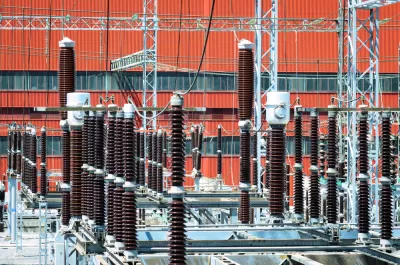
Headed by a father-daughter team from Scotland, the Tracked Electric Vehicle project envisions an electric future without charging stations. Anna Hirtenstein writes, "TEV Project highways would have an electrified metal strip embedded into the middle of the road which provides a constant source of power to the vehicle. Just like streetcars and subway trains do in today's cities, cars on a TEV highway could charge as they drive."
TEV is a nonprofit business that has drawn attention from major infrastructure companies. Its financial estimates are promising. "TEV Project plans to build its first trial road by next year at an estimated cost of $1.2 million to $1.8 million per mile, a price that is less than for a traditional highway."
Of course, EVs currently represent a minuscule portion of the world's automobile fleet. But the TEV project should also be of interest to those of us who imagine fleets of electric self-drivers ferrying people through the city.
FULL STORY: Here's One Answer to Electric Cars' Lack of Range: Electric Road

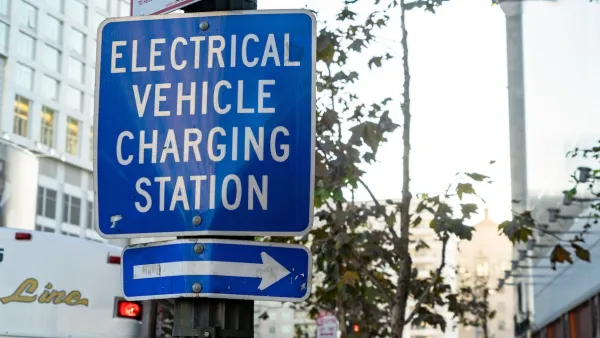
New York State Finances $60M Loan for EV Charging Infrastructure
Gov. Hochul announced the investment just as a federal program for EV charging infrastructure was halted by administration officials.
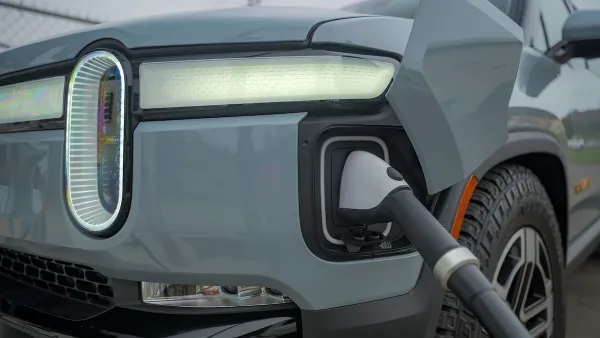
Rivian Joins Movement Toward Universal EV Charging
As more automakers like Tesla, Ford, and Rivian make their charging infrastructure compatible, the shift could lead to the faster development of a nationwide EV charging network.
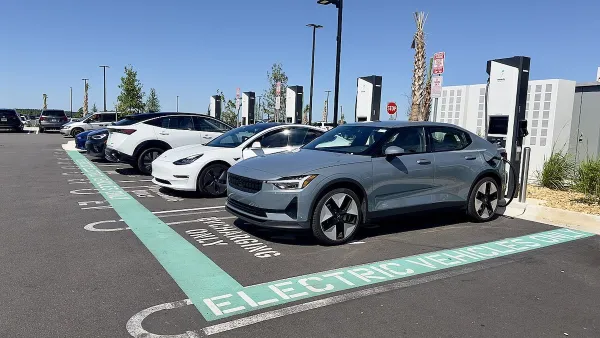
Florida Law Bars Cities From Regulating EV Chargers
Under the new law, cities cannot require charging infrastructure in local codes.

Planetizen Federal Action Tracker
A weekly monitor of how Trump’s orders and actions are impacting planners and planning in America.

The state-sanctioned urbicide of Austin
People don’t kill cities. Freeways do.

US to reduce Colorado River water deliveries to Mexico
A new Colorado Treaty amendment reduces Mexico’s Colorado River water allocation by 250,000 acre feet.

Brightline West’s future may rely on $6 billion federal loan
The company has until Nov. 2 to make a $400 million equity investment into its proposed high-speed rail line.

LA Metro’s ultimatum: no extra buses for LA28 if federal funding isn’t imminently secured
If Metro does not provide additional buses, LA28 organizers will have to find a new way to manage Olympic traffic. LA28’s budget does not include a line item for transit.

Colorado’s Largest Data Center Could Rise Next to Homes — Without a Public Hearing
The proposed campus would consume 11 times the power of Denver International Airport; as it has across the country, opposition mounts.

FREE Course: Walkable City 1: Why Walkability?
After describing his path towards focusing on walkability as the essence of good planning, Jeff Speck marches through his five principal reasons for making more walkable places.
Reinventing Malls: Planning Alchemy—Turning Gray Fields Into Gold
The course focuses on the opportunities and imperatives that shape reinvention of mall sites.

Eagle County Government
Harvard University Graduate School of Design
Nashville Planning Department
The Architects Foundation
University of Cincinnati Online
The Pocatello Development Authority
The Urban Renewal Agency of the City of Pocatello
Journal of the American Planning Association