Following concerns that the change would threaten Thornton Road Studios, a collection of arts and music businesses, the Austin City Council struck down a measure that would allow mixed-use development on the site.


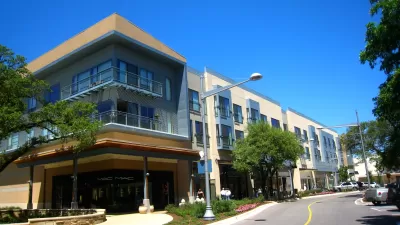
A mixed-use development proposal for the site of Thornton Road Studios in Austin was too controversial to pass. The Austin City Council struck down a zoning change that faced opposition not only from local residents, but also from artists and musicians concerned about being priced out of their city.
Elizabeth Pagano writes, "Given the almost unanimous support for the music and cultural omnibus that had passed earlier in the day, along with ongoing concerns that Austin is becoming unaffordable for the city's creative class, Council's vote to deny the zoning that would allow for a mixed-use residential project was hardly a surprise."
The developer intended to build a "wedding cake" style project, tapering up from its base to assuage those concerned about the building's scale. But that did little to convince business owners at Thornton Road Studios.
James Mays, director of the Band Aid School of Music, said, "'If you've ever attended a film festival, South by Southwest, ACL fest, an arts festival like the WEST tour, walked down Sixth Street or visited City Hall, you've been affected by the work of the businesses on Thornton Road that will be displaced by the proposed zoning change.'"
Read the full story: Council shoots down Thornton Road Studios rezoning

Denver Pauses Multifamily Development in Westside Neighborhoods Amidst Gentrification Concerns
City officials say the pause on permits for redevelopment projects aims to stop the displacement of long-term residents.
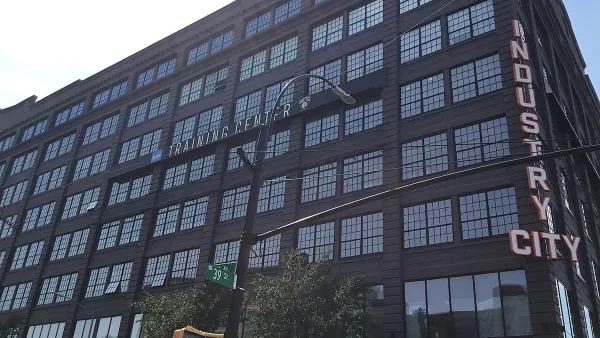
‘Emergent City’ Documentary Highlights Rare Anti-Gentrification Victory
The film charts the saga of a Brooklyn site called Industry City.
Austin Employs Team to Help Residents Avoid Displacement
The city’s new Displacement Prevention Navigators will conduct outreach and assist with finding resources to help cost-burdened residents at risk of losing their housing stay in their homes.

Planetizen Federal Action Tracker
A weekly monitor of how Trump’s orders and actions are impacting planners and planning in America.

Washington state to charge fee to drivers with fuel-efficient cars
Revenue from the fee will go towards supporting the state’s highways.

Trump to blast ‘hydrocarbon highway’ through ‘world’s longest art gallery’
Environmental and historic preservation groups are suing to stop the project.

Data centers need power – lower income, rural residents pay the price
In 2025, data centers paid only 38% of the energy infrastructure costs linked to their growth, with households, especially rural and low-income residents, bearing the remaining burden.

MBTA Green Line project moved to next phrase of CIG program
The modernization effort will cost $4.08 billion.

22-mile pedestrian and bike path to encircle Atlanta by 2030
The project will also support affordable housing.

FREE Course: Walkable City 1: Why Walkability?
After describing his path towards focusing on walkability as the essence of good planning, Jeff Speck marches through his five principal reasons for making more walkable places.
Reinventing Malls: Planning Alchemy—Turning Gray Fields Into Gold
The course focuses on the opportunities and imperatives that shape reinvention of mall sites.

City of Charlotte
City of Rosemead
Rutgers University, Edward J. Bloustein School of Planning and Public Policy
University of Michigan School for Environment and Sustainability (SEAS)
Hunter College, City University of New York (CUNY)
The Architects Foundation
University District Partnership