St. Louis Public Radio details the work of a local researcher who says the segregation of today's St. Louis is the result of deliberate, decades-long federal housing policy.


"A researcher with the Economic Policy Institute says the federal government needs to recognize that it played a deliberate role in creating racially segregated neighborhoods in cities like St. Louis," according to an article by Camille Phillips.
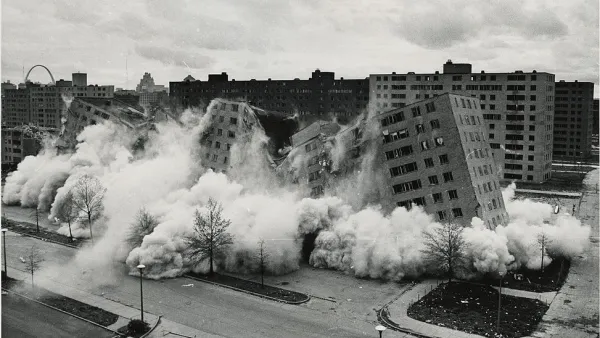
The researcher, Richard Rothstein, recently presented at the Missouri History Museum Symposium, "[drawing] a direct line between today’s segregated schools and neighborhoods and two federal housing programs from the 1930s, 40s and 50s: public housing and subsidized construction."
The article presents more of the details of Rothstein's argument, which traces roots back to the 1930s and finds effects in St. Louis neighborhoods Desoto-Carr and projects like Pruitt-Igoe. Rothstein also argues that Section 8 vouchers and low-income housing credits "are presently used to reinforce segregation."
Read the full story: Researcher: St. Louis segregation is a legacy of deliberate federal policy

More Cities and Counties Arming Renters Against Source of Income Discrimination
St. Louis County is considering fair housing legislation that would prevent source of income discrimination, as many cities in the region have already done, and many more are also considering.
Land Use Regulation's Legacy of Racial Segregation
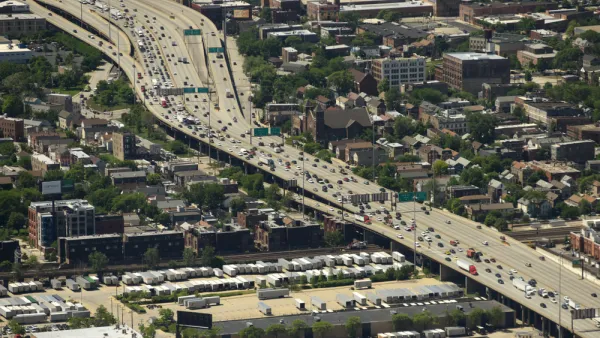
An investigative feature by Governing magazine blames the history of land use regulations like zoning and redlining for the racial segregation of contemporary communities all over the state of Illinois and the country.
The Massive Redevelopment Plans for North St. Louis Failed—What Next?
Detroit has Dan Gilbert, and for a few years, it looked like St. Louis had Paul McKee. Now that McKee's massive plans for the redevelopment of North St. Louis have failed expectations, what has been lost and what, potentially, can still be gained?

Planetizen Federal Action Tracker
A weekly monitor of how Trump’s orders and actions are impacting planners and planning in America.

Amtrak, CN end decades-long dispute with eight-year agreement
The new operating agreement establishes an updated framework for the companies to work together, including processes to resolve disputes.

Northwest rail fans eager for Sept. 30 debut of Amtrak’s Airo fleet
Get ready for that new train smell and more seats. But they won’t go faster or run more frequently on the Cascades route in Washington and Oregon.

Brightline Florida files for bankruptcy
The transit company is over $5 billion in debt.

St. Louis Metro to test if single-car trains can reduce operating costs, maintain rider satisfaction
The pilot program will run from October to spring 2027, and begin with one single-car train operating on Metrolink’s Red and Blue lines.

Pennsylvania is building data centers in abandoned mines
Housing data centers in mines provides an alternative to destroying local forests and may spare residents from data centers’ noise and air pollution.

FREE Course: Walkable City 1: Why Walkability?
After describing his path towards focusing on walkability as the essence of good planning, Jeff Speck marches through his five principal reasons for making more walkable places.
Reinventing Malls: Planning Alchemy—Turning Gray Fields Into Gold
The course focuses on the opportunities and imperatives that shape reinvention of mall sites.

City of Thousand Oaks
City of Wisconsin Rapids
Harvard University Graduate School of Design
The Architects Foundation
University of Cincinnati Online
The Pocatello Development Authority
The Urban Renewal Agency of the City of Pocatello