Los Angeles is experiencing an elevated anti-growth conversation and suspicion of insider dealings at City Hall. In the midst of this, a councilmember known as an "outsider" aims to reconcile his constituents with the city's development processes.


David Ryu represents the Fourth District, a region rich with iconic L.A. landmarks: "Museum Row, Griffith Park, Runyon Canyon, the Hollywood sign, the Original Farmer’s Market, and the Grove are all in CD 4. We have everything."
Neighborhoods within the district are concerned with the impacts of congestion and mansionization. Some are now clamoring for inclusion in the city's Baseline Mansionization Ordinance.
Ryu is supporting his constituents' push for temporary moratoriums on oversized residential projects. But he says his short time in office has already taught him that growth isn’t at the core of development conflicts.
"During the campaign, it seemed on the surface like the community was frustrated about development," he tells The Planning Report. "But the root issue is lack of trust and lack of communication with government."
The former healthcare professional's platform blasted City Hall relationships with developers—a source of public suspicion that Ryu says is the real impetus behind putatively anti-growth efforts like the Neighborhood Integrity Initiative. During his campaign, Ryu refused, and in some cases returned, donations from developers. Now in office, he means to build community trust in the development process from the ground up.
"When it comes to planning, it’s about first gaining trust around the small things, like potholes or tree trimming," he says. "Constituents have to feel confident in these small things so that when you say you’re going to do bigger things, they have that trust."
One project in the works aims to ease the pain of overcrowded tourist destinations with a transportation-management plan, which Ryu hopes will ultimately link popular landmarks, their surrounding neighborhoods, and Metro stations throughout the district.
In The Planning Report, Ryu argues that paying attention to community concerns and adhering to an open process can pay off for developers by increasing efficiency, rather than bogging projects down.
"If you’re a developer, you can show me a nice presentation and I can give you all the zoning variances and zone changes you want, but guess what happens? A lawsuit," he says. "Whether you win or lose is irrelevant: For business, time is money. Getting held up for one to two years in litigation doesn’t help anybody."
Of course, "getting held up" is a problem for the city, too, and Ryu recognizes that it isn’t necessarily a consequence of corruption: City Hall has not recovered from cuts to staff during the 2008 recession, nor from disinvestment in professional development and capacity-building technology.
Read the full story: LA City Councilmember Ryu’s Top Priority: Constituent Engagement to Build Public Trust

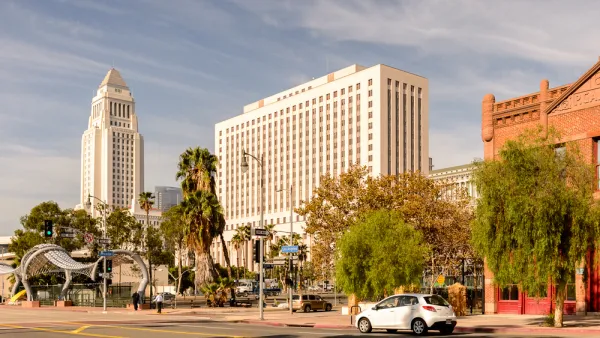
Sent A Strong Message, Los Angeles Leaders Respond With Planning Reforms
In the aftermath of the Measure S vote, members of the Los Angeles City Council have responded by pushing for expediting community plan updates and finding a sustainable source of funding for updating the region's plans.
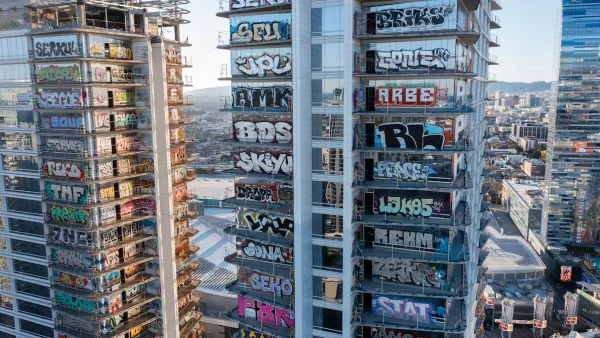
LA’s Abandoned Towers Loom as a “$1.2 Billion Ruin of Global Capital”
Oceanwide Plaza, shuttered mid-construction after its developer filed for bankruptcy, has stood vacant on prime Los Angeles real estate since 2019.

How L.A. Plans to Address Intersecting Issues of Homelessness and Open Space
In California, agencies are working to redefine enforcement and safety procedures as the number of homeless individuals who seek refuge in vulnerable open or wild landscapes continue to increase.

Planetizen Federal Action Tracker
A weekly monitor of how Trump’s orders and actions are impacting planners and planning in America.

Amtrak, CN end decades-long dispute with eight-year agreement
The new operating agreement establishes an updated framework for the companies to work together, including processes to resolve disputes.

Northwest rail fans eager for Sept. 30 debut of Amtrak’s Airo fleet
Get ready for that new train smell and more seats. But they won’t go faster or run more frequently on the Cascades route in Washington and Oregon.

LAX SkyLink opening delayed again, contractor won’t commit to new deadline
The project was supposed to open its doors to the public in 2023.

Caltrain may slash over one-third of its stations
If Bay Area voters reject two transit tax measures, Caltrain, BART and AC Transit will see steep service cuts.

A 'dangerous' precedent: North Carolina successfully pressures communities into voting for toll roads
Two mayors resigned from the Charlotte Regional Transportation Planning Organization after it voted in favor of the toll roads.

FREE Course: Walkable City 1: Why Walkability?
After describing his path towards focusing on walkability as the essence of good planning, Jeff Speck marches through his five principal reasons for making more walkable places.
Reinventing Malls: Planning Alchemy—Turning Gray Fields Into Gold
The course focuses on the opportunities and imperatives that shape reinvention of mall sites.

City of Thousand Oaks
City of Wisconsin Rapids
Harvard University Graduate School of Design
The Architects Foundation
University of Cincinnati Online
The Pocatello Development Authority
The Urban Renewal Agency of the City of Pocatello