The Brookings Institution mapped the proliferation of startup accelerators—an increasingly popular tool for economic growth.


As you might have heard, technology startups have become something of a hot item in economic development circles. Ian Hathaway describes how this dynamic of the new economy is playing out geographically:
A convergence of factors in information technology and capital markets have helped propel a boom in venture capital-backed startups in recent years. While well-established regions such as San Francisco-Silicon Valley, Boston-Cambridge, and New York account for the lion’s share of startup activity and funding, significant evidence suggests that a non-trivial amount of early stage capital is dispersing geographically throughout the United States.
According to Hathaway, the emergence of startup accelerators reflects the importance of technology startups to contemporary economic development strategies, defining these accelerators as entities that "support early-stage, growth-driven companies through education, mentorship, and financing in a fixed-period, cohort-based setting."
Hathaway provides additional information about how to distinguish accelerators from incubators, angel investors, and other kinds of startup-focused entities before providing a series of infographics to illustrate the widespread (i.e., beyond the Silicon Valley) adoption of the accelerator model.
Read the full story: Accelerating growth: Startup accelerator programs in the United States

Focus on Scale-Up, Not Start-Up
Jose Corona of Inner City Advisors urges: to truly transform local neighborhoods, we must shift our attention to invest in enterprise scale, not start-ups, as a long-lasting solution for creating good jobs.
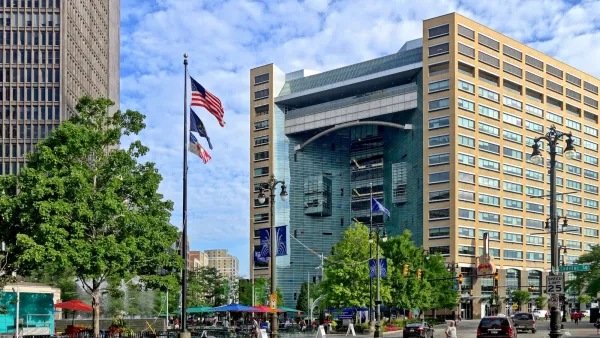
The nation's 10 'stickiest' downtowns
How often do residents visit your downtown?
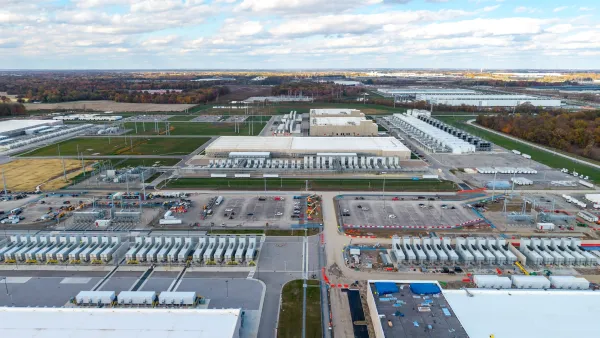
After the servers go dark
The rise and fall of communities with decommissioned nuclear facilities hold critical lessons for those considering hosting data centers.

Planetizen Federal Action Tracker
A weekly monitor of how Trump’s orders and actions are impacting planners and planning in America.

‘Going backwards:’ Baltimore mayor, students rally against state's transit funding plan
Maryland's proposed six-year plan provides no funding for Baltimore’s BMORE bus program and reduces its road maintenance funding.

Detroit to transform waterfront with $2.2 billion investment
Developers will convert about 18 acres of unused parking lot space into civic spaces.

HUD, USDA agree on framework to simplify housing environmental review standards
Their agreement is a requirement of the 21st Century ROAD to Housing Act.

Cost of water rising at a faster pace than inflation, median household income
California and Maryland residents have seen their water bills grow especially high.

NYC building owners overwhelmingly comply with new emissions limits
The New York City Department of Buildings is fining owners who did not file emissions reports.

FREE Course: Walkable City 1: Why Walkability?
After describing his path towards focusing on walkability as the essence of good planning, Jeff Speck marches through his five principal reasons for making more walkable places.
Reinventing Malls: Planning Alchemy—Turning Gray Fields Into Gold
The course focuses on the opportunities and imperatives that shape reinvention of mall sites.

planning NEXT
City of Thousand Oaks
City of Wisconsin Rapids
The Architects Foundation
University of Cincinnati Online
Northern Illinois Transit Authority (NITA)
The Pocatello Development Authority
The Urban Renewal Agency of the City of Pocatello