A new study has found that despite higher monetary incentives, most commuters won't ditch their cars as long as their parking remains free.


This year, following Congressional approval, individuals who take transit to work will now receive the same monetary benefit ($255 per month) as those who drive alone and park at their place of employment. Despite this change, a new study casts doubt on any impending shift in how people commute. Eric Jaffe of CityLab reports that the study conducted by TransitCenter found that people are only likely to shift commute modes when the monetary benefit is there and the free parking is taking away.
The TransitCenter study reflects research conducted by Andrea Hamre at Virginia Tech. Hamre research again found that free parking was enough incentive to make people commute alone to work.
When no subsidies are offered, 62.3 percent of people drive to work, as per the model. But when both parking and transit subsidies are offered, slightly more people take their car—63.8 percent. Slightly more people take transit, too, but fewer people carpool or walk or ride their bike, so on net traffic would be worse.
Removing free parking ultimately shifts more cars off the road, reducing congestion and as the Transit Center notes, freeing up "billions of dollars a year in tax revenue that could be used for other public services."
Read the full story: Commuters Don't Stop Driving to Work Unless You Take Away Free Parking
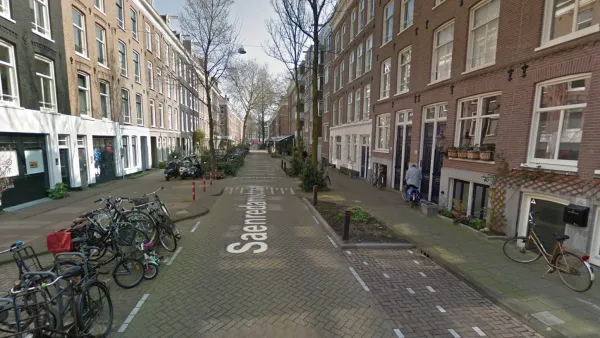
Watch: How to Remove Thousands of Parking Spaces
What the city of Amsterdam will gain by removing cars from on-street parking space.
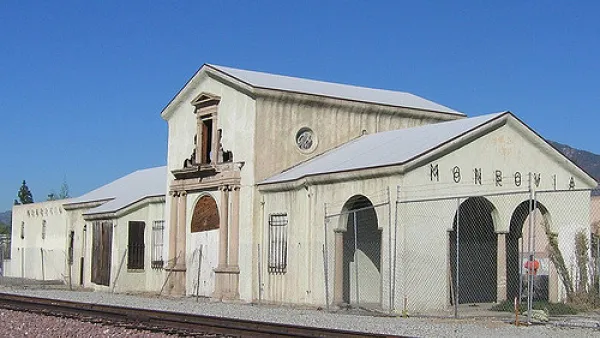
Light Rail Stations to Charge for Parking in Southern California's San Gabriel Valley
The popularity of the Gold Line extension in the San Gabriel Valley to the east of Pasadena requires a new approach to parking. It's hoped that parking fees will decrease demand for parking at stations along the route without affecting ridership.
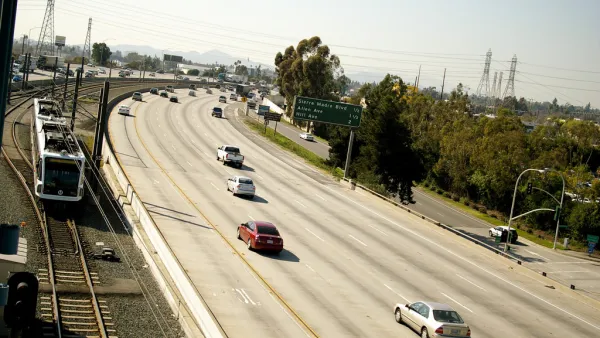
Parking Crunch Hits New Light Rail Station
The number of people parking at the new Gold Line light rail station in Azusa, California is outstripping the available supply of parking spaces, forcing many onto surrounding residential streets, which now has neighbors up in arms.

Planetizen Federal Action Tracker
A weekly monitor of how Trump’s orders and actions are impacting planners and planning in America.

Eastern Nebraska is running out of electricity
Data centers and electrification are straining eastern Nebraska’s grid, throttling economic development.

Move over, LA: St. Louis gears up for Olympics, invests millions in downtown redevelopment
The Missouri city will host the 2028 Olympic soccer group stage and knockout matches.

Dallas releases zoning code overhaul to officials
The drafted overhaul is over 400 pages long.

NYC renovations for dangerous, ‘mercilessly crammed’ street delayed until 2027
Construction was supposed to begin this fall.

San Diego’s Midway Rising project gets greenlight from city council
The project looks to become the largest affordable housing development in California's history.

FREE Course: Walkable City 1: Why Walkability?
After describing his path towards focusing on walkability as the essence of good planning, Jeff Speck marches through his five principal reasons for making more walkable places.
Reinventing Malls: Planning Alchemy—Turning Gray Fields Into Gold
The course focuses on the opportunities and imperatives that shape reinvention of mall sites.

City of Rosemead
Rutgers University, Edward J. Bloustein School of Planning and Public Policy
One Hundred Miles
University of Michigan School for Environment and Sustainability (SEAS)
Hunter College, City University of New York (CUNY)
The Architects Foundation
City of Cambridge
The Pocatello Development Authority
The Urban Renewal Agency of the City of Pocatello