Traditionally pro-transit organizations have come out against a proposal to create a new payroll tax to fund bus transit improvements.


Elliot Njus reports on a controversial new under consideration by the Oregon State Legislature.
Senate Bill 1521 would allow transit agencies that collect a payroll tax to also collect up to $1.85 per $1,000 in wages from employees. Rather than being paid by the employer, the new tax would be deducted from the employee's paycheck.
Njus adds: "The additional tax would be restricted to improving or maintaining bus service. It couldn't be used for other modes of transportation, such as light rail." Employers inside the area served by TriMet would be affected by the bill, along with areas served by transit agencies in Lane County, Wilsonville, Sandy, Canby, and South Clackamas.
Njus also provides insight into the political coalitions on either side of the bill's issues. Some traditionally pro-transit groups have already come out in opposition to the bill.
Michael Andersen followed that mainstream news coverage of the bill with an in-depth article for Bike Portland. Andersen provides additional details about how the tax would work, before noting the amount of funding it would create and the service capacity that funding would allow. Andersen also provides more ink to the opinions of the organizations opposing the bill, "because the tax would fall flatly on both rich and poor workers…"
Read the full story: Bill would let TriMet, other transit agencies tax employees' wages


New Details for Portland's Transit Plan as Voters Head to the Polls
Voters in Portland-area voters will decide on a transportation funding measure for the "Get Moving 2020" plan, with details of four bus rapid transit project targeted for funding announced within weeks of the election.
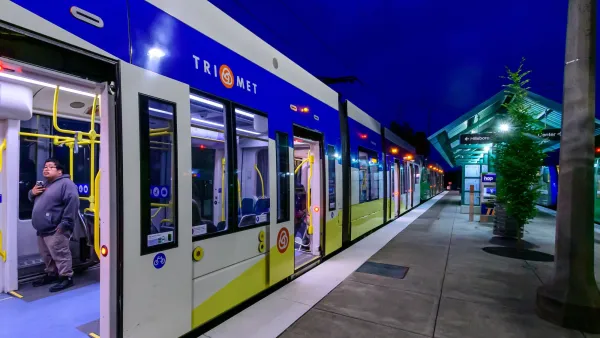
Portland transit announces deep service cuts, hundreds of layoffs
The TriMet agency is cutting service on multiple transit lines, reducing customer service phone hours and eliminating over 100 staff positions.

Portland Transit is About to Get a Lot Worse
TriMet is making multiple rounds of service cuts this year as the agency faces a $300 million budget shortfall.

Planetizen Federal Action Tracker
A weekly monitor of how Trump’s orders and actions are impacting planners and planning in America.

Data reveals that NYC’s bet on congestion pricing has paid off
After almost two years of the program, reports show positive impacts on traffic and air quality and no disruptions to parking.

HUD modernizes 50-year-old manufactured housing framework
The Next Generation Manufactured Housing Action Plan establishes new energy-efficiency standards for manufactured homes, and new guidelines for anchoring them.

Small single-family homes are illegal in most of MA. Voters can change that
Most land zoned for single-family housing in Massachusetts requires at least 40,000 square feet of land per house.

Public steps inside U.S.’s first battery-powered train
Metra’s groundbreaking train feature modern seats and a futuristic battery car.

Companies show off AI technology, new innovation hubs at APTA Expo
Nearly 700 companies attended the American Public Transportation Association’s Expo last week, which happens once every three years.

FREE Course: Walkable City 1: Why Walkability?
After describing his path towards focusing on walkability as the essence of good planning, Jeff Speck marches through his five principal reasons for making more walkable places.
Reinventing Malls: Planning Alchemy—Turning Gray Fields Into Gold
The course focuses on the opportunities and imperatives that shape reinvention of mall sites.

One Hundred Miles
County of Mendocino
planning NEXT
The Architects Foundation
University of Cincinnati Online
Montrose County
Northern Illinois Transit Authority (NITA)
The Pocatello Development Authority