A map-making effort by The Washington Post's Wonkblog puts the Western United States' population, or lack thereof, in perspective.



"I don't know about you, but I'm a sucker for those maps that show the crazy geographic concentration of things like wealth and population," begins a recent post. He clearly wasn't talking to us at Planetizen because then he would know that we are a sucker for those maps that show crazy geographic concentration of things like wealth and population.
The map Ingraham shared with his audience on this occasion is meant to illustrate the "jaw-dropping emptiness of America." Sourced from Reddit, the original map shows "the enormous chunk of land where only 1 percent of the population lives." Ingraham updated the map for a bit more legibility and with the 2014 population numbers from the U.S. Census.
Ingraham provides a few different ways of putting the data shown on the map in perspective, in addition to offering one very specific mark of distinction:
The least-populated place in the United States is Alaska's Yukon-Koyukuk Census Area. At over 145,000 square miles, it's larger than New York, Pennsylvania, Maryland and Virginia -- combined. But it's home to only 5,547 people, for a population density of fewer than 4 people every 100 miles.
Read the full story: Look at the jaw-dropping emptiness of America
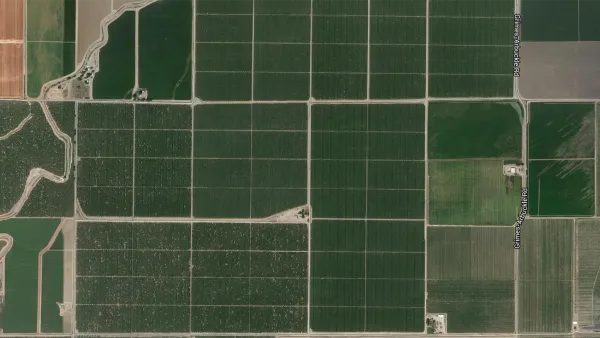
Facebook AI Maps Population Density
Facebook expects to release its worldwide maps of human density in the coming months—potential applications will likely be somewhere on the spectrum between humanitarian and commercial.
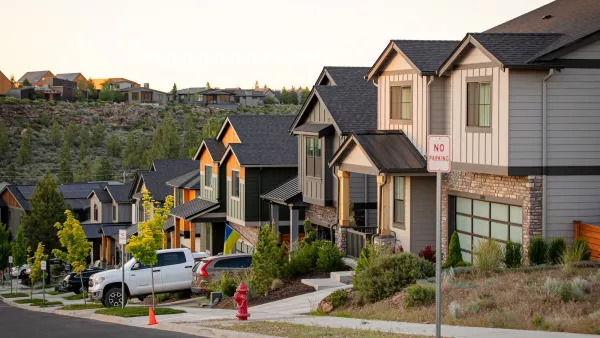
Oregon cities are excluding a key tool that could help their housing goals: maps
An effort to use geospatial analysis to understand how housing and access to opportunity are distributed in Oregon cities has largely stalled.
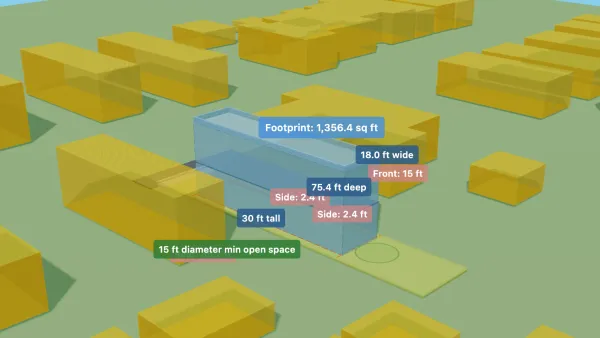
Interactive, 3D Chicago Zoning Map Lets You Visualize Potential Development
A new tool creates a visual model of potential development on Chicago lots based on the property’s specific zoning regulations.

Planetizen Federal Action Tracker
A weekly monitor of how Trump’s orders and actions are impacting planners and planning in America.
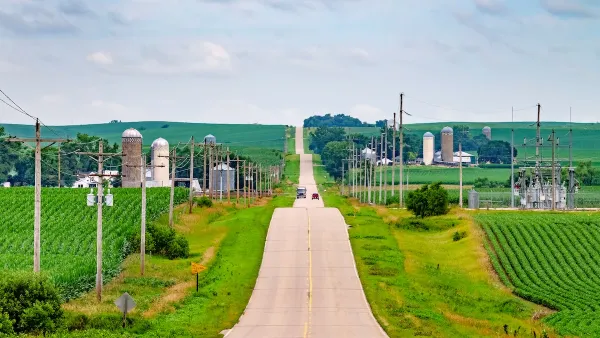
Eastern Nebraska is running out of electricity
Data centers and electrification are straining eastern Nebraska’s grid, throttling economic development.
Washington state to charge fee to drivers with fuel-efficient cars
Revenue from the fee will go towards supporting the state’s highways.

How a Massachusetts city used laser beams to find the root of its tree loss
Cambridge discovered that the most tree loss was occurring on residential lots rather than city-owned property.

Instead of building new housing, LA developers are turning mansions into mega-mansions
In the richest areas, the number of houses valued at $30 million with demolition permits has skyrocketed since 2018.

Illinois considers spending $1 billion in taxpayer money on data center
A quantum computing campus and data center are currently under construction in Chicago.

FREE Course: Walkable City 1: Why Walkability?
After describing his path towards focusing on walkability as the essence of good planning, Jeff Speck marches through his five principal reasons for making more walkable places.
Reinventing Malls: Planning Alchemy—Turning Gray Fields Into Gold
The course focuses on the opportunities and imperatives that shape reinvention of mall sites.

City of Charlotte
City of Rosemead
Rutgers University, Edward J. Bloustein School of Planning and Public Policy
University of Michigan School for Environment and Sustainability (SEAS)
Hunter College, City University of New York (CUNY)
The Architects Foundation
University District Partnership
City of Cambridge
The Pocatello Development Authority