Compared to other countries, building mass transit in the United States has proven significantly more expensive. But why? And how do we fix this?


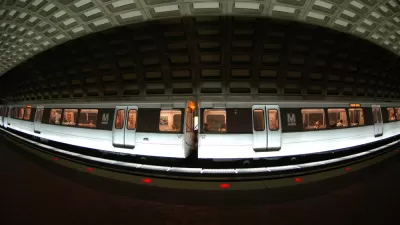
Why does it cost more to build a subway line in New York City than Paris or Tokyo, both dense, expensive cities? John Ricco asks the questions in the Greater Greater Washington blog, trying to identify what it is about the United States that makes building mass transit here so expensive. Ricco lists a number of possible culprits that lead to greater costs, from lawsuits and union rules, to inexperienced municipalities and the over engineering of station designs.
While it may be hard to narrow down the reason to one or two factors, the implications for higher costs are significant.
One major downside to having a cost problem is that it can be used as an ad-hoc justification to kill transit projects…
If your costs are five times higher than what they should be, that means you're potentially getting five times less transit than what's possible. If the Silver Line's costs were more in line with international standards, we'd have billions left over that could be spent on improving Metro.
Read the full story: If we lowered transit construction costs, we could build more transit

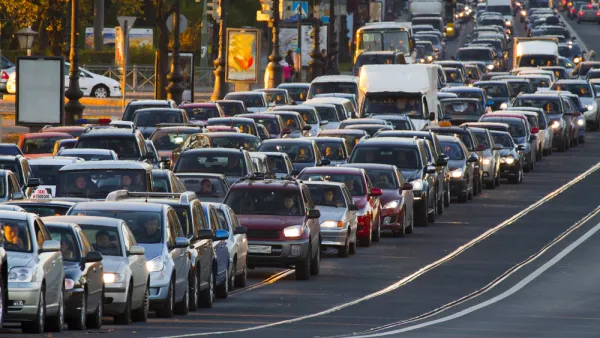
It’s Time to Embrace Congestion Pricing
Charging based on demand and for access is commonplace—except on roads.
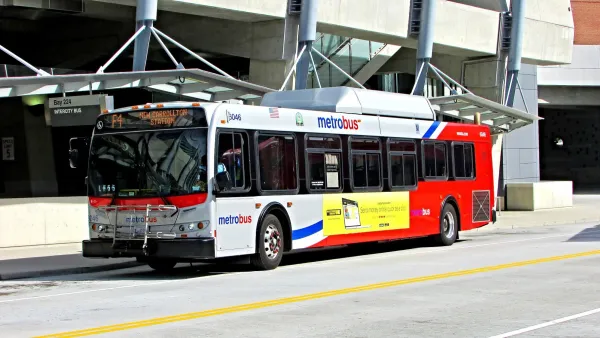
D.C.-Area Residents Want Bus Lanes and Free Transfers, Survey Shows
New survey findings identify transit priorities among residents in D.C. and surrounding areas, and indicate broad support for public investments.
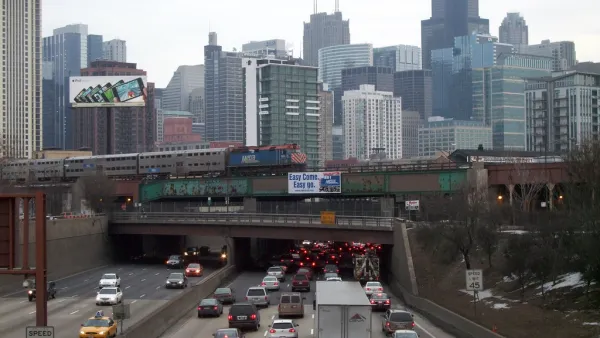
The Best Cities for Public Transit
Redfin released its updated transit scores for 2019 and, while there’s little change in the ranking, cities like D.C. and New York did see changes in their scores.

Planetizen Federal Action Tracker
A weekly monitor of how Trump’s orders and actions are impacting planners and planning in America.

Amtrak, CN end decades-long dispute with eight-year agreement
The new operating agreement establishes an updated framework for the companies to work together, including processes to resolve disputes.

Judges permit Denver to divert 77,000 acre feet from the Colorado River for reservoir expansion
Overuse and climate change have caused the Colorado River’s water levels to plummet.

NYC DOT wants faster, more permanent street upgrades
The city is examining ways to build more concrete infrastructure without getting entangled in 'decades-long' projects.

'Something we’ve never seen before:' rising utility rates could strain city finances nationwide
Data centers, climate change and other factors have caused utility rates in the United States to increase by 38% since 2020.

Trump to overrule local leaders, lease millions of acres of America’s Pacific Island territories’ seafloors to mining companies
International law says that the Indigenous people of America’s territories have a right to prior and informed consent regarding projects that impact their countries.

FREE Course: Walkable City 1: Why Walkability?
After describing his path towards focusing on walkability as the essence of good planning, Jeff Speck marches through his five principal reasons for making more walkable places.
Reinventing Malls: Planning Alchemy—Turning Gray Fields Into Gold
The course focuses on the opportunities and imperatives that shape reinvention of mall sites.

Harvard University Graduate School of Design
KFH Group Inc.
Greater Baltimore Committee
The Architects Foundation
University of Cincinnati Online
The Pocatello Development Authority
The Urban Renewal Agency of the City of Pocatello