Federal regulators might have killed a proposal that would have built the tallest skyscraper on the West Coast in the city of Seattle.


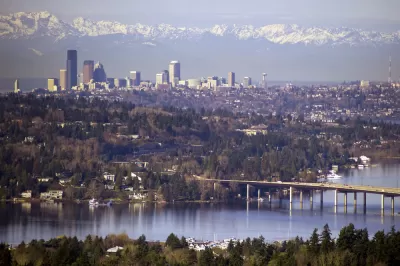
"The Federal Aviation Administration has sent a 'notice of presumed hazard' to the developer who has proposed to build a 102-story building at Fourth Avenue and Columbia Street in downtown Seattle," reports Marc Stiles.
The notice argues that the proposed tower would obstruct operations at Boeing Field. A shorter construction crane could also "interfere with helicopter flights to and from Harborview Medical Center," according to Stiles.
The notice also gave the project's developer, Miami-based Crescent Heights Inspirational Living, a path toward completion of the project: choosing a project alternative that would top the building out at 965 feet tall. The current tallest building on the West Coast is the U.S. Bank Tower in Los Angeles, which stands 1,018 feet tall.
Read the full story: FAA says proposed 102-story tower is too tall

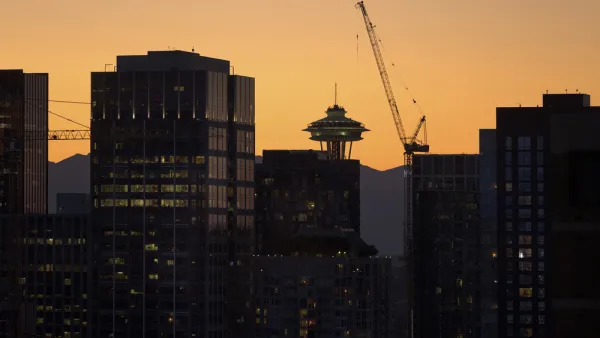
Tracking the Skyward Progress of Western U.S. Cities
A Washington Post feature analyzes the changing skylines of cities from the Rocky Mountains to the Pacific Ocean.
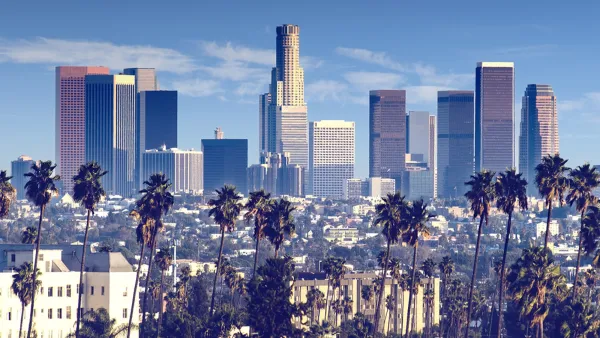
West Coast Cities Redefining Height With Batch of New Skyscrapers
The title of tallest building west of the Mississippi, property of the U.S. Bank Tower in Los Angeles since 1989, will soon go to another building. What does that say about the post-recession of West Coast cities?
Zoning Changes Bring Good and Bad in Downtown Seattle
Zoning changes in downtown Seattle have created a more dense area, as was intended. But the zoning changes are also bringing some unintended consequences.

Planetizen Federal Action Tracker
A weekly monitor of how Trump’s orders and actions are impacting planners and planning in America.

Amtrak, CN end decades-long dispute with eight-year agreement
The new operating agreement establishes an updated framework for the companies to work together, including processes to resolve disputes.

Judges permit Denver to divert 77,000 acre feet from the Colorado River for reservoir expansion
Overuse and climate change have caused the Colorado River’s water levels to plummet.

NYC DOT wants faster, more permanent street upgrades
The city is examining ways to build more concrete infrastructure without getting entangled in 'decades-long' projects.

'Something we’ve never seen before:' rising utility rates could strain city finances nationwide
Data centers, climate change and other factors have caused utility rates in the United States to increase by 38% since 2020.

Trump to overrule local leaders, lease millions of acres of America’s Pacific Island territories’ seafloors to mining companies
International law says that the Indigenous people of America’s territories have a right to prior and informed consent regarding projects that impact their countries.

FREE Course: Walkable City 1: Why Walkability?
After describing his path towards focusing on walkability as the essence of good planning, Jeff Speck marches through his five principal reasons for making more walkable places.
Reinventing Malls: Planning Alchemy—Turning Gray Fields Into Gold
The course focuses on the opportunities and imperatives that shape reinvention of mall sites.

Harvard University Graduate School of Design
KFH Group Inc.
Greater Baltimore Committee
The Architects Foundation
University of Cincinnati Online
The Pocatello Development Authority
The Urban Renewal Agency of the City of Pocatello