East Portland is home to 25 percent of the city's residents—many of which are low-income or immigrants. The East Portland Action Plan aims to protect the community as a wave of gentrification approaches.


According to an article by Andrew Theen, residents of east Portland are mobilizing in the face of the city's red-hot rental market and record low vacancy rates. "In emotional testimony Monday, immigrants, low-income residents and advocates said Portland's leaders can and must do more to ensure that they aren't pushed out of their neighborhoods and the city itself as gentrification moves east," according to Theen.
The mobilization has an official vessel, in the form of the "East Portland Action Plan"—a city-funded project to generate a list of proposed policy actions. Policy recommendations include: 1) homeowner protections and new homeownership opportunities, such as co-ops, 2) increased renter protections, 3) ending the statewide ban on inclusionary zoning and allowing density bonuses, 4) broadening the practice of community benefit deals for development projects, and 5) focusing economic development projects in the area. A full list of recommendations is also available online [pdf].
The article includes additional background on a variety of the residents that participated in the East Portland Action Plan Process.
Hat tip to Kelsey E. Thomas at Next City for sharing the article.
Read the full story: East Portlanders see gentrification coming, call for action
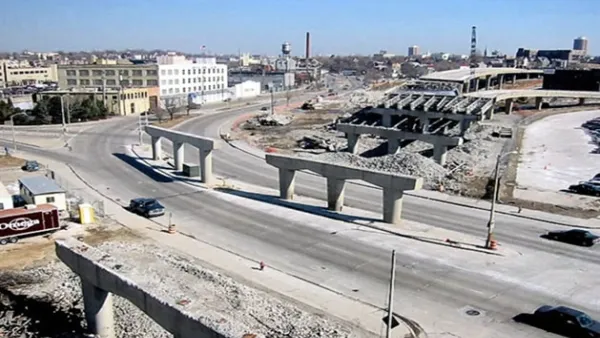
Bridging Divides: The Crucial Role of Collaboration in Highway Removal
Highway removal is most successful when agencies at all levels of government work closely with each other and the impacted community.
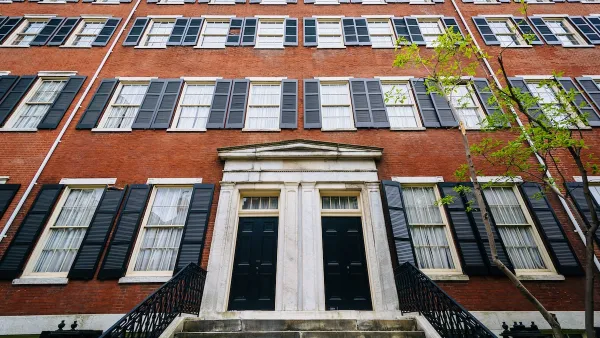
Philly Residents Push Back on New Historic Preservation District
Some residents of Philadelphia’s newly designated Washington Square West Historic District say the community was left out of the decision-making process that could impact housing costs and building requirements.

Kids and Urbanization
The question of whether there is space for children in rapidly changing cities was under investigation in two recent studies with somewhat contradictory findings.

Planetizen Federal Action Tracker
A weekly monitor of how Trump’s orders and actions are impacting planners and planning in America.

Washington state to charge fee to drivers with fuel-efficient cars
Revenue from the fee will go towards supporting the state’s highways.
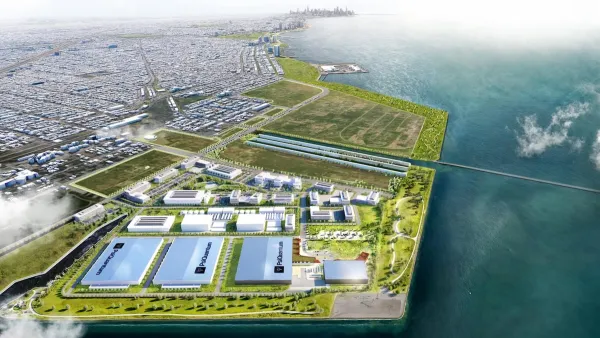
Illinois considers spending $1 billion in taxpayer money on data center
A quantum computing campus and data center are currently under construction in Chicago.

Senate passes bill overhauling permitting
The bill still needs to pass the House.

Did data centers change how voters cast their ballots?
Texas, Ohio, and Georgia all flipped party control. But in rural counties, the effect of local data centers was mixed.

Amtrak invests in eight new Airo trainsets
The new trainsets will begin serving passengers in 2031.

FREE Course: Walkable City 1: Why Walkability?
After describing his path towards focusing on walkability as the essence of good planning, Jeff Speck marches through his five principal reasons for making more walkable places.
Reinventing Malls: Planning Alchemy—Turning Gray Fields Into Gold
The course focuses on the opportunities and imperatives that shape reinvention of mall sites.

City of Charlotte
City of Rosemead
Rutgers University, Edward J. Bloustein School of Planning and Public Policy
University of Michigan School for Environment and Sustainability (SEAS)
Hunter College, City University of New York (CUNY)
The Architects Foundation
University District Partnership