Out of sheer necessity, the state of California has embarked on a new process for regulating the use of groundwater.


Tim Hearden reports on the "first milestone in carrying out groundwater regulations passed by lawmakers last year." Those new regulations are the result of the Sustainable Groundwater Management Act, "a package of bills passed by the Legislature and signed by Gov. Jerry Brown last fall."
The milestone of concern a year after the Sustainable Groundwater Management Act was signed: the creation of a mechanism "to resolve discrepancies over the boundaries of basins that will be affected by the new rules." The need for such a mechanism implies just how much work is left to be done in settling the new groundwater regime in this drought-stricken state. Identifying basins and sub-basins was one of the major provisions of the bill.
Hearden also offers more details about the package of bills, including a requirement for "local groundwater management agencies to be set up by 2017, sustainability plans for overdrafted basins to be in place by 2020, plans for other high- and medium-priority basins to be established by 2022 and sustainability in all high- and medium-priority basins to be achieved by 2040…"
Read the full story: Calif. reaches first milestone in crafting groundwater regulations
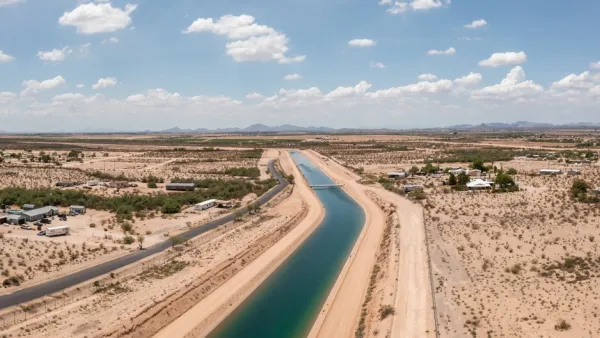
Arizona Governor Takes Steps to Modernize Water Policy
A newly released report warns of rapidly dwindling groundwater resources as developers plan to build hundreds of thousands of new homes.
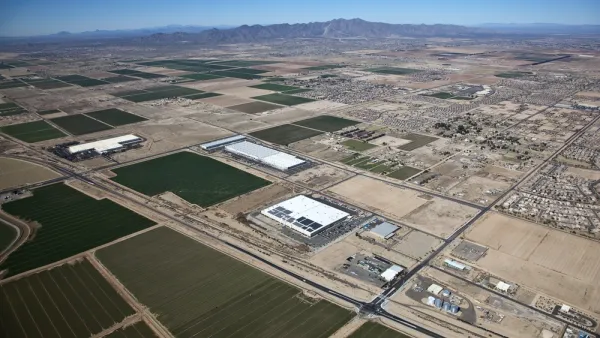
Arizona Tapping Groundwater to Fuel Suburban Growth
Critics say Arizona’s growth patterns are unsustainable and dangerous, given the depleted Colorado River and the state’s deepening reliance on groundwater.
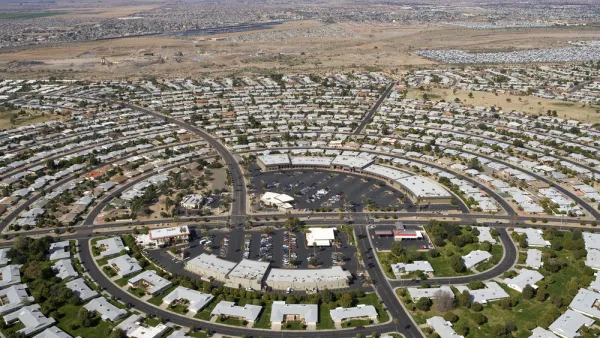
Arizona’s Growth Threatens Water Supplies
New communities are popping up across Arizona’s desert, evading water consumption restrictions and straining the state’s groundwater supplies.

Planetizen Federal Action Tracker
A weekly monitor of how Trump’s orders and actions are impacting planners and planning in America.

California plans to bury El Niño’s downpour
If the state plays its cards right, it may be able to store a billion acre-feet of El Niño’s water in aquifers.

Desperate measures: Advocates weigh draining Lake Powell to fill Colorado River
Draining the reservoir could reduce evaporation losses by a couple hundred thousand acre-feet.

Chicago voters approve permanent festival grounds, penalty for vacant property owners
Currently, major summer and fall festivals take over public parks for weeks at a time, drawing criticism from nearby residents

NYC votes to cut outdoor dining red tape, speed up permitting
New York City also voted to allow the Department of Transportation to begin work on urgent projects before notifying elected officials.

California appears to reject Prop. 45
The proposition would have expanded the projects that qualify for a streamlined environmental review, effectively paring down the California Environmental Quality Act.

FREE Course: Walkable City 1: Why Walkability?
After describing his path towards focusing on walkability as the essence of good planning, Jeff Speck marches through his five principal reasons for making more walkable places.
Reinventing Malls: Planning Alchemy—Turning Gray Fields Into Gold
The course focuses on the opportunities and imperatives that shape reinvention of mall sites.

City of Rosemead
Rutgers University, Edward J. Bloustein School of Planning and Public Policy
One Hundred Miles
Hunter College, City University of New York (CUNY)
The Architects Foundation
University of Cincinnati Online
City of Cambridge
Montrose County
The Pocatello Development Authority