Without designated industrial zones, New York manufacturing companies risk losing their facilities to the residential development market. The de Blasio administration has promised some zoning protections for industrial enclaves.



After a 22-month wait, New York City manufacturing companies have the mayor's assurances that the zoning code will protect them. This editorial argues that manufacturing jobs can offer high compensation to workers. "But one thing they do need help with is space. These businesses are perfectly happy to compete with each other, but in a fight for real estate with apartment and hotel developers, they are toast."
The proposed rules severely limit or restrict residential and hospitality uses in designated areas. From the editorial: "That it came a year and a half after the mayor's housing plan says a lot about his priorities, but the policymaking, while tedious, was solid." See here for more on New York's ongoing debate over where to zone for much-needed housing.
Emphasis will be placed on retaining high-tech, high-skill manufacturers. "The city will develop zoning to accommodate the so-called innovation economy—smaller, modern, tech-oriented businesses with different needs from the heavy industry of yesteryear."
Read the full story: Industrial businesses should find city's zoning plan worth the wait
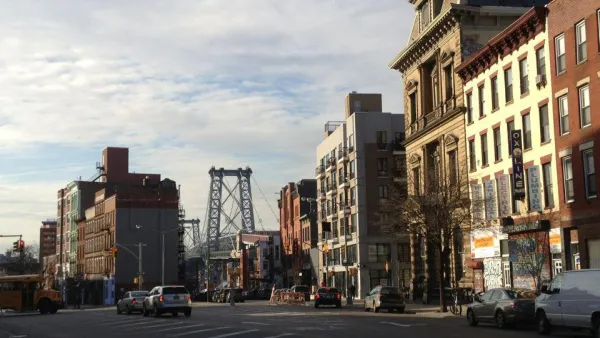
Zoning to Protect Manufacturing in N.Y.C.
Development in industrial areas is pushing out manufacturers, but new zoning regulations could help control the incursion.

Manhattan Community Group Resists 'Super Tower'
Plans for an 800-foot tower have attracted well-funded opposition from a community group. Its campaign to regulate the structure's height has spiraled into a big fight.

Neighborhoods Push for Benefits in New York Zoning Plan
The Brooklyn neighborhood of Gowanus was recently added to Mayor de Blasio’s sweeping zoning reform plan. But Gowanus also has plans of its own.

Planetizen Federal Action Tracker
A weekly monitor of how Trump’s orders and actions are impacting planners and planning in America.

Eastern Nebraska is running out of electricity
Data centers and electrification are straining eastern Nebraska’s grid, throttling economic development.

Study reveals best places in the U.S. for cycling, walking
New research from Streetlight Data examines bicycle and pedestrian miles per capita in the 100 largest U.S. cities by population.

Developers reveal $10 billion stadium plan as ‘Hail Mary’ to keep Bears in Chicago
The plan would also boast a public park, high- and mid-rise buildings and a youth sports complex.

As Texas embraces carbon storage, a Black community questions the risks
Texas now issues permits for companies to store carbon dioxide underground. East Texas residents fear safety risks, and skeptics doubt the climate benefits.

New BLM proposal would slash public comment periods, environmental protections
The proposed rewrite would also strip legal leverage from Tribal nations and state governments.

FREE Course: Walkable City 1: Why Walkability?
After describing his path towards focusing on walkability as the essence of good planning, Jeff Speck marches through his five principal reasons for making more walkable places.
Reinventing Malls: Planning Alchemy—Turning Gray Fields Into Gold
The course focuses on the opportunities and imperatives that shape reinvention of mall sites.

City of Rosemead
Rutgers University, Edward J. Bloustein School of Planning and Public Policy
One Hundred Miles
University of Michigan School for Environment and Sustainability (SEAS)
Hunter College, City University of New York (CUNY)
The Architects Foundation
City of Cambridge
The Pocatello Development Authority
The Urban Renewal Agency of the City of Pocatello