An investigation of passenger complaints provides the starting point for an in-depth investigation of the service provided by Florida's largest transit system.


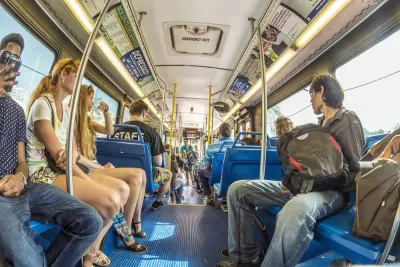
Douglas Hanks shares the findings on an investigation by the Miami Herald into customer complaints about the Miami-Dade Metrobus system. Requesting all complaints from bus passengers since the start of 2014, Hanks reports that through July of 2015, "there were nearly 27,000 [complaints] registered via email, online and call center. That’s roughly 47 per day, offering the most detailed look available at what irks, enrages and horrifies the system’s 210,000 daily passengers."
Among the complaints are horror stories involving cockroaches, a driver eating out of a cup with a spoon while operating the bus, and a bus route that routinely arrives 45 minutes late to deliver one man to work.
The Miami-Herald has also created an interactive database of "Bus Gripes," where interested transit observers can sort through specific complaints and compare the rating achieved by each of the system's routes.
Mayor Carlos Gimenez, who is up for re-election next year, "has pledged to usher in an era of cleaner and more efficient buses," according to Hanks. But critics of the mayor credit years of chronic underfunding for the current state of the system. Hanks also provides these details about Gimenez's goals for transit funding: "Gimenez restored Transit’s increase this year but has also pledged to end the agency’s current $100 million operating subsidy from transportation taxes by 2020. Backed by a county oversight board and other leaders who endorse the shift, Gimenez wants the operation subsidies spent on Transit projects included in the 2002 [sic] plan. The county’s budget forecasts hinge on an expanding economy should providing enough dollars in transit to make up for the lost sales tax money."
The article includes a lot more, in-depth reporting on the state of the system and the politics of transportation in Miami.
Read the full story: On the bus in Miami-Dade, and not happy about it

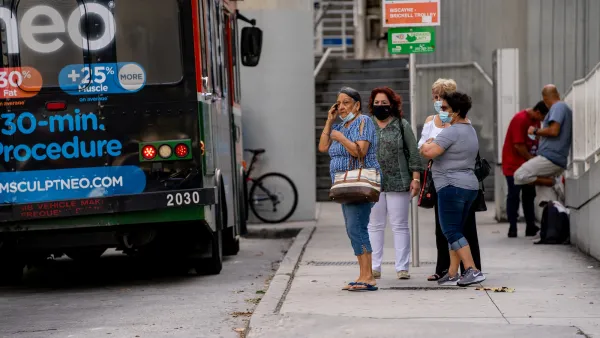
Miami promised a 'Better Bus Network.' Riders say it hasn't delivered.
Ridership on Miami-Dade Transit dropped by 2%-10% every month between October and December 2025.
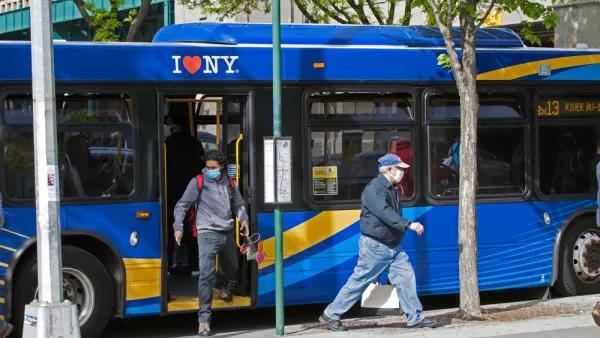
All-Door Boarding Stuck in Neutral in New York City
MTA leadership has decided all-door boarding will lead to fare evasion and isn’t willing to adopt a program that was already well underway.
Can New York Legislators Make Buses Free While Improving Service?
A pair of state legislators hope to make buses free while improving service levels on the Metropolitan Transportation Authority’s (MTA) bus system in New York City. The effort will require a new level of political will for transit.

Planetizen Federal Action Tracker
A weekly monitor of how Trump’s orders and actions are impacting planners and planning in America.

The state-sanctioned urbicide of Austin
People don’t kill cities. Freeways do.

US to reduce Colorado River water deliveries to Mexico
A new Colorado Treaty amendment reduces Mexico’s Colorado River water allocation by 250,000 acre feet.

Nation's most wind-powered state turns to coal as data centers increase energy demand
For the first time in decades, Iowa has increased its generation of coal power.

NYC cools commuters with city's first rain garden above a bus stop
New York City officials say the plants in the rain garden can absorb 16 gallons of rainwater during heavy storms.

Brightline West’s future may rely on $6 billion federal loan
The company has until Nov. 2 to make a $400 million equity investment into its proposed high-speed rail line.

FREE Course: Walkable City 1: Why Walkability?
After describing his path towards focusing on walkability as the essence of good planning, Jeff Speck marches through his five principal reasons for making more walkable places.
Reinventing Malls: Planning Alchemy—Turning Gray Fields Into Gold
The course focuses on the opportunities and imperatives that shape reinvention of mall sites.

Eagle County Government
Harvard University Graduate School of Design
Nashville Planning Department
The Architects Foundation
University of Cincinnati Online
The Pocatello Development Authority
The Urban Renewal Agency of the City of Pocatello
Journal of the American Planning Association