London Mayor Boris Johnson has tabled strict air-pollution controls until 2020 despite evidence of increasing pollution levels in the city's center.


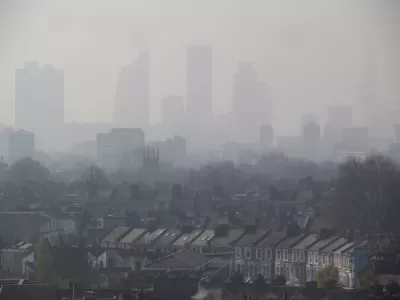
Christine L. Corton writes in The New York Times about the potential return of London's infamous pea-soup fog—a combination of natural fog and "sulfur-laden smoke" from industrial chimneys and home coal fires. The culprit this time appears to come from car exhaust.
…after several decades of cleaner air, we seem to be sliding back. Motor vehicles are now the main cause of air pollution, and campaigners are trying to create some urgency around the debate to reduce car emissions. But people are as wedded to cars now as they were tied to their open fires a century or more ago.
The last recorded case of London’s "great yellow fog" was in 1962, following the adoption of a clean Air Act in 1956 that required residents to switch from coal to cleaner sources of energy, such gas or electricity. The Clean Air Act arose after a 1952 incident, which Corton describes as a "great killer fog" that lasted five days and resulted in the deaths of an estimated 4,000 people.
Read the full story: The Return of London’s Fog
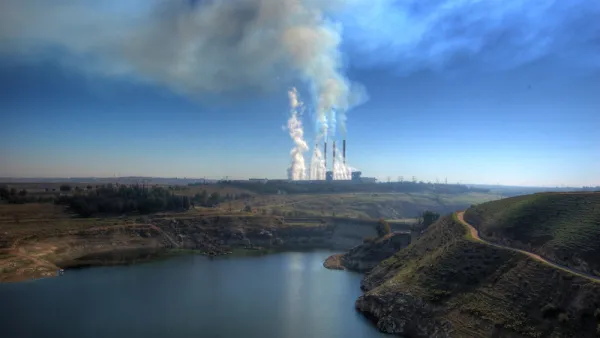
The Trump Administration's Environmental Policies Have Consequences for Black Lives
A Trump administration decision not to tighten Clean Air Act restrictions on soot pollution will have more consequences for Black Americans.
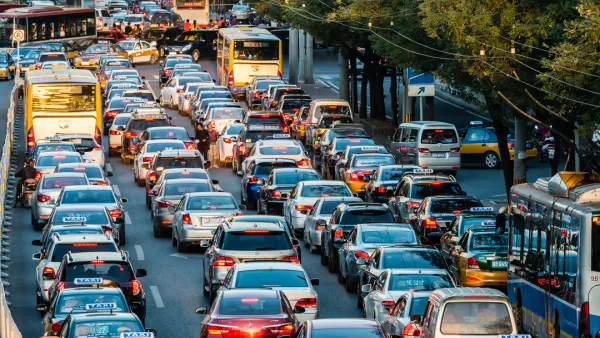
Cities Have Tried to Rein in Cars, and the Results Have Been Mixed
Vehicle pollution is making cities around the world unlivable. Some cities have taken steps to curb auto use and emissions, with varying levels of success.
Poverty and Pollution Blowing East
A new study shows how pollution and poverty can create a persistent cycle in poor neighborhoods.

Desperate measures: Advocates weigh draining Lake Powell to fill Colorado River
Draining the reservoir could reduce evaporation losses by a couple hundred thousand acre-feet.

Eastern Nebraska is running out of electricity
Data centers and electrification are straining eastern Nebraska’s grid, throttling economic development.

Move over, LA: St. Louis gears up for Olympics, invests millions in downtown redevelopment
The Missouri city will host the 2028 Olympic soccer group stage and knockout matches.

‘No clear next steps’ for Chicago's permanent festival grounds
Eleventh Ward Ald. Nicole Lee has suggested Soldier Field as a possible location for the permanent event space.

California, Hawaii, Rhode Island approve housing propositions
Hawaii and Rhode Island each approved their sole proposition, while California approved two of its three.

Officials claim feds 'rushed' Amtrak environmental review
Amtrak plans to move their Chicago maintenance facility from an industrial area to a residential one.

FREE Course: Walkable City 1: Why Walkability?
After describing his path towards focusing on walkability as the essence of good planning, Jeff Speck marches through his five principal reasons for making more walkable places.
Reinventing Malls: Planning Alchemy—Turning Gray Fields Into Gold
The course focuses on the opportunities and imperatives that shape reinvention of mall sites.

City of Rosemead
Rutgers University, Edward J. Bloustein School of Planning and Public Policy
One Hundred Miles
University of Michigan School for Environment and Sustainability (SEAS)
Hunter College, City University of New York (CUNY)
The Architects Foundation
City of Cambridge
Montrose County
The Pocatello Development Authority