Prop. 1, a quarter-cent sales tax that would benefit public transit in Wasatch Range counties, passed in 10 counties but was defeated in seven, including the populous Salt Lake County where supporters have yet to concede due to the narrow loss.


The Utah Transportation Coalition was "pleased with the success of Prop 1 in Carbon, Davis, Duchesne, Grand, Rich, San Juan, Sanpete, Sevier, Tooele and Weber Counties," according to a "thank you" message on their website. [That's 10 counties.] "We’re disappointed that residents in Beaver, Box Elder, Juab, Morgan, Uintah and Utah Counties will not benefit from the transportation improvements provided by Prop 1." [Six counties]
The 17th county, Salt Lake, is home to Salt Lake City and the county seat, and offers the most transit services.
Lee Davidson, transportation reporter for The Salt Lake Tribune, writes that the proposition "went down to apparent defeat by a razor-thin 50.9 percent to 49.1 percent margin, according to the final unofficial tally on election night. Supporters were not willing to concede defeat, noting that late-arriving votes by mail still could reverse that result."
"We're down by about 2,600 votes," and thousands of ballots could still be counted, said Abby Albrecht, campaign director for the pro-Prop 1 Utahns for Responsible Transportation Investments. "We still have hope."
"Sandy Mayor Tom Dolan, a strong supporter of Prop 1 [and recipient of Utah APA 2002 Citizen Planner Award], said controversy over the Utah Transportation Authority [sic] likely brought down the proposition in Salt Lake County," writes Davidson. Planetizen has two very positive posts on UTA, the transit authority which services seven counties of the Wasatch Front (per Wikipedia); one on bicycling, the other on rail.
Along the Wasatch Front, 40 percent of Prop 1 money, by law, would go to the UTA. Another 40 percent would go to cities and unincorporated area service districts for local roads, trails, bike paths, sidewalks and similar projects. Twenty percent would go to counties for projects of regional significance.
Dolan said most residents supported the part of Prop 1 that would help local roads, "but the campaign against UTA had a strong effect on the turnout" and in votes against the proposition.
Of the five other UTA-serviced counties that voted on Prop. 1, it passed in Davis, Tooele, and Weber, and failed in Box Elder and Utah.
"Interestingly, the Koch brothers-backed group Americans for Prosperity came out against Prop 1, a tell-tale sign that on balance, the measure was good for transit," writes Angie Schmitt of Streetsblog USA in a post-election analysis that includes Seattle and Texas.
However, Americans For Prosperity did not put up any funds against the measure in Salt Lake County, while proponents spent $675,000, according to Davidson.
"The UTA Board committed to use its share of Prop 1 money primarily to expand bus service, including more frequency, longer service hours and more weekend service," adds Davidson.
The legislation enabling Prop. 1 was created by the same legislation that will increase the gas by a nickel effective January 1.
Hat tip to Angie Schmitt.
FULL STORY: Prop 1 » Tax hike for transportation hits rough road, appears dead in S.L. County

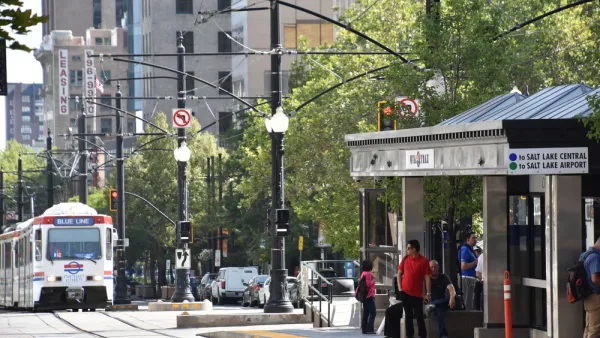
Service Redesign Proposed by Utah Transit Authority
The Utah Transit Authority is proposing a new approach to transit service design for the counties on the Wasatch Front, focusing changes on a "core route network" of frequent service.
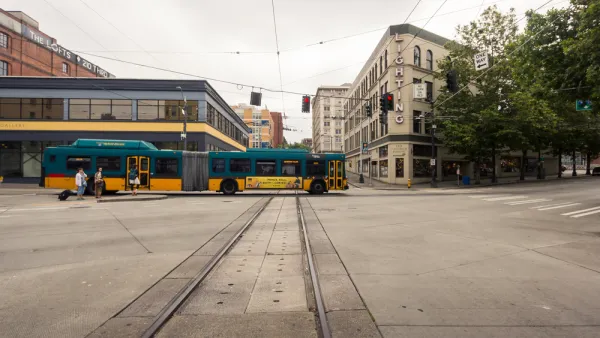
Transit Spending on the Ballot in Seattle and Washington
Voters in the city of Seattle will consider a sales tax to fund bus transit service, while voters around the state of Washington will have a chance to send new leaders to Congress.
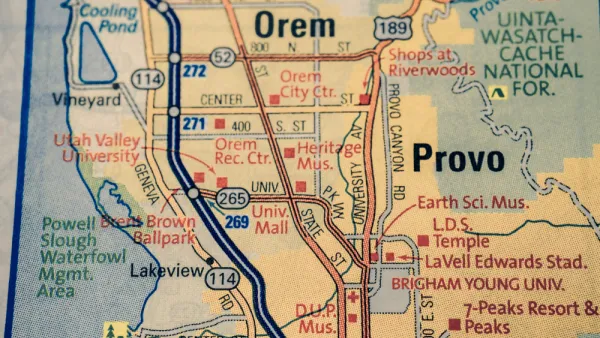
Provo Bus Will Be Free for Three Years
A federal grant meant to reduce congestion will make bus travel from Provo to Orem free until 2021.

Planetizen Federal Action Tracker
A weekly monitor of how Trump’s orders and actions are impacting planners and planning in America.

The state-sanctioned urbicide of Austin
People don’t kill cities. Freeways do.

US to reduce Colorado River water deliveries to Mexico
A new Colorado Treaty amendment reduces Mexico’s Colorado River water allocation by 250,000 acre feet.

Mamdani overhauls NYC's Vision Zero plan with 100 new policy goals
The overhaul aims to reduce traffic deaths and make streets safer for pedestrians, cyclists and drivers through lower speed limits, new safety infrastructure and more.

Amtrak not solely to blame for New Jersey commuter rail's unreliability, report finds
A new study from the Garden State Initiative found that NJ Transit’s budget grew 20% across a 4 year period, but reliability declined significantly over the same period.

EPA erases limits on planet-warming pollution from power plants
Under Monday’s plan, power plants would still have some limits on how much mercury, arsenic and other contaminants they can emit.

FREE Course: Walkable City 1: Why Walkability?
After describing his path towards focusing on walkability as the essence of good planning, Jeff Speck marches through his five principal reasons for making more walkable places.
Reinventing Malls: Planning Alchemy—Turning Gray Fields Into Gold
The course focuses on the opportunities and imperatives that shape reinvention of mall sites.

Eagle County Government
Harvard University Graduate School of Design
Nashville Planning Department
The Architects Foundation
University of Cincinnati Online
The Pocatello Development Authority
The Urban Renewal Agency of the City of Pocatello
Journal of the American Planning Association