A few words to live by for elected officials in communities working to transform vacant and abandoned properties into valued, productive uses.


Kim Graziani has some advice for newly elected officials, by way of a little perspective from Leslie Knope. Knope, the character from the popular show Parks and Recreation, famously remarked about how she keeps perspective during contentious community meetings in her hometown of Pawnee, Indiana: "What I hear when I'm being yelled at is being caring loudly at me."
So while newly elected officials all over the country take office following yesterday's election, this is the world they'll now occupy on a regular basis. While these new elected might understandably find it difficult to duplicate Knope's thorough sense of civic duty, they might still benefit from a series of recommendations offered by Graziani.
Writing for the Center for Community progress, Graziani focuses especially on communities struggling to deal with vacant and abandoned properties: "Trust us, residents care REALLY LOUDLY about vacant and abandoned properties…including big, empty pits that could be the next greatest park in places such as fictional Pawnee, Indiana."
Here's a sample of the advice offered by Graziani, with more nuance and elaboration available in the article:
- "Address the elephant in the room." Specifically, acknowledge that racial and class injustices "are at the heart of vacancy, abandonment, and disinvestment."
- Consider this your new mantra: EVERY NEIGHBORHOOD DESERVES INVESTMENT.
- "Cultivate a team of do-ers." Specifically, "a team that is willing to eat, sleep, and breathe all things vacancy and abandonment."
Read the full story: The Leslie Knope guide for new mayors

$160 Million in Bond Funding for Demolitions on the Ballot in Detroit
Proposal N, on the ballot for Detroit voters next week, will provide $160 million in bond funding for demolitions and $90 million to mothball homes for future rehab, but, according to this opinion, it won't solve the city's blight challenges.
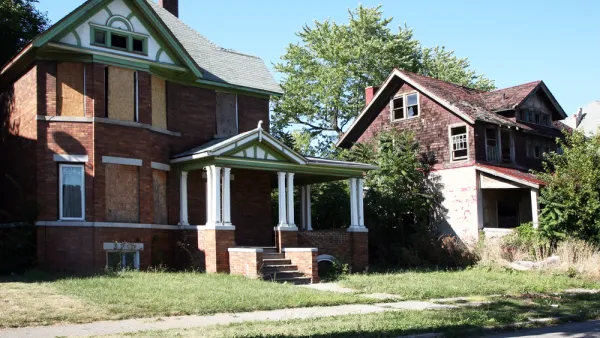
Detroit Continues Demolition Program After Lead Risks Revealed
The city of Detroit said it would halt a demolition program after a report revealed the amount of lead released by demolitions into the environment, risking the health of children and other local residents.
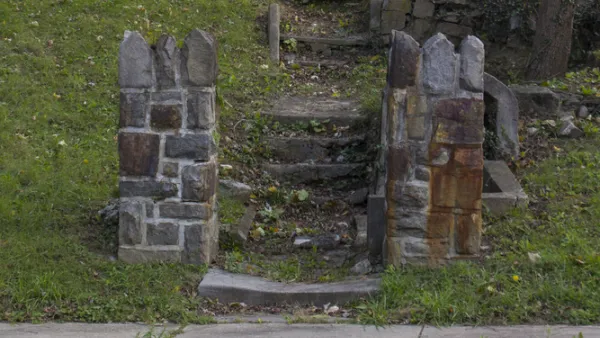
Demolitions Can't Keep Pace With Vacancies in Baltimore
As the city of Baltimore grapples with a declining population, it faces obstinate challenges in controlling the problems associated with vacant buildings, including the "vicious cycle" of vacancies causing more vacancies.

Planetizen Federal Action Tracker
A weekly monitor of how Trump’s orders and actions are impacting planners and planning in America.

Eastern Nebraska is running out of electricity
Data centers and electrification are straining eastern Nebraska’s grid, throttling economic development.

Study reveals best places in the U.S. for cycling, walking
New research from Streetlight Data examines bicycle and pedestrian miles per capita in the 100 largest U.S. cities by population.

Why does it take an emergency for the U.S. to expedite infrastructure projects?
In June 2023, Philadelphia repaired a melted interstate in 12 days thanks to an emergency order.

Federal government nominates new FTA administrator
Mark Aesch is currently the founder and CEO of a transportation management consulting firm.

Developers reveal $10 billion stadium plan as ‘Hail Mary’ to keep Bears in Chicago
The plan would also boast a public park, high- and mid-rise buildings and a youth sports complex.

FREE Course: Walkable City 1: Why Walkability?
After describing his path towards focusing on walkability as the essence of good planning, Jeff Speck marches through his five principal reasons for making more walkable places.
Reinventing Malls: Planning Alchemy—Turning Gray Fields Into Gold
The course focuses on the opportunities and imperatives that shape reinvention of mall sites.

City of Charlotte
City of Rosemead
Rutgers University, Edward J. Bloustein School of Planning and Public Policy
University of Michigan School for Environment and Sustainability (SEAS)
Hunter College, City University of New York (CUNY)
The Architects Foundation
City of Cambridge
The Pocatello Development Authority
The Urban Renewal Agency of the City of Pocatello