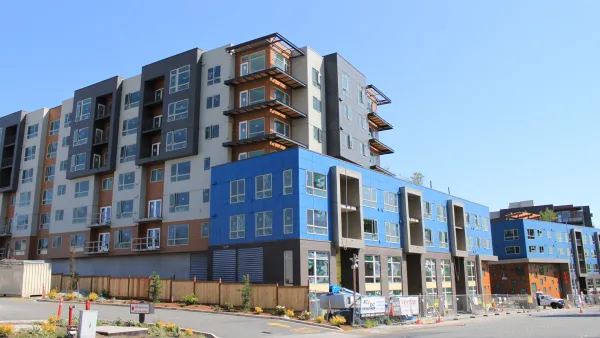
Big investments in residential building in New York City indicate the strength of the city's economy, according to an article in Crain's New York Business.


"Spurred by the boom in residential building, total construction spending in the city will reach a record $39 billion this year and increase another 5% in the next two years," reports Greg David.
Citing projections from the New York Building Congress, David notes that the private sector is picking up the slack from the public sector: "Government spending, which accounted for more than half of all construction outlays in the previous two decades, will account for only a third this year"—though the article predates the recent approval of the MTA capital plan.
The article also goes into more detail about the relationship of the expiration of the 421-a tax break, which Josh Barbanel detailed in a separate article from July. "With [421-a] continuation beyond 2015 now dependent on a deal between builders and the construction unions over wages on 421-a projects, there could be another flurry at end of the year," adds David.
FULL STORY: City construction soars as residential outpaces government spending

Sunday Funday: Game Simulates the Development Experience
Even though it's simplified, Inside the Rent provides a window into the logic of developers trying to get apartments built in New York City. The game's creators emphasize its educational value.
Op-Ed: New York's Affordable Housing More Corrupt than Helpful
A columnist takes the recent scandal involving disgraced former New York State Assembly Speaker Sheldon Silver as a particularly heinous example of how far astray affordable housing policy is from its intended goal.

Adaptive Reuse More Popular Than Ever, Study Says
The past decade saw more old commercial buildings transformed into residential buildings than any decade previous.

Planetizen Federal Action Tracker
A weekly monitor of how Trump’s orders and actions are impacting planners and planning in America.

The state-sanctioned urbicide of Austin
People don’t kill cities. Freeways do.

US to reduce Colorado River water deliveries to Mexico
A new Colorado Treaty amendment reduces Mexico’s Colorado River water allocation by 250,000 acre feet.

5 New England states march closer to 800 megawatt wind energy project
Securing federal approval for the project may be complicated under the Trump administration, which has historically been hostile towards domestic wind power.

Baltimore to break ground on $50 million Transit Priority Project
The project will bring faster bus trips, safer streets and better bike connections to Baltimore.

Airbnb launches $250 million 'last-dollar financing' housing accelerator, makes first investment in Austin
The company will put $6.4 million towards affordable housing development in Texas’ capital.

FREE Course: Walkable City 1: Why Walkability?
After describing his path towards focusing on walkability as the essence of good planning, Jeff Speck marches through his five principal reasons for making more walkable places.
Reinventing Malls: Planning Alchemy—Turning Gray Fields Into Gold
The course focuses on the opportunities and imperatives that shape reinvention of mall sites.

Eagle County Government
Harvard University Graduate School of Design
Nashville Planning Department
The Architects Foundation
University of Cincinnati Online
The Pocatello Development Authority
The Urban Renewal Agency of the City of Pocatello
Journal of the American Planning Association