A long, contentious political process has finally produced an approval for a massive capital investment program for the New York MTA. Some questions about funding remain, however.


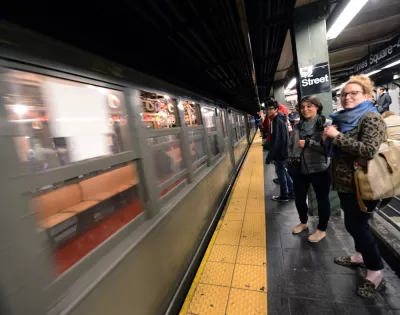
"The Metropolitan Transportation Authority approved a program Wednesday to refurbish the region’s mass transit system, after scaling back the cost of the program at the insistence of Gov. Andrew Cuomo," reports Dana Rubinstein.
The approval followed months of public dispute between Mayor Bill de Blasio and Governor Cuomo. The "good news" about the compromise that brought he capital plan to approval is tempered, according to Rubinstein, by ongoing questions about some of the sources of funding included in the plan.
On the other side, some of the cost savings will be achieved through "efficiencies" and "reductions," including "$1.3 billion in cuts from New York City Transit subways and buses, $285 million from Long Island Rail Road, $232 million from Metro-North Railroad, and $200 million from bridges and tunnels."
Rubinstein also lists the projects and programs that will benefit from the spending program, totaling in the ballpark of $29 billion.
With regard to the quoted sum, other media sources are quoting the plan's price tag as $26 billion, including Danielle Furfaro in the New York Post and Andrew Tangel in the Wall Street Journal.
FULL STORY: MTA approves refurbishment plan, but questions remain


Op-Ed: Congestion Pricing Offers New York a 'Promising Path Forwards'
New York State Budget Director Robert Mujica penned a Sunday op-ed for the Daily News on the benefits of congestion pricing. On Tuesday, Gov. Cuomo broke the news on WNYC that he and Mayor de Blasio agreed on tolling the central business district.
Breaking News: 10-Point Plan to Restructure the MTA Announced
Local and state leadership finally agreed on a plan to fix the city of New York's struggling transit system.
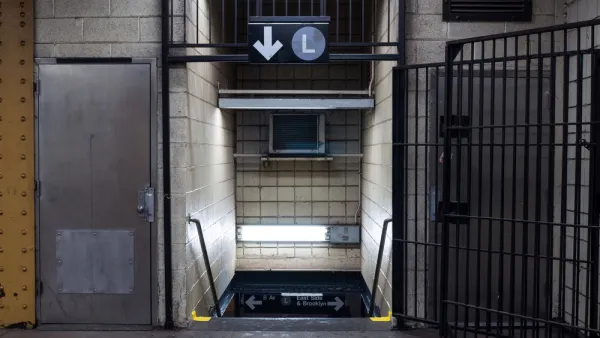
Breaking: Gov. Cuomo Cancels L Train Closure
Surprise, shocking news from New York City, as Governor Andrew Cuomo steps in at the 11th hour to change course on the highly anticipated (and dreaded) L Train closure scheduled to begin later this year.

Planetizen Federal Action Tracker
A weekly monitor of how Trump’s orders and actions are impacting planners and planning in America.

The state-sanctioned urbicide of Austin
People don’t kill cities. Freeways do.

US to reduce Colorado River water deliveries to Mexico
A new Colorado Treaty amendment reduces Mexico’s Colorado River water allocation by 250,000 acre feet.

5 New England states march closer to 800 megawatt wind energy project
Securing federal approval for the project may be complicated under the Trump administration, which has historically been hostile towards domestic wind power.

Baltimore to break ground on $50 million Transit Priority Project
The project will bring faster bus trips, safer streets and better bike connections to Baltimore.

Airbnb launches $250 million 'last-dollar financing' housing accelerator, makes first investment in Austin
The company will put $6.4 million towards affordable housing development in Texas’ capital.

FREE Course: Walkable City 1: Why Walkability?
After describing his path towards focusing on walkability as the essence of good planning, Jeff Speck marches through his five principal reasons for making more walkable places.
Reinventing Malls: Planning Alchemy—Turning Gray Fields Into Gold
The course focuses on the opportunities and imperatives that shape reinvention of mall sites.

Eagle County Government
Harvard University Graduate School of Design
Nashville Planning Department
The Architects Foundation
University of Cincinnati Online
The Pocatello Development Authority
The Urban Renewal Agency of the City of Pocatello
Journal of the American Planning Association