Justin Trudeau is Canada's 23rd prime minister, after his election victory over incumbent Stephen Harper. Trudeau is the son of iconic PM Pierre Elliott Trudeau, and has promised large spending programs to benefit urban areas.


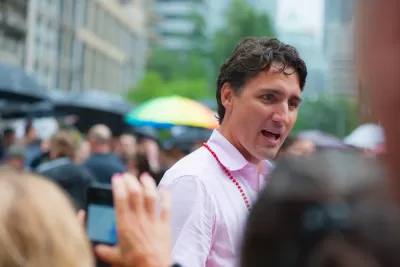
Royson James comments on the urban agenda that contributed to a game-changing election of Liberal Justin Trudeau to the position of prime minister earlier this week in Canada.
James writes: "Certainly, part of the calculus going forward is expectation that the Liberals will be good for cities. Cities — Toronto, Vancouver, parts of Alberta even — were good to Trudeau this election. They’ll be expecting the Liberals to reciprocate the love."
James tells a history of failed urban agendas, dating back to the 90s, when "[c]ampaigns and sustained howling from mayors of all stripes failed to reach the ears of successive prime ministers." That changed in this election, according to James: "the federal parties tripped over themselves to woo the urban voter with promises of infrastructure funding."
"Message finally received," writes James.
As for what the urban agenda Liberals have promised on route to the victory in this election: "The Liberals pledged $19.7 billion over 10 years on 'social infrastructure' targeted at new affordable housing and seniors’ facilities, plus tax breaks to those building affordable rental units."
FULL STORY: Now, Trudeau must live up to his promises to cities: James


Cities Still Absent From Presidential Campaign Politics
Last night's Democratic candidate debate was held in the nation's second largest city, but like previous debates, it left urban issues largely unaddressed.
Smart Cities World Congress Opens its Biggest Event
Organized by Fira de Barcelona at its Gran Via venue, the event is the largest to date, with over 840 exhibiting companies, 700 attending cities and a 31% increase regarding exhibition space, occupying two pavilions for the first time.
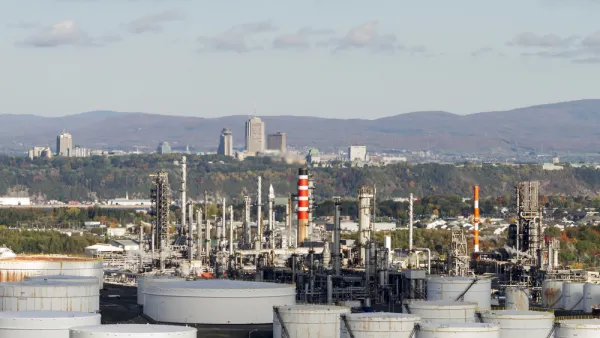
Prime Minister Trudeau Extends Carbon Pricing Throughout Canada
A carbon tax-and-dividend plan goes into effect on January 1 in the four Canadian provinces that don't price carbon emissions. Revenues will be rebated to residents, small businesses, and public institutions as Climate Action Incentive payments.

Planetizen Federal Action Tracker
A weekly monitor of how Trump’s orders and actions are impacting planners and planning in America.

The state-sanctioned urbicide of Austin
People don’t kill cities. Freeways do.

US to reduce Colorado River water deliveries to Mexico
A new Colorado Treaty amendment reduces Mexico’s Colorado River water allocation by 250,000 acre feet.

5 New England states march closer to 800 megawatt wind energy project
Securing federal approval for the project may be complicated under the Trump administration, which has historically been hostile towards domestic wind power.

Baltimore to break ground on $50 million Transit Priority Project
The project will bring faster bus trips, safer streets and better bike connections to Baltimore.

Airbnb launches $250 million 'last-dollar financing' housing accelerator, makes first investment in Austin
The company will put $6.4 million towards affordable housing development in Texas’ capital.

FREE Course: Walkable City 1: Why Walkability?
After describing his path towards focusing on walkability as the essence of good planning, Jeff Speck marches through his five principal reasons for making more walkable places.
Reinventing Malls: Planning Alchemy—Turning Gray Fields Into Gold
The course focuses on the opportunities and imperatives that shape reinvention of mall sites.

Eagle County Government
Harvard University Graduate School of Design
Nashville Planning Department
The Architects Foundation
University of Cincinnati Online
The Pocatello Development Authority
The Urban Renewal Agency of the City of Pocatello
Journal of the American Planning Association