A strong scent of snark is detected in a recent editorial criticizing the possibility of building a shared bike and pedestrian path on the Verrazano-Narrows Bridge to State Island.


The State Island Advance editorial board voices its displeasure with the escalating cost of a plan to build a bicycle and pedestrian path across the Verrazano-Narrows Bridge. At issue is a recent cost estimate in the ballpark of $300 to $400 million.
The editorial takes a few swipes at the bicycle lobby, who "think the MTA should spare no expense to build a bike path across the Narrows." But the editorial claims that compared to put bikepaths on streets throughout the boroughs, putting a bike and pedestrian path on the bridge is a much taller order:
"One of the ideas under consideration is the construction of bike and pedestrian lanes on either side of the deck on the lower level. A second proposal offers the same configuration on the upper level. And then there's a proposal to build a separate bridge that would run parallel to the Verrazano. The second span would be equipped with a vertical lift in its center to allow ships to pass."
The editorial board makes it clear that they consider any such plans to be a joke, albeit an expensive one. The new price tag of $300 to $400 million has climbed from its original estimate of $75 million, to be sure. Instead of spending the money on the new path, the editorial proposes that the community deserves better transit options first, and should join the editorial board in voicing its displeasure with the project.
Read the full story: $300-$400 million for Verrazano bike paths? Are they nuts? (editorial)

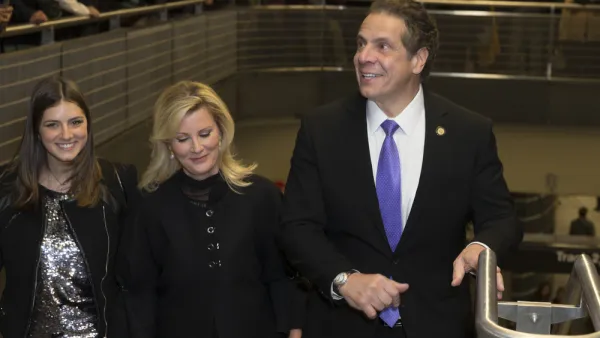
How NY Gov. Andrew Cuomo Came to Support Congestion Pricing
Gov. Andrew Cuomo was not an early endorser of congestion pricing. Why the sudden embrace, particularly when Mayor Bill de Blasio is opposed? Turns out that electronic tolling technology, embraced by the MTA, appears to have moved the governor.
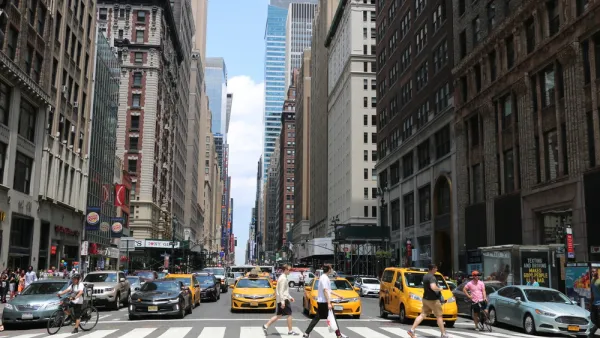
Praise for Gov. Andrew Cuomo from New York Times on Cordon Pricing
Thanks to the governor's support, there is reason for optimism that a plan to charge motorists entering Manhattan below 60th St. and toll the East River bridges will have a better outcome than Mayor Michael Bloomberg's plan did in April 2008.
Op-Ed: Infrastructure First, Redevelopment Second for Staten Island
With big plans come big responsibilities. Will a massive wave of development investment headed for Staten Island be met with a commensurate investment in infrastructure?

Planetizen Federal Action Tracker
A weekly monitor of how Trump’s orders and actions are impacting planners and planning in America.

The state-sanctioned urbicide of Austin
People don’t kill cities. Freeways do.

US to reduce Colorado River water deliveries to Mexico
A new Colorado Treaty amendment reduces Mexico’s Colorado River water allocation by 250,000 acre feet.

Nation's most wind-powered state turns to coal as data centers increase energy demand
For the first time in decades, Iowa has increased its generation of coal power.

NYC cools commuters with city's first rain garden above a bus stop
New York City officials say the plants in the rain garden can absorb 16 gallons of rainwater during heavy storms.

Brightline West’s future may rely on $6 billion federal loan
The company has until Nov. 2 to make a $400 million equity investment into its proposed high-speed rail line.

FREE Course: Walkable City 1: Why Walkability?
After describing his path towards focusing on walkability as the essence of good planning, Jeff Speck marches through his five principal reasons for making more walkable places.
Reinventing Malls: Planning Alchemy—Turning Gray Fields Into Gold
The course focuses on the opportunities and imperatives that shape reinvention of mall sites.

Greater Baltimore Committee
Eagle County Government
Harvard University Graduate School of Design
The Architects Foundation
University of Cincinnati Online
The Pocatello Development Authority
The Urban Renewal Agency of the City of Pocatello
Journal of the American Planning Association