With big plans come big responsibilities. Will a massive wave of development investment headed for Staten Island be met with a commensurate investment in infrastructure?


Felix Ciampa, executive director of the Urban Land Institute New York, pens on op-ed on the subject of a critical, yet sometimes neglected step in urban transformation: infrastructure investment. The setting is State Island, due for a major overhaul with the Destination St. George project. According to Ciampa, "city officials need to do more to prepare Staten Island for the changes ahead. The city will only be able to truly celebrate neighborhood growth if it is also prepared to enhance and strengthen the infrastructure that sustains it in the long term."
Once millions of additional visitors begin to take advantage of Staten Island as a destination, asks Ciampa, "how will the borough handle this sudden influx of visitors, tourists, shoppers and new residents? More specifically, how will the borough's existing transit resources accommodate all of this new development — and what must be done to ensure that Staten Island's new developments thrive in the spotlight of their new-found popularity?"
Ciampa goes on to call for a new look at the area's existing plans, paying specific attention to infrastructure and transit access. The time for planning and building new infrastructure, is now, according to Ciampa—not after the developments already underway on the island have been completed.
Read the full story: Let's make sure St. George development works for everyone
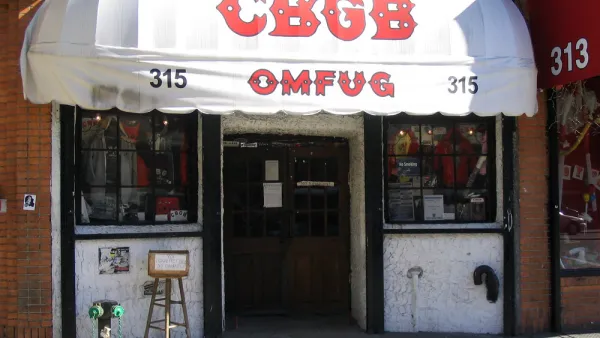
Opinion: Lower Rents Will Give Downtown Spaces Back to the ‘Weirdos’
Introducing the “CBGB theory of city planning.”
New York City Council Wants Community Engagement to Lead Affordable Housing Development
New York Mayor Eric Adams and City Council Speaker Adrienne Adams have proposed very different responses to the city’s lack of affordable housing.

A New Housing ‘Blueprint’ for New York City
With every new mayoral administration in New York City comes a new plan for addressing the city’s housing affordability crisis. Now it’s Mayor Adams’s turn.

Desperate measures: Advocates weigh draining Lake Powell to fill Colorado River
Draining the reservoir could reduce evaporation losses by a couple hundred thousand acre-feet.

Eastern Nebraska is running out of electricity
Data centers and electrification are straining eastern Nebraska’s grid, throttling economic development.

Malls are becoming the midtowns of the future
Mall and office park redevelopments are a generational opportunity to create new nodes of urbanity.

NYC breaks ground on anti-flooding infrastructure project
New York City's new system will reduce stormwater flows to local sewers by 90%.

One Kentucky town’s secret to affordable housing
The Smoketown Community Land Trust has already built seven affordable homes for community members.

Houston gains petal-shaped cooling infrastructure to make streets more ‘delightful’
The city has installed the pavilions along 15 blocks in Houston.

FREE Course: Walkable City 1: Why Walkability?
After describing his path towards focusing on walkability as the essence of good planning, Jeff Speck marches through his five principal reasons for making more walkable places.
Reinventing Malls: Planning Alchemy—Turning Gray Fields Into Gold
The course focuses on the opportunities and imperatives that shape reinvention of mall sites.

City of Rosemead
Rutgers University, Edward J. Bloustein School of Planning and Public Policy
One Hundred Miles
University of Michigan School for Environment and Sustainability (SEAS)
Hunter College, City University of New York (CUNY)
The Architects Foundation
City of Cambridge
Montrose County
The Pocatello Development Authority