Planners face the increasing challenge of how to improve economic opportunities for individuals while simultaneously improving urban neighborhoods without triggering gentrification.


Within the toolbox that planners have at their disposal, there are multiple options available to improve the physical environment. However, as the growing recognition of economic inequality shows, planners have fewer tools to improve the lives of individual citizens. Bill Fulton writes in Governing that planners "can’t do the one thing that would most improve residents’ lives: put money in their pockets."
"In large part, the answer boils down to the old people-versus-place question in urban policy: Do you focus on improving struggling neighborhoods in the hopes that everyone in the neighborhood will be better off? Or do you focus on helping people get a leg up, even if it means they leave the neighborhood?"
The challenge for planners, Fulton writes, is to seek the right balance between improving neighborhoods and improving the lives of its residents. Evidence shows that poorer residents living among more affluent neighbors will have better economic livelihoods, but moving more affluent residents into poorer neighborhoods can trigger gentrification, which will ultimately displace those who could benefit most.
Read the full story: To Help Poor Neighborhoods, Urban Planners Have to Do More Than Urban Planning


Memphis Targets Adaptive Reuse of Historic School for Neighborhood Benefits
A plan to rehabilitate the vacant former location of Melrose High School in Memphis' Orange Mound neighborhood "recalls many other recent initiatives aimed at elevating and investing in Black urban history."
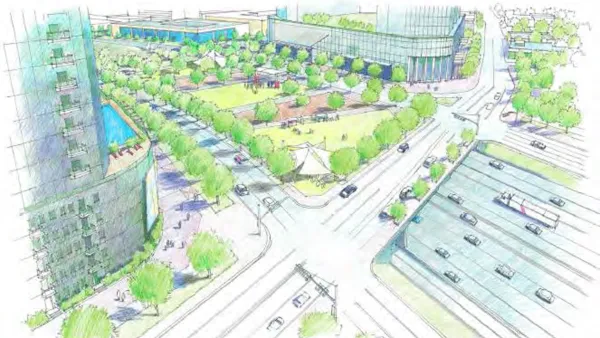
TxDOT Promises to Reverse Some of the Damage Caused by Urban Freeways in Dallas
The Texas Department of Transportation (TxDOT) is in the early stages of planning for two projects that could leverage plans to rebuild two freeways in the city with plan to reconnect the neighborhoods they severed.
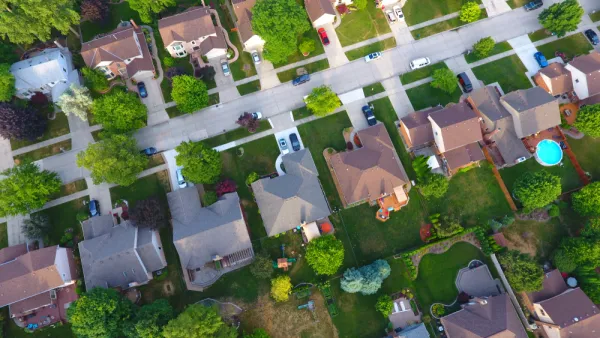
Dan Gilbert Announces $500 Million Investment in Detroit Neighborhoods
Dan Gilbert, the billionaire credited with the revitalization of development interest in and around Downtown Detroit, made a bombshell announcement in his first in-depth interview since suffering a stroke in 2019.

Planetizen Federal Action Tracker
A weekly monitor of how Trump’s orders and actions are impacting planners and planning in America.

Colorado’s Largest Data Center Could Rise Next to Homes — Without a Public Hearing
The proposed campus would consume 11 times the power of Denver International Airport; as it has across the country, opposition mounts.

Amtrak, CN end decades-long dispute with eight-year agreement
The new operating agreement establishes an updated framework for the companies to work together, including processes to resolve disputes.

'This is going to be painful:’ Virginia stares down $1.7 billion funding gap for highway maintenance
The state may address the deficit by shifting $290 million from its construction budget to maintenance projects.

Judges permit Denver to divert 77,000 acre feet from the Colorado River for reservoir expansion
Overuse and climate change have caused the Colorado River’s water levels to plummet.
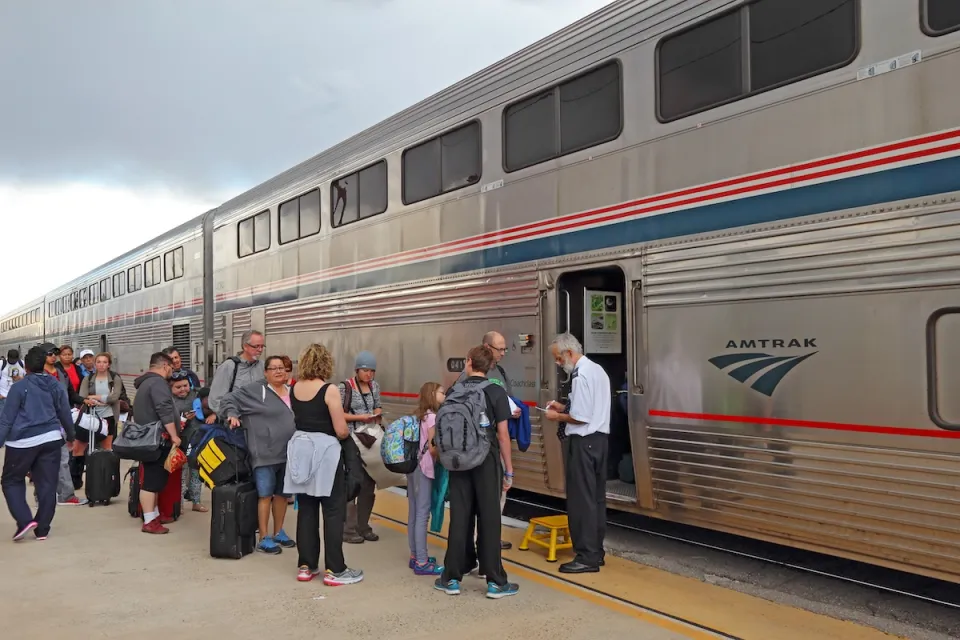
Amtrak, CN end decades-long dispute with eight-year agreement
The new operating agreement establishes an updated framework for the companies to work together, including processes to resolve disputes.

FREE Course: Walkable City 1: Why Walkability?
After describing his path towards focusing on walkability as the essence of good planning, Jeff Speck marches through his five principal reasons for making more walkable places.
Reinventing Malls: Planning Alchemy—Turning Gray Fields Into Gold
The course focuses on the opportunities and imperatives that shape reinvention of mall sites.

KFH Group Inc.
Greater Baltimore Committee
Eagle County Government
The Architects Foundation
University of Cincinnati Online
The Pocatello Development Authority
The Urban Renewal Agency of the City of Pocatello