We call them Open Streets events. In French it's Journée Sans Voiture. On September 27, the world saw a car-free Paris.


"Pedestrians and bicyclists took over the streets of Paris [Sunday] for the Journée Sans Voiture (Day Without Cars) event," reports Klona Smith-Strickland. "Paris banned cars from large parts of the city center, including the famous Avenue des Champs-Élysées, as part of an effort to draw attention to the city’s dire pollution problem, especially in advance of climate talks which will take place in the city in December."
The main purpose of the article is to share some of the many images that came flooding out of Paris on the day of the event. According to Smith-Strickland, "Images from the city show crowded streets and clear blue skies. The clear skies are no coincidence in a city whose air pollution, on a peak day, can rival that of Beijing."
More details about the event are available from announcements about the Journée Sans Voiture from earlier this year.
Read the full story: This is What Paris Looks Like Without Cars
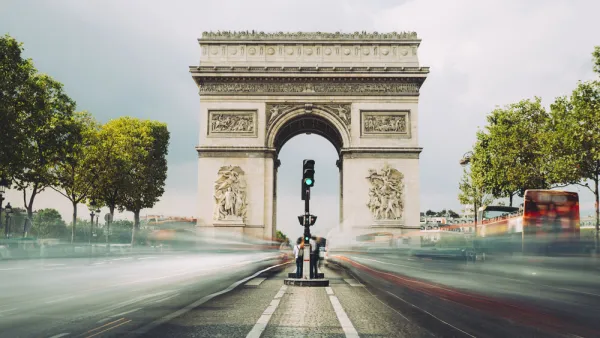
Less and Less of Paris Open to Cars
Paris Mayor Anne Hildalgo announced a new plan to further restrict cars and trucks from the city center.
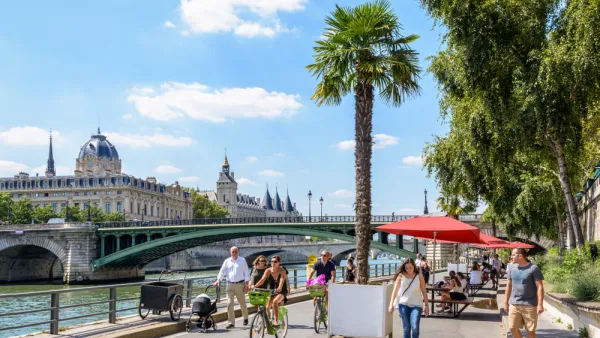
The Car-Free Revolution Continues in Paris
The city continues to reclaim space for pedestrians and cyclists.
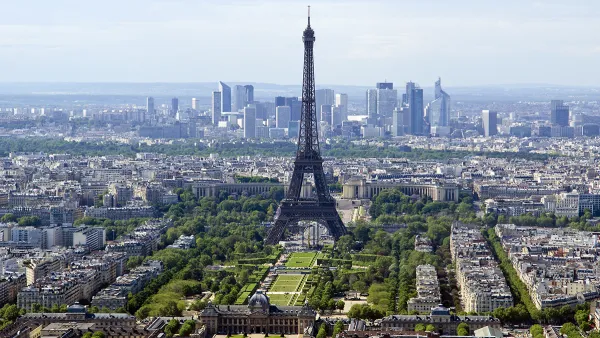
Paris to Begin Serious Car Restrictions on July 1
The carefree days of driving any-old-junker-they-please are over for Parisians, and they'll be even further obsolete when the calendar changes from June to July.

Planetizen Federal Action Tracker
A weekly monitor of how Trump’s orders and actions are impacting planners and planning in America.

California plans to bury El Niño’s downpour
If the state plays its cards right, it may be able to store a billion acre-feet of El Niño’s water in aquifers.

Desperate measures: Advocates weigh draining Lake Powell to fill Colorado River
Draining the reservoir could reduce evaporation losses by a couple hundred thousand acre-feet.

US buildings threatened, destroyed by fires set to triple by 2060
Researchers found a high fire risk for socioeconomically vulnerable neighborhoods in the American West.

LA residents may be allowed to paint their own crosswalks
Councilwoman Katy Yaroslavsky put out a motion instructing the Los Angeles Department of Public Transportation to study the feasibility of allowing volunteers to paint crosswalks.

Dallas moves to overhaul its zoning code
The city's zoning reform will allow more multi-family and mixed-use developments.

FREE Course: Walkable City 1: Why Walkability?
After describing his path towards focusing on walkability as the essence of good planning, Jeff Speck marches through his five principal reasons for making more walkable places.
Reinventing Malls: Planning Alchemy—Turning Gray Fields Into Gold
The course focuses on the opportunities and imperatives that shape reinvention of mall sites.

City of Rosemead
Rutgers University, Edward J. Bloustein School of Planning and Public Policy
One Hundred Miles
Hunter College, City University of New York (CUNY)
The Architects Foundation
University of Cincinnati Online
City of Cambridge
Montrose County
The Pocatello Development Authority