Gov. Jerry Brown's intervention to soffen Sen. Jim Beall's transportation funding bill by halving both the gas and diesel tax hikes did not assuage Republican critics of the bill, so Brown is extending the special legislative session past Friday.


This was the final week to pass critical legislation to address the enormous $59 billion problem of deferred highway and bridge maintenance, one of three infrastructure goals that Brown highlighted in his January inaugural address.
Recognizing that the 12-cent gas and 22-cent diesel tax increases called for in SB X1-1 by Sen. Jim Beall (D-S.J.) would be a steep road to climb for tax opponents, Gov. Brown proposed an alternative measure that cut both tax hikes in half, as well as including additional measures favored by Republican critics of the bill in hopes of gaining their support.
But Republicans wouldn't budge. "During a press conference announcing a major change in landmark climate change legislation, Brown and the leader of the Assembly acknowledged that they were unlikely to reach a compromise before the regular legislative session concludes on Friday," writes Jeremy B. White for The Sacramento Bee.
A special transportation session called by Brown allows lawmakers to work beyond the normal deadline. Assembly Speaker Toni G. Atkins (D-San Diego) said she and Senate president pro tem Kevin de León, D-Los Angeles, would form a conference committee to continue working on the transportation issue “as we move into the fall.
Insufficient current transportation revenue has resulted in a "$6 billion annual shortfall," according to KQED News.
Republicans claim that while fuel tax revenue has grown, transportation spending has remained stagnant as revenues are "diverted to cover other budget priorities,” writes State Senator John Moorlach (R-Irvine)
Gov. Brown expressed optimism in meeting the state's transportation needs, writes White.
“The roads are going to get fixed,” Brown said. “People are going to spare the money, whether it takes a week, a month, a year or two.”
To listen to how SB X1-1 fared and where it goes from here, it's included in this radio report, an analysis by Capital Public Radio's Ben Adler of how important legislation fared in the closing days of the legislative session. It begins with one of the most important bills, SB 350, and the elimination of the oil reduction provision.
Read the full story: SacBee: No California road-building, gasoline tax deal this week, leaders say
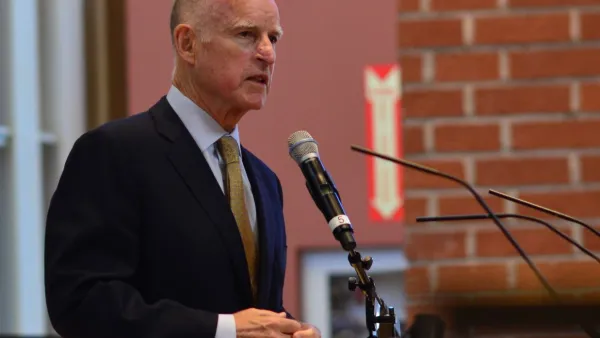
California's Housing Bills Fall Short
Three bills at the top of the Democratic leadership's housing agenda will have little impact on the state's chronic housing shortage according to multiple analyses, and wouldn't affect the outcome of a Bay Area mega-development controversy.
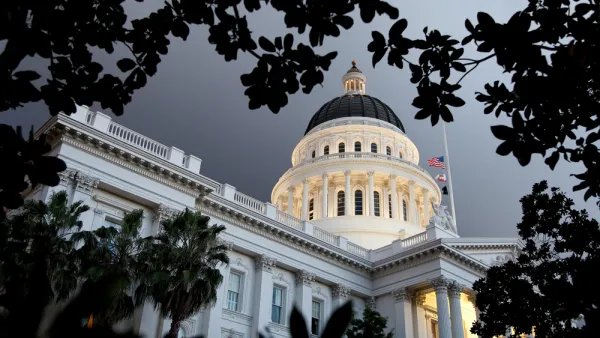
California's Record Fuel Taxes Hike Passes Legislature in One Day
On April 6, the Senate and Assembly passed a comprehensive transportation funding package that it had been unable to do for years, thanks to much deal-making by Gov. Jerry Brown. The gas tax will increase by 12 cents per gallon on November 1.
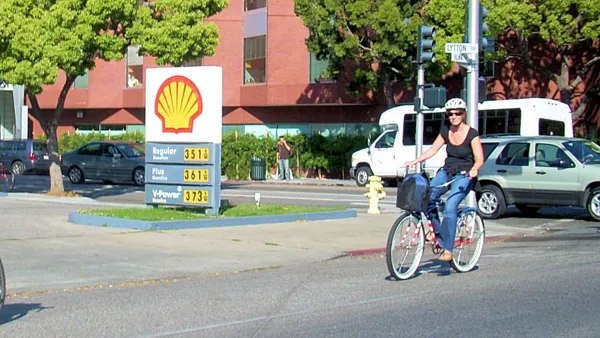
Gov. Jerry Brown and State Democratic Leaders Agree on Gas Tax Deal
Revised transportation funding legislation is needed to meet California's ballooning infrastructure deficit, but it needs a supermajority to pass, and it contains a fatal flaw for clean air activists.

Desperate measures: Advocates weigh draining Lake Powell to fill Colorado River
Draining the reservoir could reduce evaporation losses by a couple hundred thousand acre-feet.

Eastern Nebraska is running out of electricity
Data centers and electrification are straining eastern Nebraska’s grid, throttling economic development.

Malls are becoming the midtowns of the future
Mall and office park redevelopments are a generational opportunity to create new nodes of urbanity.

NYC breaks ground on anti-flooding infrastructure project
New York City's new system will reduce stormwater flows to local sewers by 90%.

One Kentucky town’s secret to affordable housing
The Smoketown Community Land Trust has already built seven affordable homes for community members.

Houston gains petal-shaped cooling infrastructure to make streets more ‘delightful’
The city has installed the pavilions along 15 blocks in Houston.

FREE Course: Walkable City 1: Why Walkability?
After describing his path towards focusing on walkability as the essence of good planning, Jeff Speck marches through his five principal reasons for making more walkable places.
Reinventing Malls: Planning Alchemy—Turning Gray Fields Into Gold
The course focuses on the opportunities and imperatives that shape reinvention of mall sites.

City of Rosemead
Rutgers University, Edward J. Bloustein School of Planning and Public Policy
One Hundred Miles
University of Michigan School for Environment and Sustainability (SEAS)
Hunter College, City University of New York (CUNY)
The Architects Foundation
City of Cambridge
Montrose County
The Pocatello Development Authority