As the city of Houston is growing, car traffic and rail traffic are also growing. The conflict between the two will be very expensive to resolve.


"Along with freeway traffic volumes, the number of rail cars moving through Houston is expected to grow over time, leading to more pressure to untie some critical spots where railroad tracks and roads intersect," reports Dug Begley.
"The solution is to build overpasses or underpasses in as many places as possible. Eliminate the at-grade crossing and automobile traffic keeps moving while trains can move more efficiently," explains Begley, but the high cost of those projects makes it difficult. One potential source of money, notes Begley, is the federal government, which is "focusing on highway and rail crossings that experience a high volume of rail cars carrying energy products like crude oil and ethanol."
There is another safety concern as well: "Collisions at highway crossings are the second most common cause of deaths along tracks, behind trespasser fatalities that occur mostly when people walk along the tracks and are struck by a train. Last year, 269 people were killed in crossing collisions, the first time in a decade the number of fatalities increased."
Read the full story: Rail crossings remain a problem and a priority

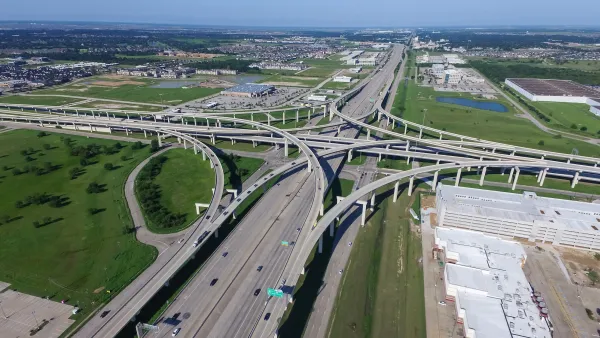
Induced demand is real: Commutes on Houston's 26-lane freeway take 51% longer after expansion
A massive freeway expansion only led to longer drive times, showing that building more lanes won't solve congestion.
Houston Metro May Now Share Lanes With Traffic After All
When the Houston Metro debuted they had planned to keep parts of the route open to cars. After recent crashes that might change.
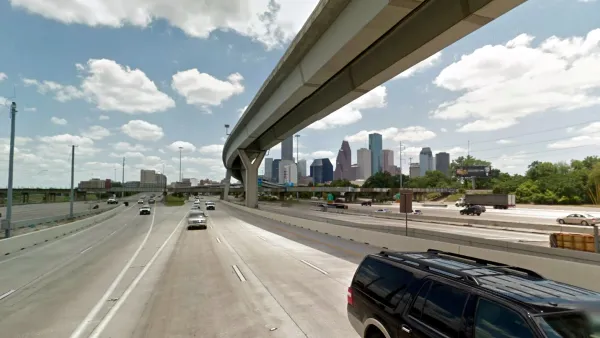
Too Big for Texas? Houston's 23-Lane Freeway
After a $2.3 billion widening project, traffic once again chokes the Katy Freeway's 23 lanes. For road spending critics who are also taxpayers, this I-told-you-so moment is bittersweet.

Planetizen Federal Action Tracker
A weekly monitor of how Trump’s orders and actions are impacting planners and planning in America.

‘Going backwards:’ Baltimore mayor, students rally against state's transit funding plan
Maryland's proposed six-year plan provides no funding for Baltimore’s BMORE bus program and reduces its road maintenance funding.

Detroit to transform waterfront with $2.2 billion investment
Developers will convert about 18 acres of unused parking lot space into civic spaces.

Newsom vetoes high-speed rail supervision bill after agency receives condemnatory audit
The audit found the CHSRA approved almost $600,000 in unallowable travel expenses.

Nation sees first electric plane-boat hybrid take off in public demo
The Viceroy Seaglider can fly at speeds of 180mph for up to 180 miles.

One of nation’s poorest counties to receive $6 billion data center
The developers estimate the project will create 200 permanent jobs and 1,000 temporary construction jobs.

FREE Course: Walkable City 1: Why Walkability?
After describing his path towards focusing on walkability as the essence of good planning, Jeff Speck marches through his five principal reasons for making more walkable places.
Reinventing Malls: Planning Alchemy—Turning Gray Fields Into Gold
The course focuses on the opportunities and imperatives that shape reinvention of mall sites.

City of Thousand Oaks
City of Wisconsin Rapids
Harvard University Graduate School of Design
The Architects Foundation
University of Cincinnati Online
Northern Illinois Transit Authority (NITA)
The Pocatello Development Authority
The Urban Renewal Agency of the City of Pocatello