More residents moved from the counties of Los Angeles and Orange to the nearby counties of San Bernardino and Riverside than anywhere else in the country.


"The nation’s most powerful internal migration flow in recent years has been from Los Angeles and Orange counties into two 'Inland Empire' counties to the east, a new Census Bureau report indicates," reports Dan Walters.
"That eastward stream of migration into Riverside and San Bernardino counties during the 2009-2013 period helped the region become the state’s leader in population growth. Its population rose by 1 million between 2000 and 2010, nearly a third of all California growth during the decade, and has since increased by another 200,000."
Walters notes that the migration in Southern California—from one location to a nearby location—mirrored trends around the country. Nine out of ten of the top ten migration flows, in fact, were to nearby metro areas over that time period.
Read the full story: Southern California sees strongest regional migration

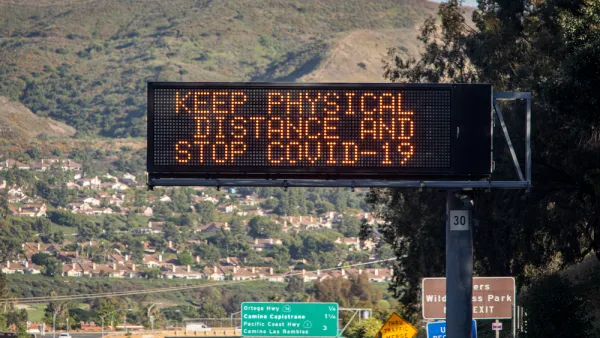
California Hospitals Now Operating Under Contingency Care Guidelines
The three levels of care provided by hospitals: conventional, contingency, and crisis, were outlined in a letter sent to all hospitals. They must notify the state by Wednesday that they have adopted some version of crisis standards to ration care.
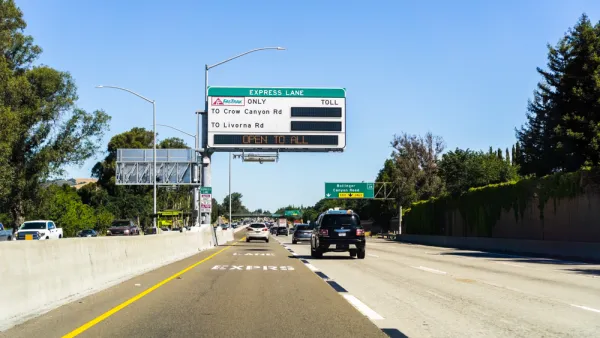
More Toll Lanes Coming to California Freeways
Solo drivers in the Golden State will have more options to escape traffic congestion on busy freeways – for a price, as transportation agencies increasing decide to convert existing carpool lanes to high-occupancy toll lanes and add new ones.

Regional Planning Paradigm Shift in Southern California
The Southern California Association of Governments, in response to new mandates from the state, has adopted a radical new approach to housing requirements in Los Angeles, Orange, Riverside, and San Bernardino counties.

Planetizen Federal Action Tracker
A weekly monitor of how Trump’s orders and actions are impacting planners and planning in America.

Amtrak, CN end decades-long dispute with eight-year agreement
The new operating agreement establishes an updated framework for the companies to work together, including processes to resolve disputes.

Northwest rail fans eager for Sept. 30 debut of Amtrak’s Airo fleet
Get ready for that new train smell and more seats. But they won’t go faster or run more frequently on the Cascades route in Washington and Oregon.

Brightline Florida files for bankruptcy
The transit company is over $5 billion in debt.

St. Louis Metro to test if single-car trains can reduce operating costs, maintain rider satisfaction
The pilot program will run from October to spring 2027, and begin with one single-car train operating on Metrolink’s Red and Blue lines.

Pennsylvania is building data centers in abandoned mines
Housing data centers in mines provides an alternative to destroying local forests and may spare residents from data centers’ noise and air pollution.

FREE Course: Walkable City 1: Why Walkability?
After describing his path towards focusing on walkability as the essence of good planning, Jeff Speck marches through his five principal reasons for making more walkable places.
Reinventing Malls: Planning Alchemy—Turning Gray Fields Into Gold
The course focuses on the opportunities and imperatives that shape reinvention of mall sites.

City of Thousand Oaks
City of Wisconsin Rapids
Harvard University Graduate School of Design
The Architects Foundation
University of Cincinnati Online
The Pocatello Development Authority
The Urban Renewal Agency of the City of Pocatello