A new study finds evidence of a causal link between bikeshare and congestion in Washington, D.C.



A study by Casey J. Wichman for the Resources for the Future (RFF) think tank examined Capital Bikeshare for its impact on transportation in the Washington, D.C. metropolitan area.
A few of the study's key findings, according to the RFF page devoted to the study:
- "A causal effect exists between the introduction of bike-sharing programs and traffic congestion." In D.C., the reduction varies between two and three percent, according to the study.
- "A secondary, suggestive finding is that congestion increases in areas neighboring those with bike docks. It could be the case that motor vehicle drivers seek to avoid streets populated with cyclists, among other potential factors."
The study also argues for the growing relevance of similar studies as more cities expand bikeshare infrastructure.
Read the full story: Bicycle Infrastructure and Traffic Congestion: Evidence from DC’s Capital Bikeshare


Study: Uber and Lyft Clog Roads, Steal Transit Riders
The findings of a recent study reveals the effects of transportation network companies to be the enemy of all forms of alternative transportation—far from the urban savior some hope they'll be.
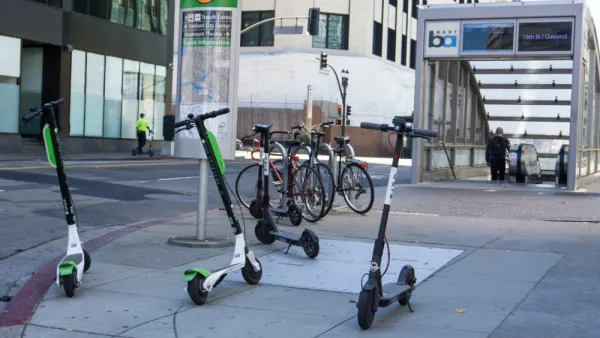
How E-Scooters Can Complement Public Transit
With some strategic planning on the part of transit agencies and operators, shared e-scooters can be an important ally in the fight against car dependence.

D.C.'s Capital Bikeshare Turns 10
D.C.'s Capital Bikeshare is celebrating its 10th birthday today, September 20.

Planetizen Federal Action Tracker
A weekly monitor of how Trump’s orders and actions are impacting planners and planning in America.

‘Going backwards:’ Baltimore mayor, students rally against state's transit funding plan
Maryland's proposed six-year plan provides no funding for Baltimore’s BMORE bus program and reduces its road maintenance funding.

Detroit to transform waterfront with $2.2 billion investment
Developers will convert about 18 acres of unused parking lot space into civic spaces.

Newsom vetoes high-speed rail supervision bill after agency receives condemnatory audit
The audit found the CHSRA approved almost $600,000 in unallowable travel expenses.

Nation sees first electric plane-boat hybrid take off in public demo
The Viceroy Seaglider can fly at speeds of 180mph for up to 180 miles.

One of nation’s poorest counties to receive $6 billion data center
The developers estimate the project will create 200 permanent jobs and 1,000 temporary construction jobs.

FREE Course: Walkable City 1: Why Walkability?
After describing his path towards focusing on walkability as the essence of good planning, Jeff Speck marches through his five principal reasons for making more walkable places.
Reinventing Malls: Planning Alchemy—Turning Gray Fields Into Gold
The course focuses on the opportunities and imperatives that shape reinvention of mall sites.

City of Thousand Oaks
City of Wisconsin Rapids
Harvard University Graduate School of Design
The Architects Foundation
University of Cincinnati Online
Northern Illinois Transit Authority (NITA)
The Pocatello Development Authority
The Urban Renewal Agency of the City of Pocatello