The federal government offered to $24 million to create a loan pool in struggling areas of North St. Louis County—most infamously displayed to the country over the past year in the intense racial conflicts centering around Ferguson.


The U.S. Department of Housing and Urban Development announced "the allocation of more than $26 million from the Community Development Block Grant (CDBG) Program for St. Louis County, Missouri," according to a release from the county of St. Louis. Making up the bulk of that total, "St. Louis County received $24 million under the Section 108 Loan Guarantee Program to establish a loan pool for community development projects." In addition to the $24 million, HUD granted $2.4 million in Declared Disaster Recovery Funds for areas damaged by tornadoes and severe storms in 2013.
Local news station KVHS reports more detail about how the money will be spent: "St. Louis County Executive Steve Stenger says much of the money is expected to go to north St. Louis County, including Ferguson, where economic disparity became a focal point during unrest that followed the fatal shooting of Michael Brown by a police officer last year."
The Section 108 Loan Guarantee Program can found projects ranging from "transit-oriented development; mixed-use commercial, retail and multi-family rental development; business development loans; and public infrastructure and facilities, including collaborative projects that cross municipal borders," according to the press release.
Read the full story: HUD Awards More Than $26 Million to St. Louis County to Boost Economic Growth and Revitalize Distressed Communities

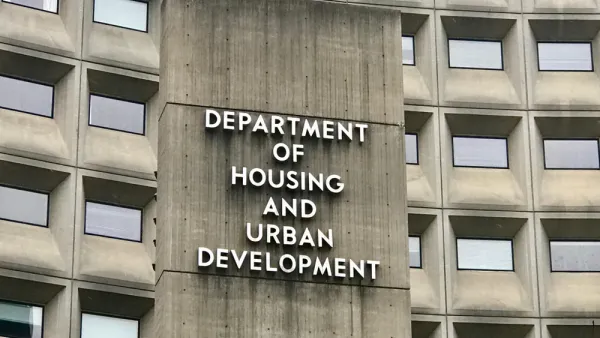
How Federal Policy Can Support More Affordable Housing in Exclusionary Communities
The recently funded “Yes In My Back Yard” federal grant program provides support for local and state governments to implement housing policy reforms, but it doesn’t go far enough to undo the exclusionary practices of wealthy communities.
Los Angeles County First to Recommend Resumption of Indoor Masking
Due to the emergence of the more transmissible Delta variant, Los Angeles County's masking guidance goes beyond what the CDC and the state health department recommend for those who are fully vaccinated. St. Louis has joined them.
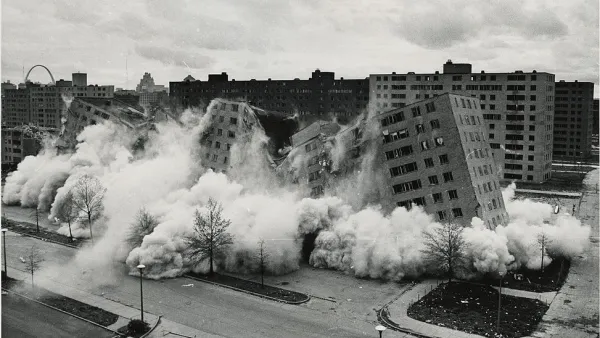
More Cities and Counties Arming Renters Against Source of Income Discrimination
St. Louis County is considering fair housing legislation that would prevent source of income discrimination, as many cities in the region have already done, and many more are also considering.

Planetizen Federal Action Tracker
A weekly monitor of how Trump’s orders and actions are impacting planners and planning in America.

The state-sanctioned urbicide of Austin
People don’t kill cities. Freeways do.

US to reduce Colorado River water deliveries to Mexico
A new Colorado Treaty amendment reduces Mexico’s Colorado River water allocation by 250,000 acre feet.

Nation's most wind-powered state turns to coal as data centers increase energy demand
For the first time in decades, Iowa has increased its generation of coal power.

NYC cools commuters with city's first rain garden above a bus stop
New York City officials say the plants in the rain garden can absorb 16 gallons of rainwater during heavy storms.

Brightline West’s future may rely on $6 billion federal loan
The company has until Nov. 2 to make a $400 million equity investment into its proposed high-speed rail line.

FREE Course: Walkable City 1: Why Walkability?
After describing his path towards focusing on walkability as the essence of good planning, Jeff Speck marches through his five principal reasons for making more walkable places.
Reinventing Malls: Planning Alchemy—Turning Gray Fields Into Gold
The course focuses on the opportunities and imperatives that shape reinvention of mall sites.

Greater Baltimore Committee
Eagle County Government
Harvard University Graduate School of Design
The Architects Foundation
University of Cincinnati Online
The Pocatello Development Authority
The Urban Renewal Agency of the City of Pocatello
Journal of the American Planning Association