The city has launched a program of collaboration with the green tech industry.


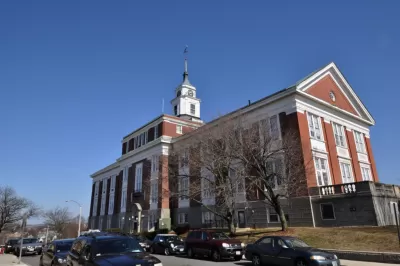
Two miles northwest of Boston, the city of Somerville, Massachusetts, has determined to reach carbon neutrality by 2050. While many cities, states, and countries have set targets for drastically reducing their carbon footprint, few have set such an ambitious goal. Bordering Cambridge, and surrounded by world-class universities, the small but densely packed city is "home to the largest green tech incubator in the country," Elizabeth Daigneau reports. "Somerville figured that if it was going to be carbon-neutral by 2050, it was going to need the help and cooperation of the business community."
The recently launched Green Tech Program will initially focus on pilot projects and facilitating information exchange through green tech networking events. The stated goal of the first event "is to raise the profile of municipal-ready technologies while providing a forum for city and industry officials to exchange opportunities and challenges." The first event was held in June in partnership with the Massachusetts Clean Energy Center.
The first pilot program will be launched in partnership with Understory, a weather intelligence firm that caters to the insurance industry. According to their website, the startup provides "hyper-local data to power advanced damage analytics." The firm will install solar-powered weather stations at two local schools in order to share weather data with the city and the public. Daigneau writes, "Ultimately, Somerville has three broad goals with its pilot projects: They must help with climate change mitigation, climate change adaptation and quality of life."
Read the full story: How Does a City Get to Zero Carbon Emissions?
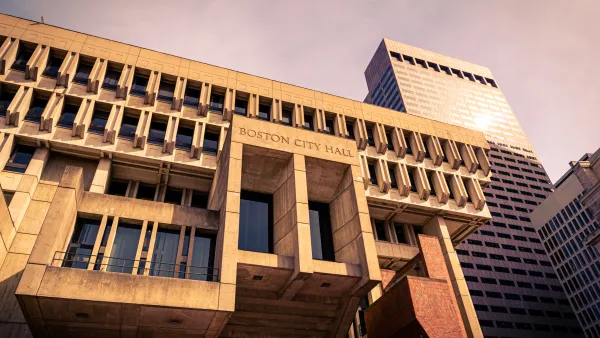
Boston Eliminates Fossil Fuels in New City-Owned Buildings
Mayor Michelle Wu said the new rule will help boost demand for green materials and create new jobs in the green building sector.
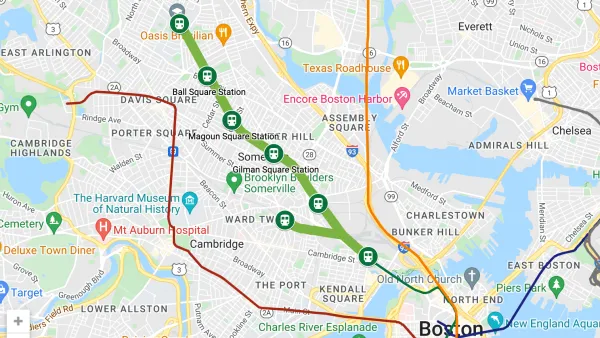
Long Awaited Green Line Extension Opens Today North of Boston
The Green Line Extension project, in the works for decades, is now providing rail transit service from Boston north into Somerville.
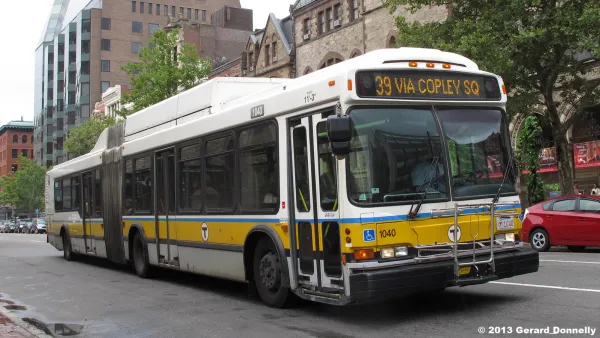
'Rapid Response Bus Lanes' Program Provides Equitable Mobility Relief During the Pandemic
A new Massachusetts Bay Transportation Authority program has quickly deployed bus infrastructure around the Boston area, focusing on neighborhoods where people are relying on the bus during the pandemic.

Planetizen Federal Action Tracker
A weekly monitor of how Trump’s orders and actions are impacting planners and planning in America.

California plans to bury El Niño’s downpour
If the state plays its cards right, it may be able to store a billion acre-feet of El Niño’s water in aquifers.

Desperate measures: Advocates weigh draining Lake Powell to fill Colorado River
Draining the reservoir could reduce evaporation losses by a couple hundred thousand acre-feet.

Mamdani’s pied-à-terre tax survives legal challenge
A panel of judges found that the plaintiffs failed to demonstrate injury as a result of New York City's implementation of the tax.

Eastern Nebraska is running out of electricity
Data centers and electrification are straining eastern Nebraska’s grid, throttling economic development.

Seattle passes record-breaking transit services expansion
Proposition 1 will double the city’s transit tax to add 95,000 more bus trips and preserve 180,000 bus trips annually.

FREE Course: Walkable City 1: Why Walkability?
After describing his path towards focusing on walkability as the essence of good planning, Jeff Speck marches through his five principal reasons for making more walkable places.
Reinventing Malls: Planning Alchemy—Turning Gray Fields Into Gold
The course focuses on the opportunities and imperatives that shape reinvention of mall sites.


City of Rosemead
Rutgers University, Edward J. Bloustein School of Planning and Public Policy
One Hundred Miles
University of Michigan School for Environment and Sustainability (SEAS)
Hunter College, City University of New York (CUNY)
The Architects Foundation
City of Cambridge
Montrose County
The Pocatello Development Authority