As abstract as the study of philosophy may seem, it has to take place somewhere. Philosophy professor David Kishik posits that cities have influenced the development of philosophical ideas, from Socrates' Athens to William James' New York.


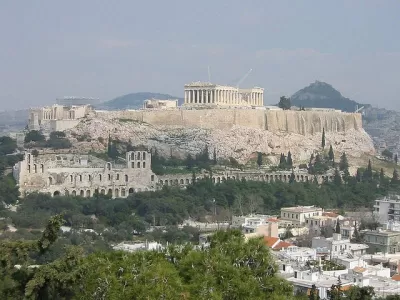
A great deal of philosophical thought, especially in moral philosophy, centers on the ways that people ought to relate to each other. It only stands to reason, then, that cities—the places where people come into contact with each other most intimately—have inspired some of the world's most important philosophers and philosophical ideas.
Writes David Kishik, "It might be enough to mention the critical importance of Athens to the birth of ancient philosophy with Socrates, Plato, and Aristotle; or the way that modern philosophy got its start in Bacon’s London, Descartes’s Paris and Spinoza’s Amsterdam; or the deep roots of American pragmatism in New York, where William James spent the first years of his life as a curious child, and John Dewey spent the last years of his life as a revered professor."
Kishik notes, though, that philosophy has not always embraced the city as such. He writes, "With (Jean-Jacques) Rousseau’s fame also came his deep aversion to the city: 'The manner of living in Paris amidst people of pretensions was so little to my liking. The cabals of men of letters, their little candor in their writings, and the air of importance they gave themselves in the world, were so odious to me. I found so little mildness, openness of heart, and frankness in the intercourse even of my friends. Disgusted with this life of tumult, I began ardently to wish to reside in the country.'" Philosophers have championed pastoralism and nationalism, in opposition to urbanism.
And yet, "the city tends to work as a zone that facilitates associations and interactions between many elements (ideas, commodities, skills, persons, interests, fortunes, desires, sensibilities, ideologies, stupidities). At least in theory, the city is not a container for lives but their meeting point, which is not to be confused with a melting pot. (A meeting point permits the differences of the parties involved. A melting pot turns them all into a single stew.)"
Read the full story: Metrosophy: Philosophy and the City

15 US cities and their global namesakes
Hundreds of cities around the United States are named after other places. We tour a few of them.
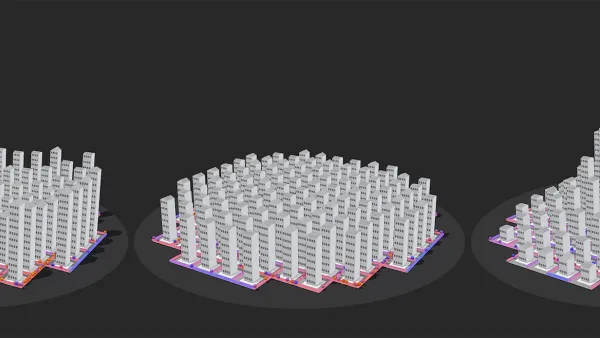
New study visualizes how city shapes impact mobility
Whether circular or linear, the shape and layout of cities affects how their residents get around.
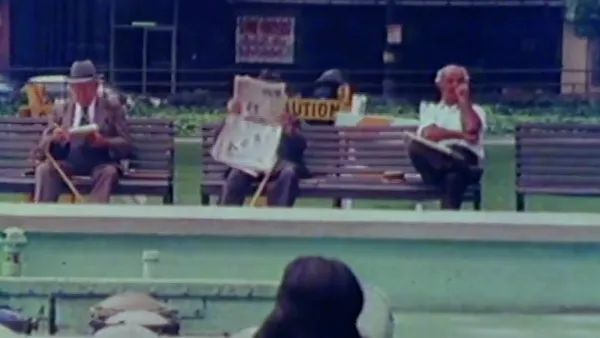
William Whyte’s Seminal Urban Film Restored
‘The Social Life of Small Urban Spaces’ changed the way planners view public space and ushered in a new way of understanding urban patterns.

Planetizen Federal Action Tracker
A weekly monitor of how Trump’s orders and actions are impacting planners and planning in America.

‘Going backwards:’ Baltimore mayor, students rally against state's transit funding plan
Maryland's proposed six-year plan provides no funding for Baltimore’s BMORE bus program and reduces its road maintenance funding.

Detroit to transform waterfront with $2.2 billion investment
Developers will convert about 18 acres of unused parking lot space into civic spaces.

HUD modernizes 50-year-old manufactured housing framework
The Next Generation Manufactured Housing Action Plan establishes new energy-efficiency standards for manufactured homes, and new guidelines for anchoring them.

New CA housing laws tear down development red tape
Recently-signed legislation makes building starter homes and ADUs cheaper and faster in California.

Metrolink finishes first expansion in 20 years
The transit agency is now one of very few in the United States to connect two major airports.

FREE Course: Walkable City 1: Why Walkability?
After describing his path towards focusing on walkability as the essence of good planning, Jeff Speck marches through his five principal reasons for making more walkable places.
Reinventing Malls: Planning Alchemy—Turning Gray Fields Into Gold
The course focuses on the opportunities and imperatives that shape reinvention of mall sites.

One Hundred Miles
County of Mendocino
planning NEXT
The Architects Foundation
University of Cincinnati Online
Montrose County
Northern Illinois Transit Authority (NITA)
The Pocatello Development Authority