A panel at the recent Urban Land Institute conference in Houston considers the imperative of understanding mixed-use development and its various forms.


Kyle Shelton examines the slippery definition of the term mixed-use, which can mean many things despite its central role in successful neighborhoods. The inspiration from the discussion followed a onael from the Urban Land Institute conference this year in Houston.
"Perhaps it should be obvious given their name, but mixed-use developments are rarely carbon copies of one another. Different topographies, financing needs, market aims, and developer visions may make one mixed-use project look entirely different from another just across the street," writes Shelton.
Shelton notes some of the important distinctions that get glossed over when mixed-use is allowed to be a catch-all term: "Can we call a suburban master-planned community that intentionally places homes, condos, retail, and office within a huge plot of land mixed-use? Or to receive such a label do projects need to be contained within a single large lot? What about an entire downtown? If architects lay out a comprehensive plan for a central business district (as ULI panelist Scott Johnson’s Johnson Fain did in Beijing) that includes several different uses, is it a mixed-use development?"
To begin to solidify a meaning for the term Shelton explains how panelists at the conference identified a few key elements of mixed-use (i.e., "at least three distinct uses, a connective green space, and the ability to allow users to live/work/play in same area), though such places could still vary drastically in scale and makeup.
Read the full story: ‘Mixed-use’ is popular, but what does it mean?

Urban Land Institute Encourages Developers to Build for Better Health
The Urban Land Institute has a new project: convincing developers that they can, and should, design for health and wellness.
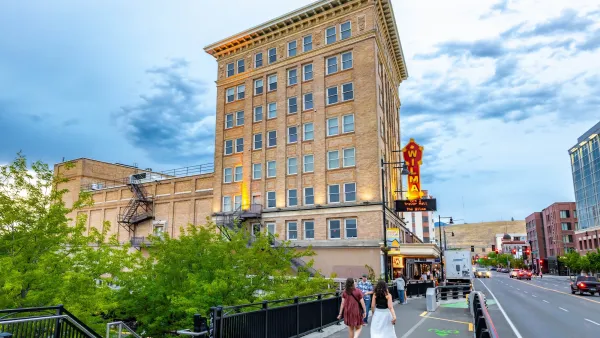
Missoula Approves Zoning Reform Emphasizing More Diverse Housing, Walkability
The city’s new zoning code, map, and development standards will guide more expansive housing options and improved walkability.
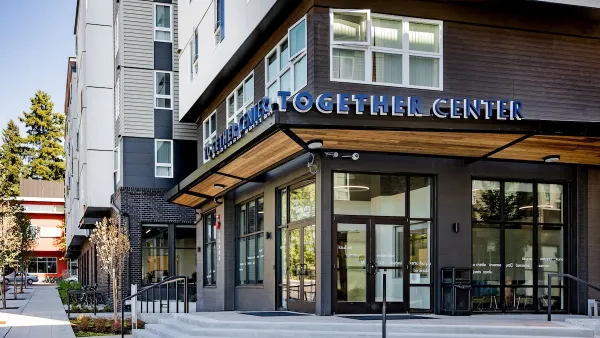
Washington Nonprofits Build Housing on Their own Offices
While affordable housing with some office space for nonprofits is relatively common, in Redmond, Washington, a group of human services organizations went the other way: they rebuilt their collective office space and added housing.

Planetizen Federal Action Tracker
A weekly monitor of how Trump’s orders and actions are impacting planners and planning in America.

‘Going backwards:’ Baltimore mayor, students rally against state's transit funding plan
Maryland's proposed six-year plan provides no funding for Baltimore’s BMORE bus program and reduces its road maintenance funding.

Detroit to transform waterfront with $2.2 billion investment
Developers will convert about 18 acres of unused parking lot space into civic spaces.

HUD modernizes 50-year-old manufactured housing framework
The Next Generation Manufactured Housing Action Plan establishes new energy-efficiency standards for manufactured homes, and new guidelines for anchoring them.

New CA housing laws tear down development red tape
Recently-signed legislation makes building starter homes and ADUs cheaper and faster in California.

Metrolink finishes first expansion in 20 years
The transit agency is now one of very few in the United States to connect two major airports.

FREE Course: Walkable City 1: Why Walkability?
After describing his path towards focusing on walkability as the essence of good planning, Jeff Speck marches through his five principal reasons for making more walkable places.
Reinventing Malls: Planning Alchemy—Turning Gray Fields Into Gold
The course focuses on the opportunities and imperatives that shape reinvention of mall sites.

One Hundred Miles
County of Mendocino
planning NEXT
The Architects Foundation
University of Cincinnati Online
Montrose County
Northern Illinois Transit Authority (NITA)
The Pocatello Development Authority