The Trust for Public Land released its 2015 ParkScore today, ranking the 75 largest U.S. cities on the metrics of acreage, facilities and investment, and access.



In addition to increasing the number of cities receiving a scores, up from 60 last year, ParkScore 2015 (see the whole list) produced a notable change at the top, with New York City dropping from a tie for first to a tie for fifth with Portland.
Minneapolis and St. Paul lead the list in 2015 (Minneapolis also tied for first last year), followed by Washington, D.C., and San Francisco.
Andrew Theen picked up on the news of the ranking, noting especially the city of Portland's penchant for pooches—manifested in "the most dog parks per 100,000 residents, with 5.4 parks, nearly eight times the average for the other 74 cities."
Peter Callghan also picked up the news of the top billings earned by the Twin Cities. Callaghan offers the following distinctions in the metrics that added up to the top ranking: "St. Paul narrowly outscored Minneapolis in the percentage of residents who are walking distance to a park (96 percent to 95 percent). Minneapolis won the median park size competition (6.8 acres to 3.7 acres). And St. Paul won the amenities race, based on its prodigious supply of hoops and playgrounds."
Read the full story: Park Score 2015


How Park Design Helps Keep Communities Healthy
A review of the healthiest cities in the United States establishes that urban parks play a vital role in the activity of a city. What conclusions can be drawn from each city?
America's Best Bike Cities
With gas prices at an all time high, bike riding has never looked better. Shermans Travel identifies the top cities to bike through, noting a bounty of amenities to save on costs for the urban biker.
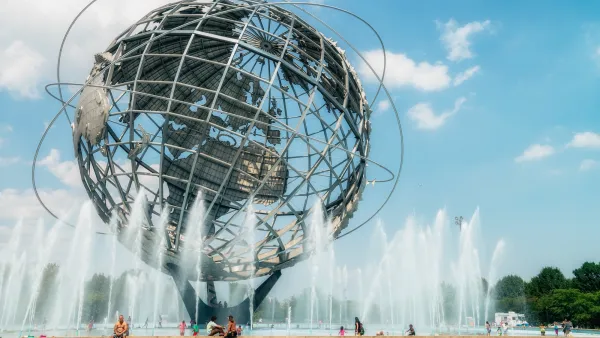
Historic Queens park is getting a $120M upgrade
The borough's largest park will undergo significant upgrades for accessibility, flood mitigation and historic preservation.

Planetizen Federal Action Tracker
A weekly monitor of how Trump’s orders and actions are impacting planners and planning in America.

Amtrak, CN end decades-long dispute with eight-year agreement
The new operating agreement establishes an updated framework for the companies to work together, including processes to resolve disputes.

Judges permit Denver to divert 77,000 acre feet from the Colorado River for reservoir expansion
Overuse and climate change have caused the Colorado River’s water levels to plummet.

Philadelphia to invest $2 billion into upgrading city airports as PHL places last in customer satisfaction
Modernizations to Philadelphia's airports will include baggage system upgrades and a new automated parking garage guidance system.

The LA housing policies making developers turn away from the city
Despite LA’s housing shortage, developers say the city’s "mansion-tax" and pandemic-era policies make it an unappealing place to build housing.

New density bill would require 7 California cities to establish regional transit hubs
The bill would also require major cities in California to permit high-rise residential buildings.

FREE Course: Walkable City 1: Why Walkability?
After describing his path towards focusing on walkability as the essence of good planning, Jeff Speck marches through his five principal reasons for making more walkable places.
Reinventing Malls: Planning Alchemy—Turning Gray Fields Into Gold
The course focuses on the opportunities and imperatives that shape reinvention of mall sites.

City of Wisconsin Rapids
Harvard University Graduate School of Design
KFH Group Inc.
The Architects Foundation
University of Cincinnati Online
The Pocatello Development Authority
The Urban Renewal Agency of the City of Pocatello