A new mapping project allows new access to information about Chicago's controversial tax increment financing mechanism. Now at least the debate will include visuals.


Benjamin van Loon shares news of the TIF Projects map from Chicago Cityscape, which offers new and helpful access to information and visualization of the impact of tax increment financing.
According to van Loon, "Chicago Cityscape's data-rich map provides an interactive overview of all 375 TIF projects in Chicago currently or soon-to-be underway. Data can be sorted by project name, approval date, TIF assistance amount, total project cost, ward, and community area, so you can always see how that magic money is being spent."
The article also includes a series of screengrabs from neighborhoods around Chicago. TIF districts have come under fire in Chicago recently, with a debate over how TIFs get spent (i.e., "mayor's slush fund for wealthy Downtown interests" or "neighborhood infrastructure investment necessity") leading up the recent Chicago mayoral election.
Read the full story: Now You Can Easily See Where TIF Dollars Are Being Spent

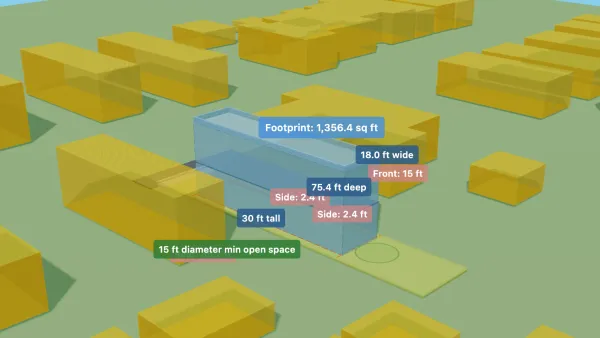
Interactive, 3D Chicago Zoning Map Lets You Visualize Potential Development
A new tool creates a visual model of potential development on Chicago lots based on the property’s specific zoning regulations.
Update: Chicago Red Line Extension TIF Approved
The long-anticipated project that will bring the Chicago Transit Authority rail system into transit deserts on the Southside of Chicago is making substantial progress.

Chicago’s Red Line Extension Environmental Review Complete
The Red Line Extension on Chicago’s South Side could be a game changer, if the city can figure out the local funding.

Planetizen Federal Action Tracker
A weekly monitor of how Trump’s orders and actions are impacting planners and planning in America.

California plans to bury El Niño’s downpour
If the state plays its cards right, it may be able to store a billion acre-feet of El Niño’s water in aquifers.

Chicago breaks ground on $3 billion megadevelopment
The new neighborhood, titled Foundry Park, will one day host 3,700 residences.

Satanic place names
From streams and lakes to valleys and canyons, I mapped more than 1,000 places named after the Devil.

California High-Speed Rail Authority CEO resigns after $600,000 scandal
Under Ian Choudri, the authority used taxpayer dollars to fund first class flights and trips to nightclubs.

Want to study the Missouri River? Soon, you may need unanimous approval from 10 states
Legislation would require 10 governors’ permission to study or build projects moving water outside the basin.

FREE Course: Walkable City 1: Why Walkability?
After describing his path towards focusing on walkability as the essence of good planning, Jeff Speck marches through his five principal reasons for making more walkable places.
Reinventing Malls: Planning Alchemy—Turning Gray Fields Into Gold
The course focuses on the opportunities and imperatives that shape reinvention of mall sites.

City of Rosemead
Rutgers University, Edward J. Bloustein School of Planning and Public Policy
One Hundred Miles
Hunter College, City University of New York (CUNY)
The Architects Foundation
University of Cincinnati Online
City of Cambridge
Montrose County
The Pocatello Development Authority