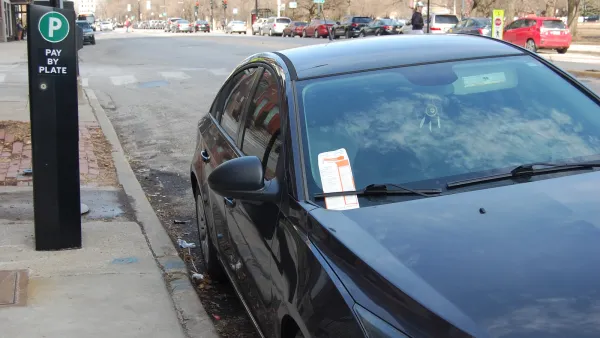
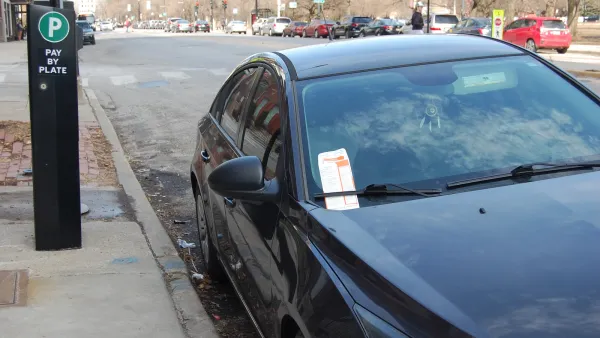
Over the next two years, Boston will replace its old parking meters with new ones connected to the internet. With this groundwork in place, pay-by-phone parking is the next step.



It's no secret that there is abundant space for urban parking innovation. Curt Woodward writes, "Researchers from MIT's Senseable City Lab, who have tested parking-spot-finder technology on the school's campus, say the average American spends about 50 hours per year just looking for parking, wasting fuel while increasing air pollution and traffic congestion."
In a step forward for the digital city, smart parking meters will spread across Boston over the next two years. From the article: "Boston already has rolled out a pilot program in the Back Bay neighborhood, called ParkBoston, that lets drivers pay for their metered spots with a smartphone app. San Francisco, Washington, D.C., and Los Angeles also have tested projects that tap into smartphone technology to make parking more convenient [...]"
Multiple start-ups are vying for the private parking market, and several more - like Boston's Haystack - have even tried to sell access to public spots. City officials and entrepreneurs alike seem confident Bostonians won't need those bags of quarters much longer.
Read the full story: Boston to install “smart” parking meters across city, spreading pay-by-phone options

Parking Meter Tests Provoke Frustration in St. Louis
Locations around St. Louis are testing new parking meters, leading to confusion and tickets. The changes are part of an ongoing test of new systems that will eventually yield an overdue overhaul of the city's parking technology.
Chicago mayor secretly bid over $3B to buy back city's parking meters
Mayor Brandon Johnson revoked an offer to pay more than $800 million above the next-highest bidder to regain control of the city's parking meters.
Chicago parking meters are for sale once again
Chicago's 75-year lease of its parking meters to an LLC puts revenue decisions in the hands of private investors.

Planetizen Federal Action Tracker
A weekly monitor of how Trump’s orders and actions are impacting planners and planning in America.

‘Going backwards:’ Baltimore mayor, students rally against state's transit funding plan
Maryland's proposed six-year plan provides no funding for Baltimore’s BMORE bus program and reduces its road maintenance funding.

Detroit to transform waterfront with $2.2 billion investment
Developers will convert about 18 acres of unused parking lot space into civic spaces.

HUD modernizes 50-year-old manufactured housing framework
The Next Generation Manufactured Housing Action Plan establishes new energy-efficiency standards for manufactured homes, and new guidelines for anchoring them.

New CA housing laws tear down development red tape
Recently-signed legislation makes building starter homes and ADUs cheaper and faster in California.

Metrolink finishes first expansion in 20 years
The transit agency is now one of very few in the United States to connect two major airports.

FREE Course: Walkable City 1: Why Walkability?
After describing his path towards focusing on walkability as the essence of good planning, Jeff Speck marches through his five principal reasons for making more walkable places.
Reinventing Malls: Planning Alchemy—Turning Gray Fields Into Gold
The course focuses on the opportunities and imperatives that shape reinvention of mall sites.

One Hundred Miles
County of Mendocino
planning NEXT
The Architects Foundation
University of Cincinnati Online
Montrose County
Northern Illinois Transit Authority (NITA)
The Pocatello Development Authority