The new meters eliminate paper receipts and provide real-time data to enforcement agents.


The New York City Department of Transportation (NYC DOT) revealed new, upgraded parking meters that use a paperless pay-by-plate system to eliminate the need for printed receipts.
According to a press release from DOT, “The upgraded meters will also help provide more short-term parking by improving parking enforcement. The meters will provide real-time data to NYPD traffic enforcement agents to help ensure vehicles don’t overstay the meter.”
Parking meters throughout the city will be changed out starting May 8 in the north side of the city and moving south. “Throughout the city, parking meters issue approximately eight miles of paper receipts daily. The length of receipt rolls printed annually totals roughly 2,500 miles, the distance between New York City and Los Angeles. Transitioning to the Pay-by-Plate model curbs the carbon footprint, lessens maintenance and repair requirements, and contributes to cleaner streets with reduced litter.”
The new system will prevent transferring parking time by moving paper receipts to a different car or area.
FULL STORY: NYC DOT Unveils Upgraded, Modern Parking Meters to Replace Current System


Boston Parking Meters to Get Smart
Over the next two years, Boston will replace its old parking meters with new ones connected to the internet. With this groundwork in place, pay-by-phone parking is the next step.
Parking Privatization Efforts Not Spreading Smoothly
In the wake of the problem-plagued privatization of Chicago's parking meters in 2008, two WSJ reporters assess conversions (or attempts) in Indianapolis (2010), Pittsburgh, Los Angeles, Cincinnati and New York, as well as what went wrong in Chicago.
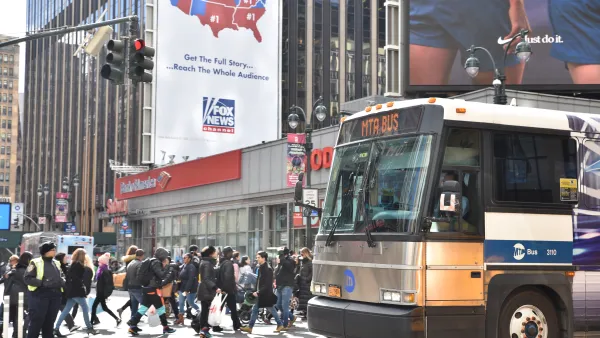
MTA to purchase biggest fleet upgrade in over a decade
The new buses will use a greener alternative to diesel fuel, and aim to improve fleet reliability and air quality.

The state-sanctioned urbicide of Austin
People don’t kill cities. Freeways do.

US to reduce Colorado River water deliveries to Mexico
A new Colorado Treaty amendment reduces Mexico’s Colorado River water allocation by 250,000 acre feet.

New Jersey’s second-largest city bans standalone data centers
Jersey City will continue to allow co-location facilities, such as those meant for research institutions that store their own data.

Amtrak not solely to blame for New Jersey commuter rail's unreliability, report finds
A new study from the Garden State Initiative found that NJ Transit’s budget grew 20% across a 4 year period, but reliability declined significantly over the same period.

EPA erases limits on planet-warming pollution from power plants
Under Monday’s plan, power plants would still have some limits on how much mercury, arsenic and other contaminants they can emit.

Phoenix announces new on-demand transit service, more frequent RAPID buses
Both new services will launch in October, and are part of Phoenix's Project Effective Access Solutions for Easing Congestion.

FREE Course: Walkable City 1: Why Walkability?
After describing his path towards focusing on walkability as the essence of good planning, Jeff Speck marches through his five principal reasons for making more walkable places.
Reinventing Malls: Planning Alchemy—Turning Gray Fields Into Gold
The course focuses on the opportunities and imperatives that shape reinvention of mall sites.

Eagle County Government
Harvard University Graduate School of Design
Nashville Planning Department
The Architects Foundation
University of Cincinnati Online
The Pocatello Development Authority
The Urban Renewal Agency of the City of Pocatello
Journal of the American Planning Association