In a complex saga involving the MTA, an 88-year-old tower, and a planned 77-story apartment behemoth, affordable housing may be first to fall by the wayside.


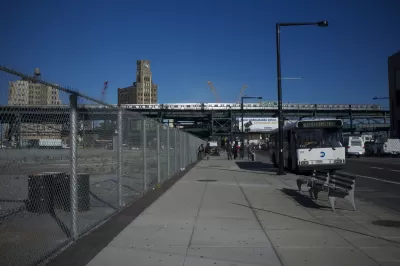
Matt A.V. Chaban reports on how a unique development situation arose in Queens. He writes, "Fourteen stories is nothing in today’s booming neighborhood, but until 1990, the brown-brick structure at 29-27 Queens Plaza North was the tallest commercial building in Queens [...] Now it will be truly overshadowed. A 915-foot skyscraper — the city's tallest outside Manhattan — is about to sprout on its doorstep. Yet the connection is no coincidence: The clock tower is helping make this 77-story glassy giant possible."
Oddly, the MTA was instrumental in facilitating the mega-project. From the article: "the [MTA's] board approved the transfer of approximately 477,000 square feet of air rights to the developers for just under $56 million. The rights came from an adjacent lot where the agency has dug a hole nearly as deep as the clock tower is tall. Through it runs a tunnel that will bring the Long Island Rail Road into Grand Central Terminal."
In a move that has provoked qualms among members of the MTA's board, "[t]he developers are in a race to begin construction by summer so they can qualify for tax breaks without having to include affordable housing." The old clock tower will instead provide office space for tech firms.
Read the full story: Queens Clock Tower, Once the Tallest, Helps a 77-Story Skyscraper Rise Next Door
Mayor de Blasio Stresses Affordable Housing in State of the City Address
In his State of the City Address on Feb. 3, the New York City mayor made it clear that his overriding priority is affordable housing. He targeted six neighborhoods in all five boroughs where development will be required to include affordable housing.
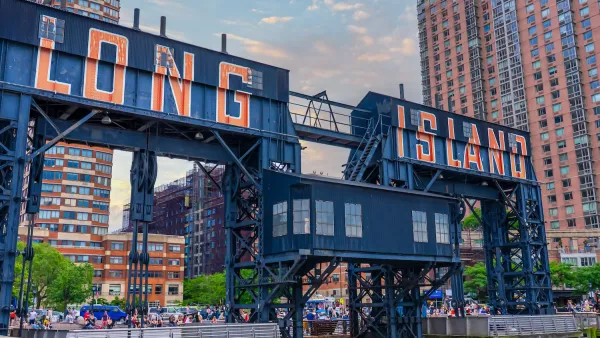
Upzoning Could Bring 15K New Homes to Queens
A rezoning plan for Long Island City opens up prime waterfront land for residential development, but some critics say new housing could be prone to flooding and should be built farther inland.
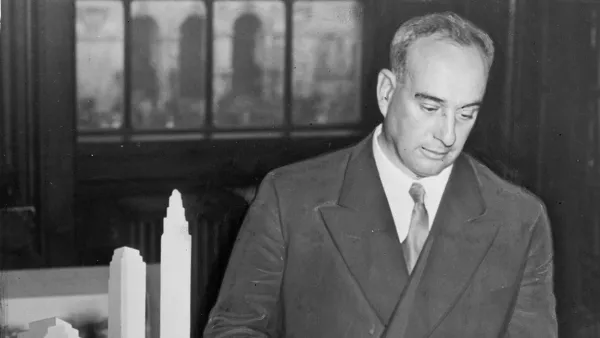
The Robert Moses Nexus to Amazon's Cancellation of Queens HQ2
Last week, Amazon abruptly canceled its decision to invest about $2.5 billion and bring 25,000 high-paying jobs to Queens. A scholar blames their abrupt decision on an arcane state bureaucracy tasked with preventing Robert Moses-like takings.

Planetizen Federal Action Tracker
A weekly monitor of how Trump’s orders and actions are impacting planners and planning in America.

California plans to bury El Niño’s downpour
If the state plays its cards right, it may be able to store a billion acre-feet of El Niño’s water in aquifers.

Desperate measures: Advocates weigh draining Lake Powell to fill Colorado River
Draining the reservoir could reduce evaporation losses by a couple hundred thousand acre-feet.

US buildings threatened, destroyed by fires set to triple by 2060
Researchers found a high fire risk for socioeconomically vulnerable neighborhoods in the American West.

LA residents may be allowed to paint their own crosswalks
Councilwoman Katy Yaroslavsky put out a motion instructing the Los Angeles Department of Public Transportation to study the feasibility of allowing volunteers to paint crosswalks.

Dallas moves to overhaul its zoning code
The city's zoning reform will allow more multi-family and mixed-use developments.

FREE Course: Walkable City 1: Why Walkability?
After describing his path towards focusing on walkability as the essence of good planning, Jeff Speck marches through his five principal reasons for making more walkable places.
Reinventing Malls: Planning Alchemy—Turning Gray Fields Into Gold
The course focuses on the opportunities and imperatives that shape reinvention of mall sites.

City of Rosemead
Rutgers University, Edward J. Bloustein School of Planning and Public Policy
One Hundred Miles
Hunter College, City University of New York (CUNY)
The Architects Foundation
University of Cincinnati Online
City of Cambridge
Montrose County
The Pocatello Development Authority