A new study from the Rational Assumptions think tank provides a completely unsurprising prognostication regarding the future of the oil market.


"The price of oil will either go up or down before it goes up or down and then likely up or down again," according to a press release announcing the findings of the "Oil Prices: What We Know for Sure" study released on April 1, 2015.
According to the study's abstract, it's unclear who is pulling the strings of the global oil market, and no one should expect to understand or predict oil prices until the planet is completely exhausted of fossil fuels. "But that day will surely come," according to the study's findings. At that point, some combination of solar, hydrogen, wind, natural gas, and biomass is expected to replace oil as the energy source driving the world's economy.
According to the press release, fortunes will be won and lost in the process and the world will continue to discover and attempt to respond to new environmental impacts as the future unfolds.
Read the full story: Study: Oil Prices to Remain Volatile Indefinitely

Self-Driving Cars Still Can't Recognize the Difference Between a Wedding Planner and an Urban Planner
Pundits agree that planners need to prepare for self-driving cars. Self-driving cars still need to prepare for planners.
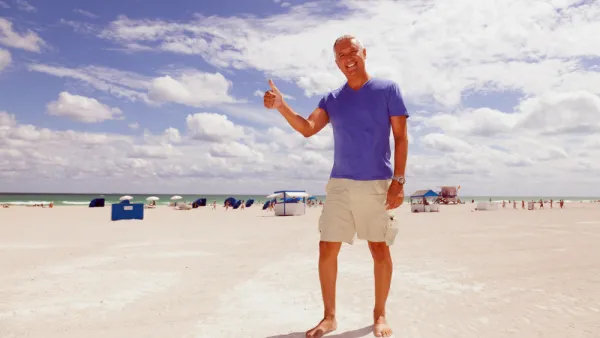
Florida Man Thought the New Comp Plan Included Zoning Changes
A Florida man is accused of not realizing an entirely separate process would be required to implement the zoning changes recommended in a recently approved comprehensive plan.

April Fool's Headlines That Didn't Make the Cut
"Who's the more foolish, the fool, or the fool who follows him?"

Planetizen Federal Action Tracker
A weekly monitor of how Trump’s orders and actions are impacting planners and planning in America.

California plans to bury El Niño’s downpour
If the state plays its cards right, it may be able to store a billion acre-feet of El Niño’s water in aquifers.

Desperate measures: Advocates weigh draining Lake Powell to fill Colorado River
Draining the reservoir could reduce evaporation losses by a couple hundred thousand acre-feet.

US buildings threatened, destroyed by fires set to triple by 2060
Researchers found a high fire risk for socioeconomically vulnerable neighborhoods in the American West.

LA residents may be allowed to paint their own crosswalks
Councilwoman Katy Yaroslavsky put out a motion instructing the Los Angeles Department of Public Transportation to study the feasibility of allowing volunteers to paint crosswalks.

Dallas moves to overhaul its zoning code
The city's zoning reform will allow more multi-family and mixed-use developments.

FREE Course: Walkable City 1: Why Walkability?
After describing his path towards focusing on walkability as the essence of good planning, Jeff Speck marches through his five principal reasons for making more walkable places.
Reinventing Malls: Planning Alchemy—Turning Gray Fields Into Gold
The course focuses on the opportunities and imperatives that shape reinvention of mall sites.

City of Rosemead
Rutgers University, Edward J. Bloustein School of Planning and Public Policy
One Hundred Miles
Hunter College, City University of New York (CUNY)
The Architects Foundation
University of Cincinnati Online
City of Cambridge
Montrose County
The Pocatello Development Authority