Paris today made its first use of a drastic plan to improve air quality in the city: ban half of the cars on the road. The ban could continue tomorrow if the current air pollution alert does not improve.


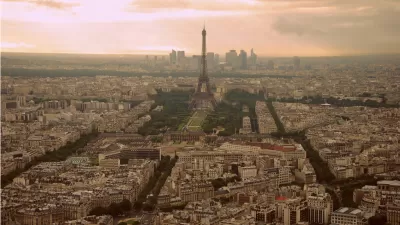
John Lichfield reports on the first implementation of a radical plan to curb pollution in Paris.
"[Today] will be an odd day in Paris," according to Lichfield. "The government has triggered a pollution control law which allows it to ban half the private cars in the greater Paris area."
The article also provides details about how the program works and how local police forces will enforce the ban. The plan is part of an ambitious approach to terrible air quality conditions that made news last year. The decision to enforce the ban today was also the subject of political intrigue in the city.
On a related note, Sarah Laskow recently wrote a speculative article for New York magazine considering the possibility of a U.S. city someday (maybe soon) banning all cars.
Read the full story: French government launches new law allowing it to ban half the private cars in Paris

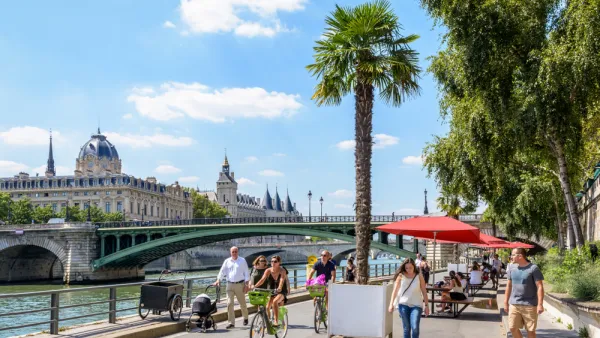
The Car-Free Revolution Continues in Paris
The city continues to reclaim space for pedestrians and cyclists.
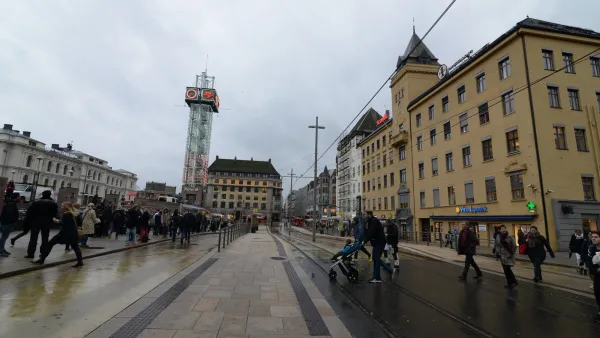
In Oslo, Streets for People, Not Cars
New measures will greatly reduce vehicle traffic in the city center as Oslo moves to put pedestrians, cyclists, and air quality before cars.
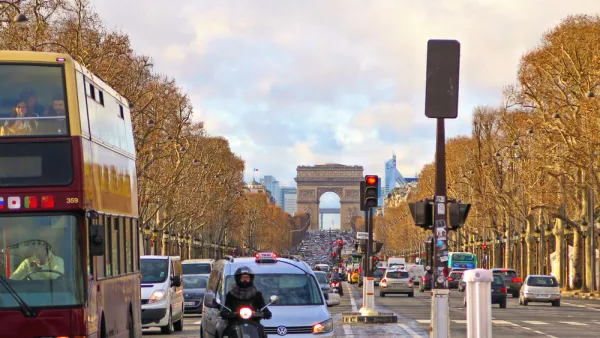
French Suburbs Join Paris in Diesel Ban
The ban on diesel cars now extends well beyond the city of Paris.

Planetizen Federal Action Tracker
A weekly monitor of how Trump’s orders and actions are impacting planners and planning in America.

Amtrak, CN end decades-long dispute with eight-year agreement
The new operating agreement establishes an updated framework for the companies to work together, including processes to resolve disputes.

Judges permit Denver to divert 77,000 acre feet from the Colorado River for reservoir expansion
Overuse and climate change have caused the Colorado River’s water levels to plummet.

Boston has spent millions making the Green Line more accessible — and there’s no end in sight
While the city has invested millions into expanding and adding platforms to the Green Line to make it more accessible, new train cars set to arrive next year will be too tall for disabled passengers to board without raising the current platforms.

Idaho may see an 18% drop in federal surface transit funding — the largest estimated cut in the US
Transit systems in rural communities are much more reliant on federal funding to provide their services.

How ‘post-disaster gentrification’ alters neighborhoods after natural calamities
After hurricanes, fires or other calamities, the original residents of a community are often replaced by younger, wealthier residents.

FREE Course: Walkable City 1: Why Walkability?
After describing his path towards focusing on walkability as the essence of good planning, Jeff Speck marches through his five principal reasons for making more walkable places.
Reinventing Malls: Planning Alchemy—Turning Gray Fields Into Gold
The course focuses on the opportunities and imperatives that shape reinvention of mall sites.

City of Wisconsin Rapids
Harvard University Graduate School of Design
KFH Group Inc.
The Architects Foundation
University of Cincinnati Online
The Pocatello Development Authority
The Urban Renewal Agency of the City of Pocatello