Ben Brown wades into the wealth/income inequity morass to make a pitch for getting beyond "gentrification" squabbles and on to wealth-building strategies for the bottom 90 percent.


Quoting loosely from Ben Brown's essay on gentrification, "A city, as Jane Jacobs famously reminded us, is a living thing, growing, dying, changing all the time. Within all that change, the increasing appeal of urban amenities is powering a market that may trump efforts to shield those without means to adapt. You can have a job and still not be able to build wealth. That’s true with most people in poverty in America. Talking only about income inequity makes it too easy to focus narrowly on jobs. Low-paying work that requires long hours and commutes inhibits responsible parenting and depletes savings that build wealth."
"Broader transportation options (especially the self-propelled kind), dignified housing, high-performing schools, quality childcare, affordable healthcare, access to healthy food and exercise: We know amenities like those build tax base and community wealth in infill urban areas and in close-in ‘burbs with quality bones. Wealth generation, after all, is the upside of gentrification. But right now, we’re allowing the price for those advantages to be bid up to a level that only a narrowing percentage of families can pay and still build wealth. Why not invest in strategies that capture that value in more equitable ways? Why not spread out the costs community-wide?"
Read the full story: ‘Gentrification’ Redux: Wealth, opportunity, community
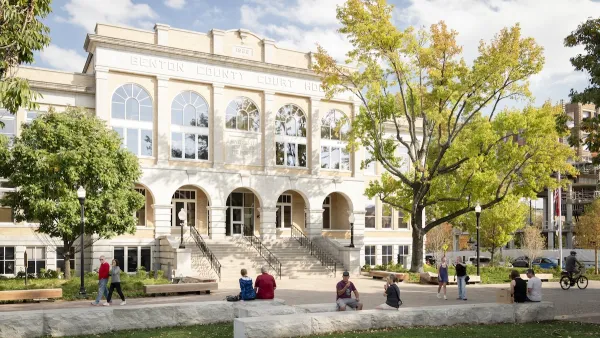
Placekeeping: Setting a New Precedent for City Planners
How a preservation-based approach to redevelopment and urban design can prevent displacement and honor legacy communities.
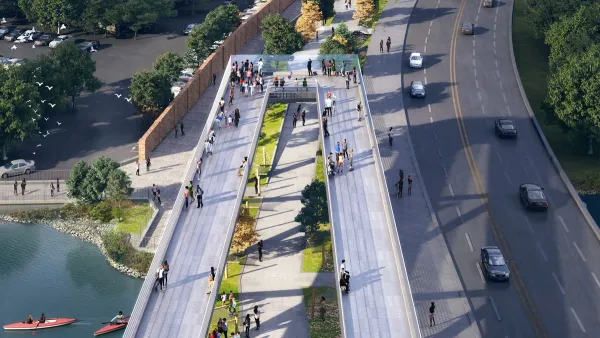
DC Park Aims for Equitable Development
Project leaders working on the 11th Street Bridge Park hope to prevent displacement of residents and bring economic and social benefits to the surrounding community.
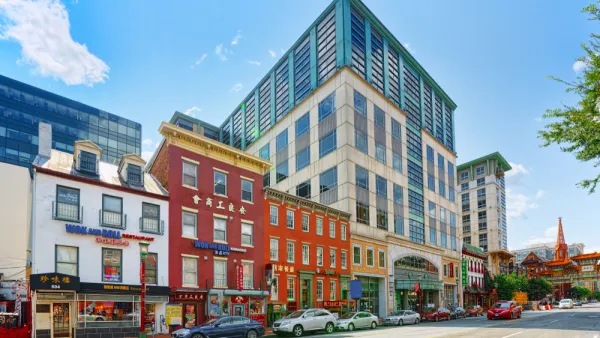
How Historic Inequity Shapes D.C.’s Transit-Oriented Development
A series of articles traces the history and policies behind Washington, D.C.’s efforts to promote equitable transit-oriented development.

Planetizen Federal Action Tracker
A weekly monitor of how Trump’s orders and actions are impacting planners and planning in America.

California plans to bury El Niño’s downpour
If the state plays its cards right, it may be able to store a billion acre-feet of El Niño’s water in aquifers.

Desperate measures: Advocates weigh draining Lake Powell to fill Colorado River
Draining the reservoir could reduce evaporation losses by a couple hundred thousand acre-feet.

Housing is the top priority of Seattle’s sole new councilmember
Jenks campaigned on building 1,000 new units of affordable housing.

New tax cuts may slash $1.5 billion in funding for Miami transit, public parks
Amendment 3 will save Miami-Dade homeowners $2,700 in 2028.

Arizona, Wisconsin, Pennsylvania hope to finally advance climate goals post-midterms
The three states have spent years under Republican or divided control.

FREE Course: Walkable City 1: Why Walkability?
After describing his path towards focusing on walkability as the essence of good planning, Jeff Speck marches through his five principal reasons for making more walkable places.
Reinventing Malls: Planning Alchemy—Turning Gray Fields Into Gold
The course focuses on the opportunities and imperatives that shape reinvention of mall sites.

City of Rosemead
Rutgers University, Edward J. Bloustein School of Planning and Public Policy
One Hundred Miles
University of Michigan School for Environment and Sustainability (SEAS)
Hunter College, City University of New York (CUNY)
The Architects Foundation
City of Cambridge
Montrose County
The Pocatello Development Authority